English
  中文简体
中文简体  Español
Why Kettle Connectors Matter for Stable Power Transmission
A kettle that cuts out mid-boil, or one that runs warm to the touch at the base, usually isn't failing because of the heating element. Nine times out of ten, the real issue sits inside a small, overlooked part: the Kettle Connector. Understanding why this component decides whether power flows smoothly or drops unexpectedly can save a manufacturer or buyer a long list of warranty claims down the road.
The Part Nobody Notices Until It Fails
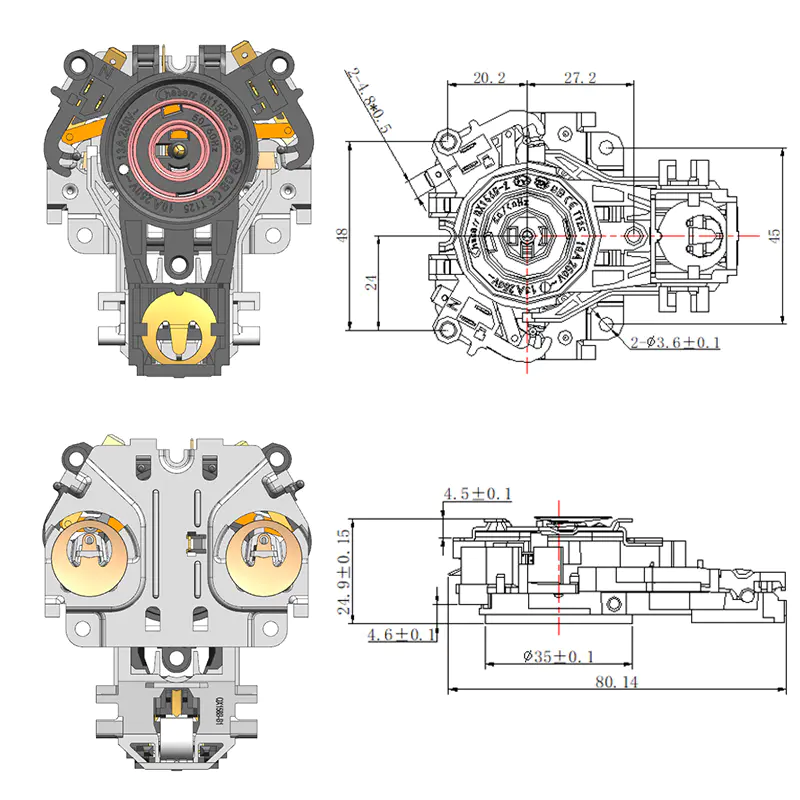
Electric kettles are designed with a detachable base, so the heating vessel needs a way to receive power without a fixed cord connected directly to it. This is where the connector becomes important, creating a link between the stationary power base and the removable jug while supporting repeated connection and separation during everyday use.
Most buyers never think about this part until something goes wrong. A kettle that intermittently loses power, or one that clicks and sparks faintly when placed back down, is almost always telling you something about the quality of its base coupler rather than its heating coil.
What This Component Actually Does
Strip away the marketing language, and the job is fairly simple to describe:
- It creates a physical, conductive link between the base and the vessel
- It carries the full electrical load needed to run the heating element
- It maintains that contact reliably across repeated attach-and-detach cycles
- It supports the kettle's ability to be lifted and poured without a fixed cord getting in the way
None of this sounds complicated on paper. In practice, getting all four of these jobs done consistently, cycle after cycle, is where quality differences between suppliers become obvious.
How Does a Weak Connection Actually Disrupt Power Flow?
This is the key question for anyone sourcing components for kettle production. A connector that looks fine on a bench test can still behave differently once it's installed, cycled repeatedly, and exposed to heat from nearby components.
Contact Surface Quality Sets the Baseline
Every connection point has a contact surface, and the condition of that surface determines how much resistance the current meets when it passes through. A rough, poorly finished, or thinly plated surface increases resistance at exactly the point where a clean connection matters.Over time, this added resistance can create heat buildup at the contact point, which may indicate that the coupler design needs further attention.
Mechanical Fit Affects Electrical Stability
A kettle base connector needs to align precisely every time the jug is placed back down, and even a small amount of looseness in that fit can translate into inconsistent contact pressure. Loose contact doesn't necessarily cut power completely, which is part of what makes it tricky to diagnose. Instead, it often shows up as intermittent flickers, mild buzzing sounds, or a kettle that occasionally takes longer to reach a boil for no obvious reason.
Repeated Cycling Wears Down Weaker Designs
Think about how many times a kettle gets lifted off and placed back on its base during a single week of regular household or commercial use. Each cycle puts mechanical stress on the coupler function, and materials that aren't built to handle that repetition will show wear far sooner than better engineered alternatives. This is one of the main reasons coupler testing during development matters so much before a design goes into full production.
Comparing Common Connector Issues and Their Root Causes
| Symptom Observed | Likely Root Cause | Impact on the Kettle |
|---|---|---|
| Kettle powers off randomly mid-use | Loose or misaligned contact pins | Interrupted heating cycle |
| Base feels warm even when kettle is off | High resistance at the contact surface | Wasted energy, potential heat damage |
| Faint clicking or sparking on placement | Worn plating or degraded contact material | Accelerated wear, safety concern |
| Slower than expected heating | Inconsistent current delivery through the connector | Reduced performance, buyer complaints |
| Connector feels loose after months of use | Mechanical fatigue in the coupler structure | Reduced product lifespan |
Looking at this pattern, it becomes clear that many complaints about a kettle suddenly stopping often begin with a connector issue that has been developing quietly before becoming noticeable.
Where Does the Thermostat Fit Into This Picture?
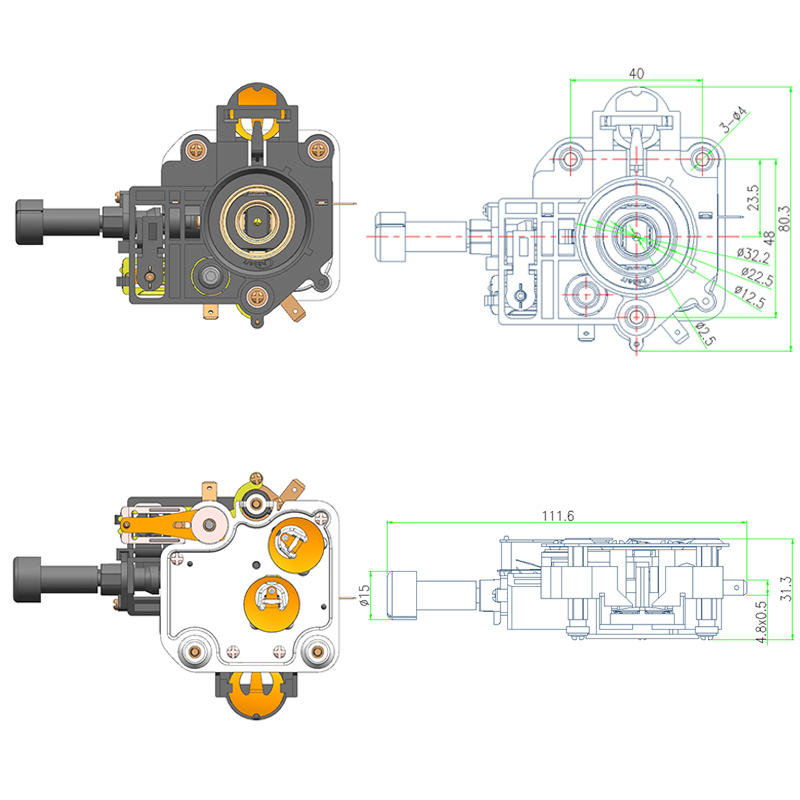
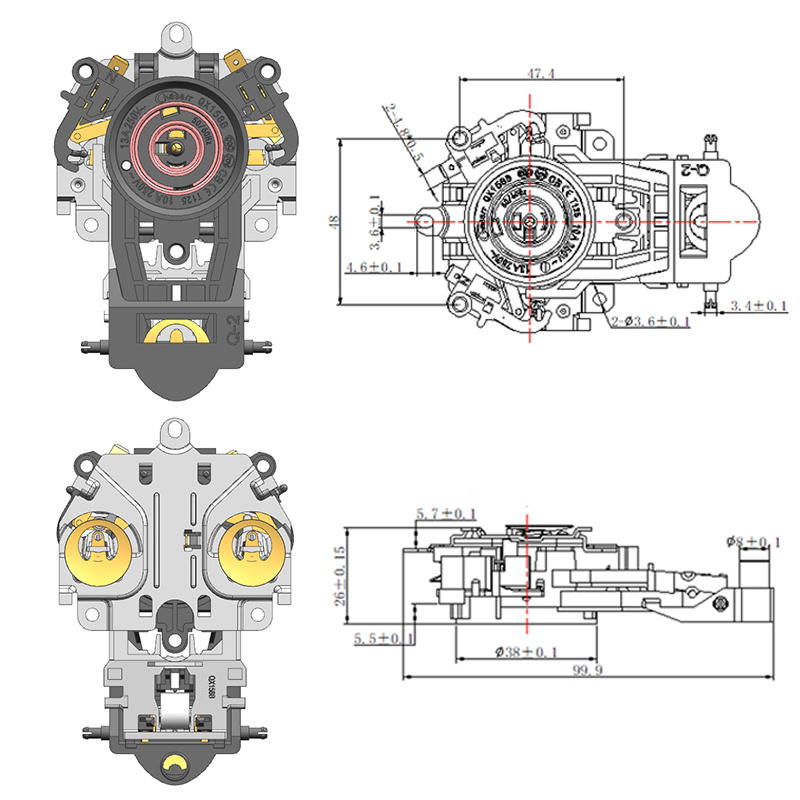
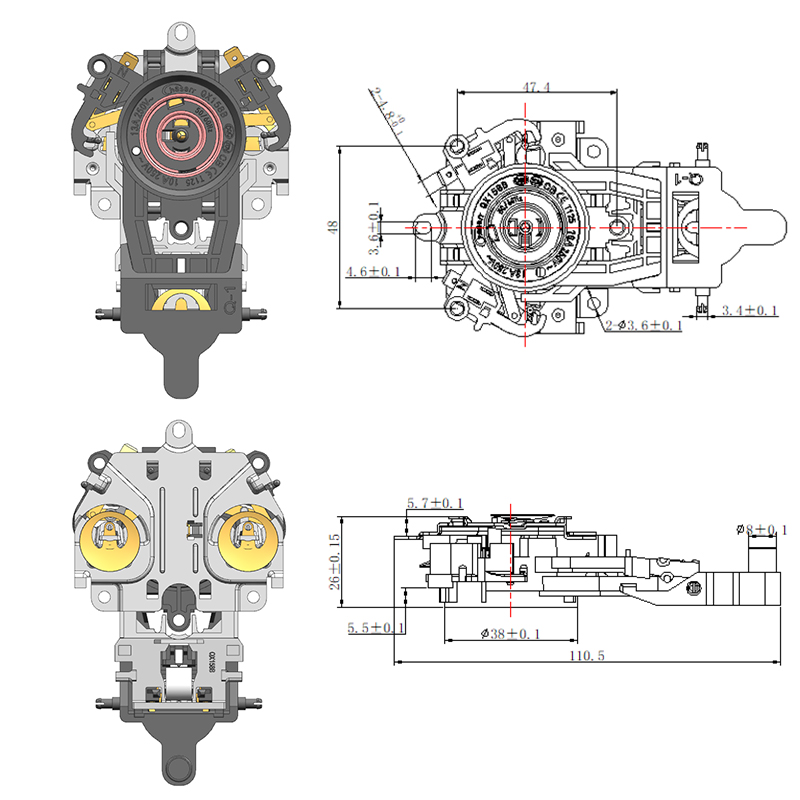
It's worth separating two systems that often get lumped together in casual conversation. The connector's job is purely about delivering power reliably between the base and the vessel. A separate thermostat connector, often tied to a bimetal switch mechanism, handles temperature regulation and automatic shutoff once water reaches boiling point.
These two systems work side by side, but they solve different problems:
- The power connector maintains a stable electrical path so the heating element receives consistent current
- The thermostat system monitors temperature and interrupts power once the target point is reached
- A weakness in either system can create similar-looking symptoms, like a kettle that shuts off unexpectedly, which is why diagnosing the actual cause matters before assuming a part needs replacing
A kettle can have a perfectly functioning thermostat and still misbehave because the connector beneath it isn't holding a stable contact. This distinction matters for manufacturers troubleshooting returned units, since replacing the wrong component wastes time and doesn't fix the underlying issue.
What Should Buyers Look for When Sourcing Connectors?
For OEM manufacturers and component buyers, the sourcing decision usually comes down to a handful of practical checks rather than abstract specifications.
Consistency Across Production Batches
A single well-performing sample doesn't guarantee that an entire production run will behave the same way. Buyers benefit from asking suppliers how they maintain consistency across batches, particularly around contact plating thickness and pin alignment tolerances.
Testing Under Realistic Conditions
Coupler testing that only checks a connector once, under ideal lab conditions, doesn't reveal much about long-term behavior. More useful testing simulates repeated attach-detach cycles alongside exposure to the heat a kettle base typically experiences during normal use.
Compatibility With Existing Base Designs
Not every electric kettle base coupler fits every housing design. Buyers integrating a new connector into an existing product line need confirmation that dimensions, pin spacing, and mounting methods match what their current tooling expects, since mismatches here create assembly delays that are easy to avoid with clear specifications upfront.
Supplier Transparency Around Material Choices
Asking a supplier about the materials used for contact points, the plating process, and the housing structure can provide insight into how they approach long-term reliability rather than focusing only on reducing costs.
Why This Small Part Deserves More Attention Than It Gets
It's tempting to treat a connector as a minor, interchangeable piece within a much larger product. In reality, it sits at the exact point where electrical performance and mechanical durability intersect, and weaknesses there ripple outward into heating consistency, safety, and how long a kettle lasts before something breaks down. Manufacturers who invest time in understanding coupler working principles, testing methods, and material quality tend to see far fewer field failures than those who treat this part as an afterthought during design and sourcing.
Bringing Reliable Power Transmission Back to the Center of Kettle Design
Getting power transmission right inside an electric kettle isn't really about chasing a single flashy feature; it comes down to making sure a small, repeatedly used connector holds a stable, low-resistance contact through thousands of attach-and-detach cycles without degrading. Every symptom discussed here, from random shutoffs to warm bases and slower heating, traces back to the same underlying question of whether that connection stays consistent over time. For manufacturers and buyers looking to reduce returns, improve safety perception, and build a kettle that performs the same way on day one thousand as it did on day one, paying close attention to connector quality, testing rigor, and supplier transparency is where that improvement actually starts. Teams looking to review their current connector specifications, testing protocols, or sourcing options are welcome to reach out to Wenzhou Qianxun Electrical Technology Co., Ltd. to discuss requirements and explore a component solution suited to their production needs.
Featured Products


-
No. 2892, Ningkang East Road, Tiancheng Industrial Zone, Yueqing City, Zhejiang Province
-
 Email: Una@chaserr.cc
 -
 Phone: +86-13075775533
- GET IN TOUCH

Electric Kettle Thermostat Coupler Manufacturer