English
  中文简体
中文简体  Español
How to Identify Your Kettle Base Connector Model Fast
A kettle that stops heating usually traces back to one small part hidden under the base, and replacing it without knowing the exact specification often leads to a part that simply will not fit. Buyers who search for a Kettle Base Connector are almost always dealing with this exact situation: the original marking has worn off, the pins look unfamiliar, or a supplier catalog lists several options that look nearly identical. Sorting through pin counts, base sizes and voltage ratings can feel confusing without a clear reference point, so the sections below walk through a practical way to narrow down the correct connector before placing an order.
Why Getting the Right Connector Matters for Your Kettle
A mismatched connector rarely fails quietly. It might spark, overheat, or simply refuse to seat properly on the base plate, and any of those outcomes creates a safety concern rather than a minor inconvenience.
For buyers sourcing parts in bulk, ordering the wrong specification also means wasted shipping costs and delayed repairs. Getting the identification step right at the beginning helps avoid unnecessary costs and delays later in the process.
There is also a compliance angle worth mentioning. Connectors are rated for specific voltage and current ranges, and installing one that does not match the kettle's original design can void warranty terms or create liability issues for resellers.
What Exactly Is a Kettle Base Connector?
This part sits between the electric kettle body and its base plate, transferring power from the wall socket through the base into the heating element. Without it, the kettle has no way to draw current once it is lifted off and placed back down.
Most designs rely on a set of contact pins on the base that align with matching sockets on the underside of the kettle. When someone lifts the jug to pour water, the connection separates cleanly, and there is no exposed live wire.
Common Signs You Need a Replacement
A few symptoms usually point toward a worn or damaged connector rather than a problem with the heating element itself:
- The kettle powers on intermittently, cutting off when moved slightly
- Visible discoloration or melting around the pins
- A loose or wobbly fit when seating the jug on its base
- A faint burning smell near the base after short use
If two or more of these show up together, checking the connector before replacing other components usually saves unnecessary teardown work.
Types of Coupler Structures You Will Encounter
Not every kettle uses the same physical layout, and this is where a lot of buyers get stuck when trying to match parts across brands.
Base Coupler vs Kettle Connector
The terms get used loosely, but there is a practical distinction. A Base Coupler typically refers to the fixed piece mounted on the power base, while a Kettle Connector often describes the mating piece attached to the underside of the jug itself. Some suppliers bundle both halves as a single assembly, others sell them separately.
Thermostat Connector Integration
On many models, the connector housing also carries wiring that links to a Thermostat Connector, which regulates shut-off once water reaches boiling point. This means a faulty connector can sometimes mimic a thermostat failure, and the two should be inspected together rather than assumed to be separate problems.
A Quick Structural Comparison
| Connector Type | Pin Arrangement | Typical Location | Compatibility Note |
|---|---|---|---|
| Base Coupler | Fixed pins on power base | Mounted inside the base housing | Matched to jug socket pattern |
| Kettle Connector | Socket receiving pins | Underside of the jug | Must align with base pin spacing |
| Thermostat Connector | Wired link to control switch | Integrated near base coupler | Sensitive to voltage rating mismatch |
The chart above is meant as a general reference rather than a fixed rule, since manufacturers occasionally combine these functions into a single molded unit.
How Can You Read the Markings on a Base Coupler?
Manufacturers usually stamp or print identifying information directly onto the plastic housing, though the print can fade with heat exposure over repeated use.
Locating the Model Text
Turn the base upside down and look near the center pin cluster or along the outer rim. Text is often small and molded into the plastic rather than printed, so running a finger over the surface sometimes reveals letters that are hard to see under normal light.
Checking the Contact Pins
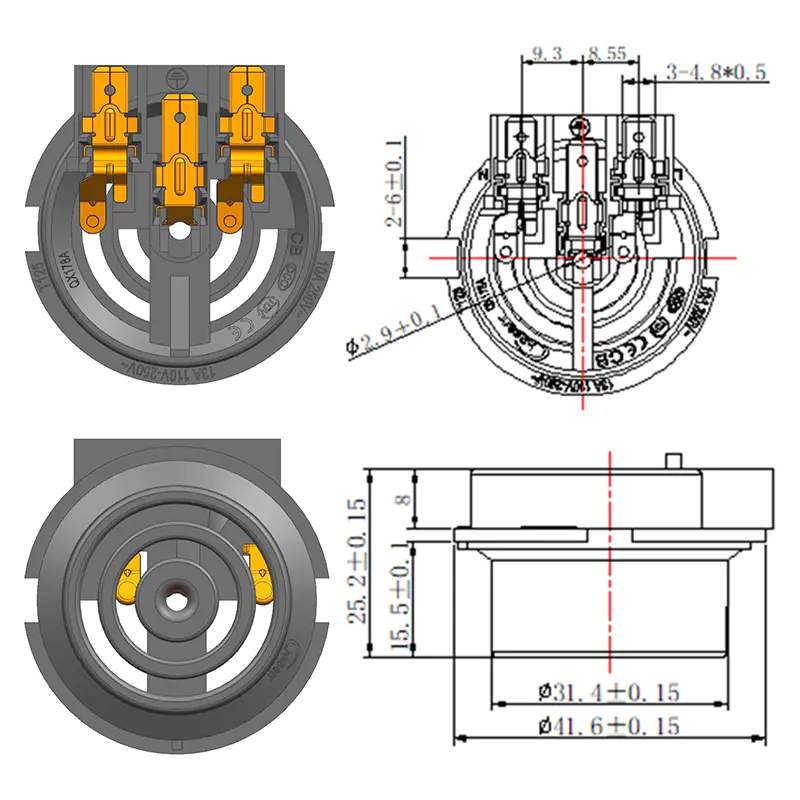
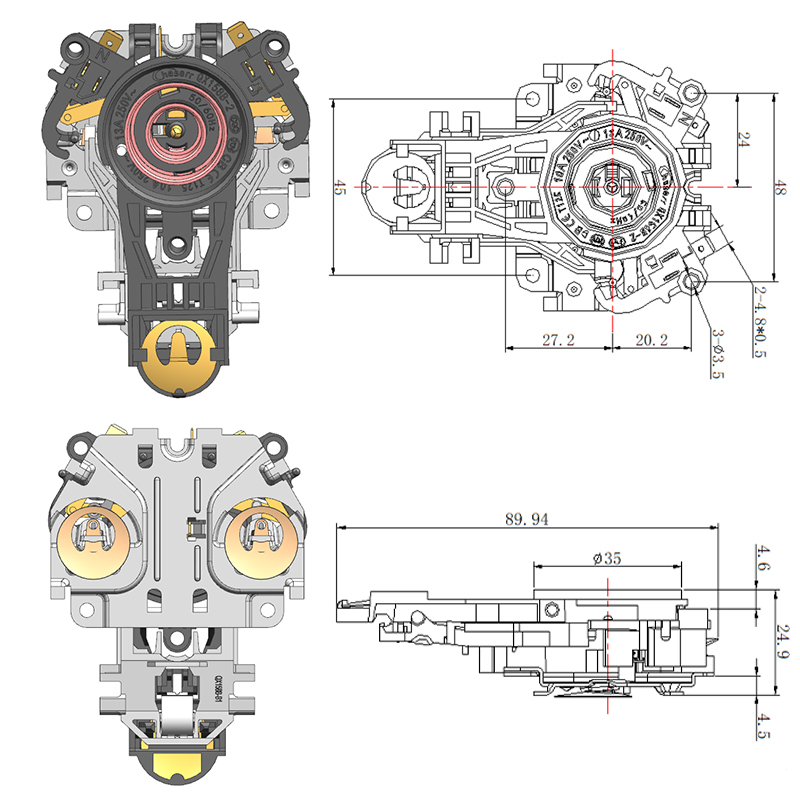
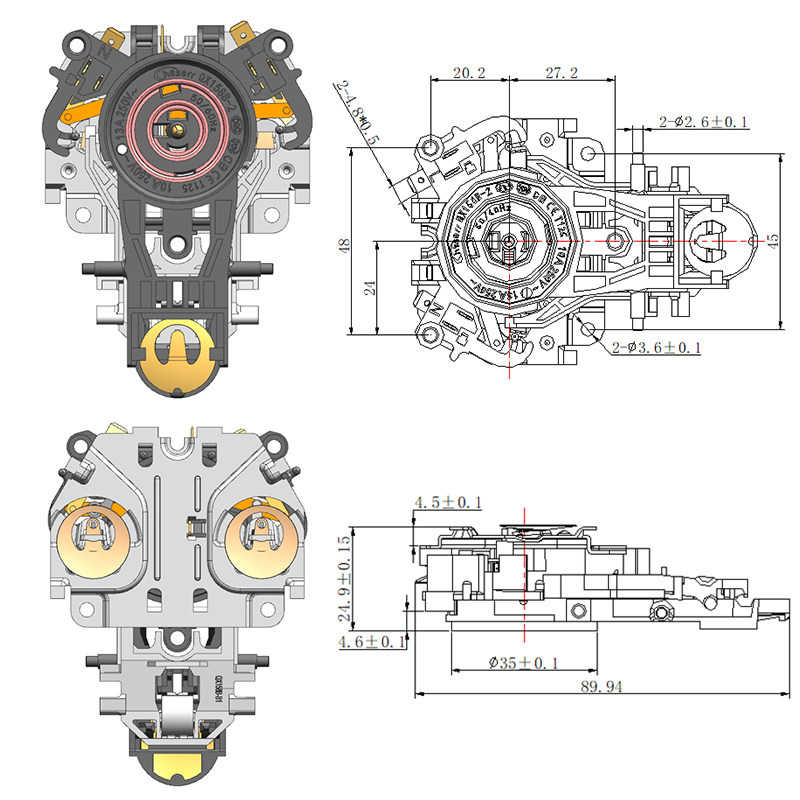
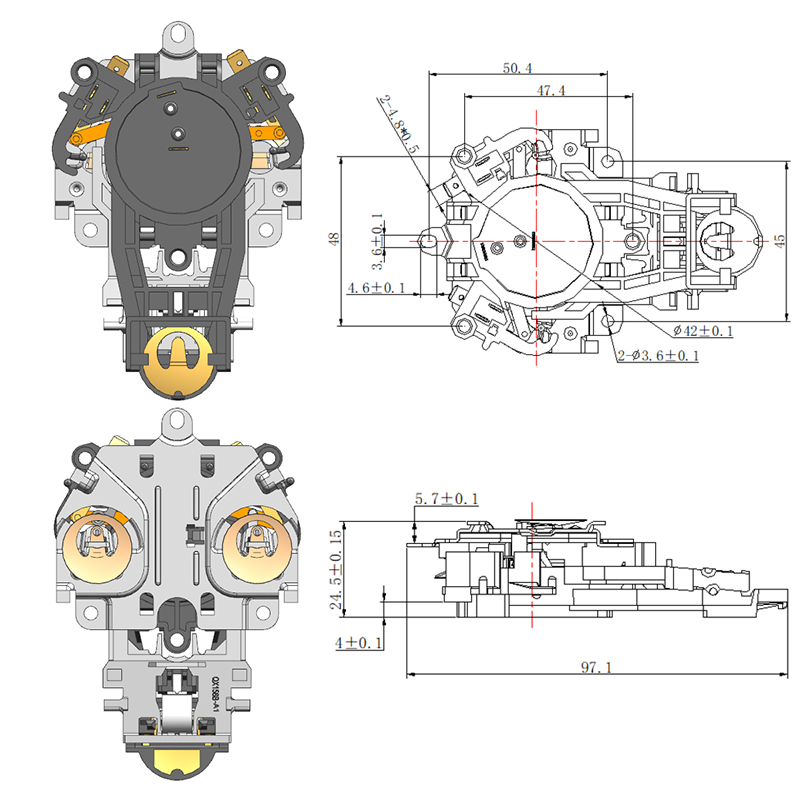
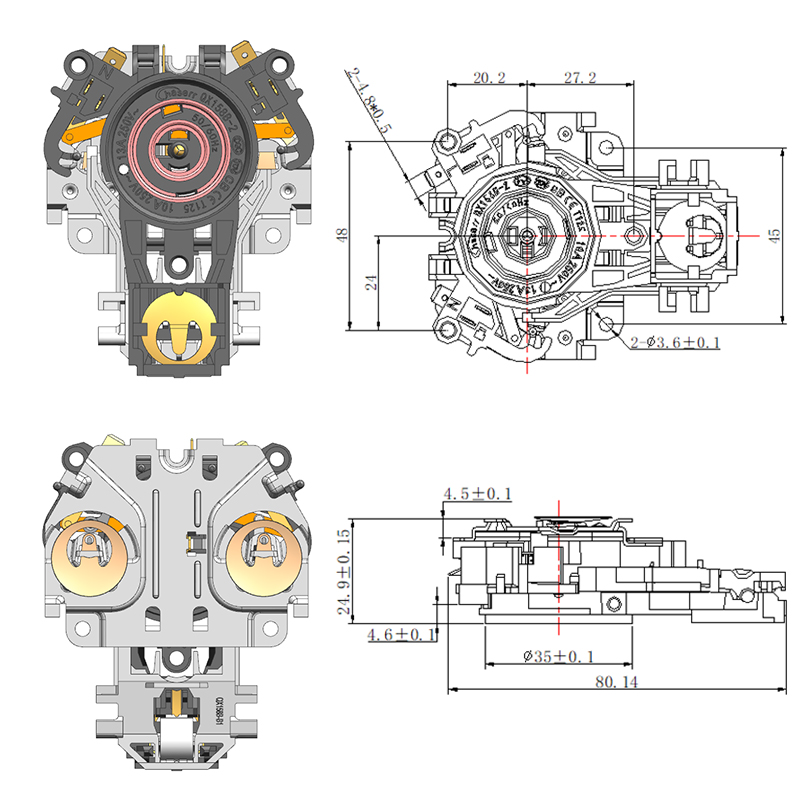
Count the number of pins and note their spacing pattern. Some couplers use three pins arranged in a triangle, others use a linear row. Even a small difference in spacing means the parts will not physically connect, regardless of how similar they look otherwise.
Measuring the Base Diameter
Using a ruler or caliper, measure across the widest point of the coupler housing. This measurement, paired with the pin layout, narrows down compatible replacements considerably even when the printed model number is unreadable.
Voltage and Current Ratings
Check any printed rating near the pins. This information matters because a connector rated for a lower load than the kettle's heating element draws will wear out faster or overheat under normal use.
A Step by Step Process for Identifying Your Connector
When the markings are unclear or missing entirely, working through a short checklist tends to be more reliable than guessing from memory:
- Unplug the kettle and separate the jug from its base
- Photograph the connector from directly above and from an angle
- Count the pins and measure the spacing between each one
- Note the outer diameter of the housing
- Record any partial text, even fragments of letters or numbers
- Compare findings against sample images from parts suppliers
- Reach out to a supplier with the photos and measurements if no exact match turns up
This sequence works whether the buyer is a repair technician handling a single unit or a procurement team sourcing replacement parts across a batch of kettles.
How Do You Test Coupler Function Before Ordering a Replacement?
Before assuming the connector itself is at fault, a short round of testing helps confirm the diagnosis and avoids ordering an unnecessary part.
Simple Continuity Check
Using a multimeter set to continuity mode, touch the probes to each pin pair while gently pressing the housing. A reading that flickers or drops out points toward internal wear inside the coupler rather than a fault elsewhere in the kettle.
Visual Inspection Tips
Look closely for any of the following under good lighting:
- Cracked or warped plastic around the pin base
- Pins that sit unevenly or feel loose when wiggled
- Carbon buildup, which appears as a dark residue near contact points
- Bent pins that no longer align straight
A connector showing two or more of these issues is generally not worth repairing and should be scheduled for replacement rather than patched temporarily.
Choosing a Compatible Replacement Without Guesswork
Once the identification steps confirm the pin layout, housing size and rating, sourcing a matching part becomes far more straightforward.
Matching Structural Specs
Buyers should prioritize matching the physical layout first, since a connector that fits mechanically but carries a slightly different rating is a smaller risk than one that does not seat properly at all. Electrical mismatches can sometimes be addressed through supplier consultation, while physical fit cannot be adjusted after manufacturing.
Working with Suppliers
Sharing clear photos, pin measurements and any legible text from the old part speeds up the sourcing process considerably. Suppliers dealing regularly with Electric Kettle Base Coupler components can often cross-reference a description against known molds even without an exact model number, particularly when buyers provide dimensions rather than relying on memory alone.
Bulk Sourcing Considerations
For businesses ordering across multiple kettle models, standardizing on a smaller range of connector types simplifies inventory management. This is worth discussing directly with a supplier, since some coupler housings are designed to accommodate slight variations in pin spacing through adjustable inserts, reducing the number of distinct part numbers a warehouse needs to stock.
Getting a kettle back into working order often comes down to a handful of careful checks rather than any single decisive clue, and the process described above reflects how technicians and procurement teams typically approach it in practice. Measuring pin spacing, checking housing diameter and confirming voltage markings together build a reasonably confident picture even when the original text has worn away completely. Buyers working with suppliers who understand different coupler and connector structures often experience a smoother sourcing process, as photos and measurements can help identify suitable options when a model number is unavailable. Wenzhou Qianxun Electrical Technology Co., Ltd. works with buyers on exactly this kind of identification and matching process, helping narrow down compatible base connectors and coupler assemblies from structural details alone. Reaching out with clear measurements and photos of the existing part is generally the fastest way to get a reliable match confirmed.
Featured Products


-
No. 2892, Ningkang East Road, Tiancheng Industrial Zone, Yueqing City, Zhejiang Province
-
 Email: Una@chaserr.cc
 -
 Phone: +86-13075775533
- GET IN TOUCH

Electric Kettle Thermostat Coupler Manufacturer