English
  中文简体
中文简体  Español
Thermostat Compatibility Across Various Kettle Materials
Can It Work With Stainless Steel Kettles?
The Anti-Drying Kettle Thermostat is widely compatible with stainless steel kettles because the material offers good heat conduction and structural stability, both of which support accurate temperature sensing.
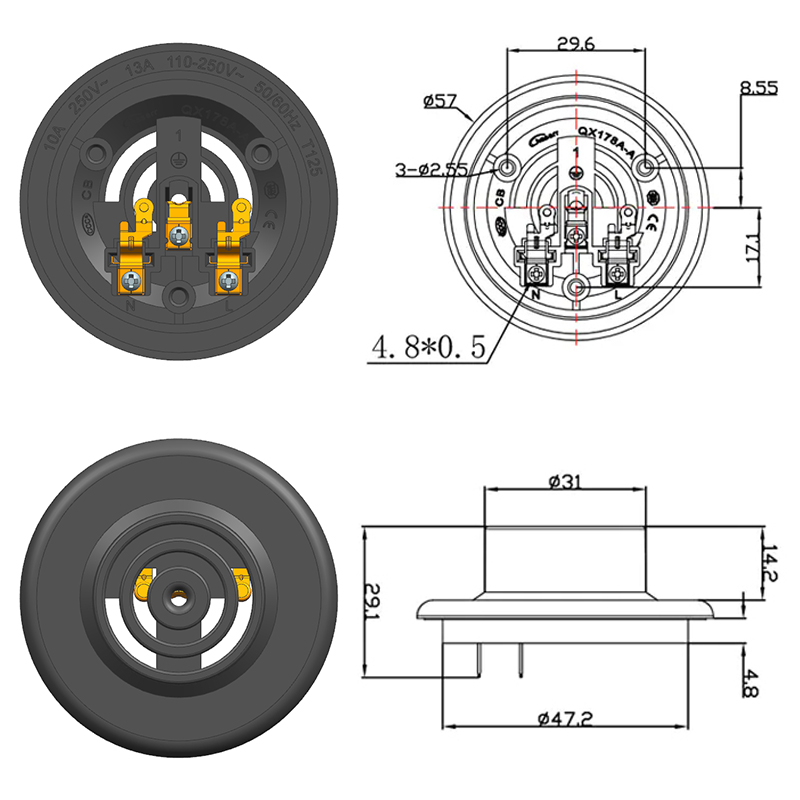
• Stainless steel distributes heat uniformly, allowing the thermostat to detect rising temperatures quickly and trigger dry-boil protection before the heating plate overheats.
• The rigidity of the metal provides a firm mounting base, ensuring the thermostat remains properly aligned with the heating element.
• Stainless steel kettles typically include flat-bottom heating structures, which further improve sensor contact and responsiveness.
For these reasons, coupling this thermostat with stainless steel vessels results in high reliability, fast reaction time, and long-term durability. It is often the preferred pairing in mid- to high-end kettle designs.
Does It Function Well with Glass Kettles?
Glass kettles have become more popular due to their visibility and aesthetic appeal, and many models successfully integrate the thermostat.
• Although glass has lower thermal conductivity compared with metal, modern designs use stainless steel bases or embedded metal plates to house the thermostat. This ensures the sensing mechanism does not interact directly with the glass but with the conductive layer beneath it.
• The thermostat performs dry-boil protection effectively because heat transfer through the base remains sufficient for accurate detection.
• The transparent body also allows users to visually confirm water presence, working as an extra safety measure that complements the thermostat’s automatic protection.
However, glass kettles require careful engineering to ensure proper sealing between the glass body and the metal base, but this does not hinder thermostat integration when executed correctly.
Is It Suitable for Plastic Electric Kettles?
Plastic kettles represent a significant portion of the low- to mid-priced market, and the thermostat can work effectively with them under proper design conditions.
• Most plastic kettles use an internal stainless steel heating plate or metal liner, which allows the thermostat to function the same way it does in metal models.
• The plastic shell does not impact thermostat sensitivity, as the sensor interacts with the heating base rather than the external casing.
• Because plastic insulates heat more slowly than metal, the kettle’s internal thermal structure must be engineered to maintain efficient heat transfer from the metal plate to the sensing module.
When manufacturers follow these guidelines, the thermostat performs dry-boil prevention reliably. However, overall durability may depend on the quality of the plastic components surrounding the heating system.
How Does It Adapt to Ceramic or Porcelain Kettles?
Ceramic and porcelain electric kettles are less common but valued for their insulation and appearance.
• These kettles also use embedded metal heating bases because ceramic alone cannot conduct heat sufficiently for fast boiling.
• The thermostat relies on this metal layer to detect temperature changes, making its performance similar to that in glass or plastic models.
• The thicker ceramic walls can retain heat longer, enhancing temperature stability but also requiring careful calibration so the thermostat does not misinterpret delayed cooling as persistent heating.
This design interplay works well when paired with calibrated sensors and optimized heating plates, ensuring protection against dry-boil conditions.
What About Multi-Material or Hybrid Kettles?
Some kettles combine materials—such as glass with stainless steel rims or plastic with metal reinforcement—to achieve specific functions.
• In these hybrids, the metal base remains the critical interface for thermostat operation.
• The surrounding materials mainly influence insulation, aesthetics, and user comfort but do not affect the thermostat’s ability to respond to heat.
• As long as the kettle’s internal water-heating structure includes a properly mounted conductive base, the thermostat performs identically across designs.
Is Compatibility Dependent on Design More Than Material?
Across all kettle categories, the determining factor is not the body material itself but the integration of a metal heating plate that interfaces with the thermostat.
• The thermostat must receive accurate, timely heat feedback to prevent dry-boil accidents.
• All well-designed kettles—regardless of whether they are stainless steel, glass, plastic, or ceramic—provide this interface.
• Differences between materials mainly influence insulation, external durability, and user comfort, but not the core protective function of the thermostat.
Featured Products


-
No. 2892, Ningkang East Road, Tiancheng Industrial Zone, Yueqing City, Zhejiang Province
-
 Email: Una@chaserr.cc
 -
 Phone: +86-13075775533
- GET IN TOUCH

Electric Kettle Thermostat Coupler Manufacturer