English
  中文简体
中文简体  Español
Proper Heat Transfer Techniques for Bimetal Iron Thermostat Installation
Understanding the Importance of Heat Transfer
When installing a Bimetal Iron Thermostat, one critical consideration often overlooked is the efficiency of heat transfer between the thermostat and the surface it monitors. These devices rely on the bending of a bimetallic strip to open or close an electrical contact, and their accuracy depends directly on how effectively heat is transferred to the sensing element. Without proper heat conduction, the thermostat may respond too slowly, inaccurately trigger, or fail to protect the appliance as intended. This can cause overheating, energy inefficiency, and potential safety hazards.
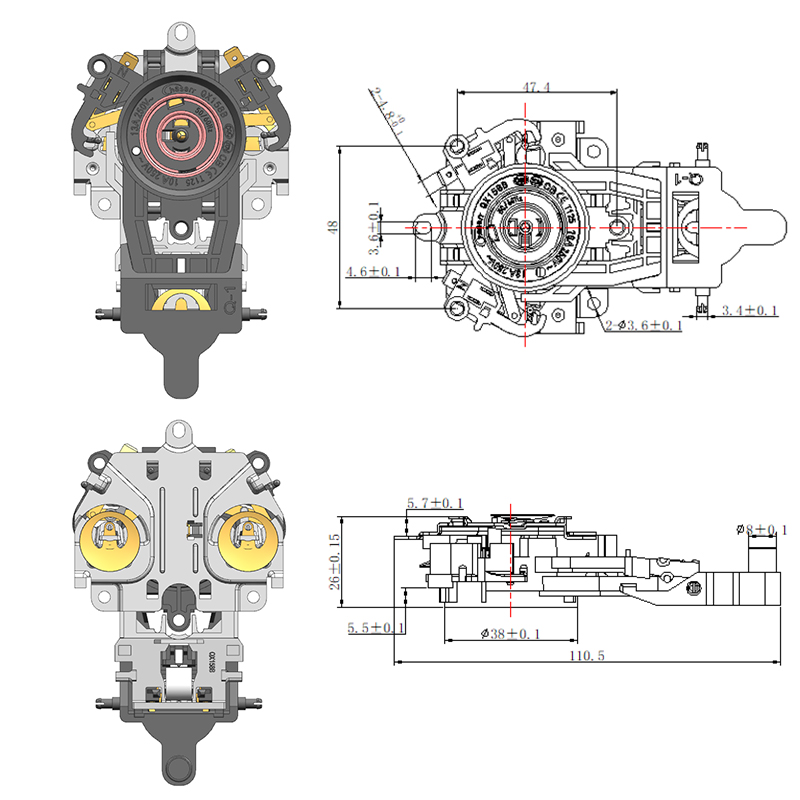
Role of Thermal Interface Materials
Thermal interface materials, commonly referred to as thermal paste or conductive pads, play a crucial role in enhancing heat transfer. When a thermostat is mounted onto a heating element or metal surface, microscopic gaps and surface irregularities can prevent full contact, reducing thermal conductivity. Applying a thin layer of thermal compound or using a thermal pad ensures that heat moves efficiently from the surface to the bimetallic strip. This enhances the responsiveness of the thermostat, allowing it to react more accurately to temperature changes and maintain consistent control.
Direct Contact vs. Thermal Paste
Some installation guides suggest that Bimetal Iron Thermostats can function with direct metal-to-metal contact. While this approach may work in applications with flat and clean surfaces, it is rarely suitable in real-world conditions. Even small imperfections, scratches, or oxidation on the contact surface can create air pockets that act as insulators. Using a thermal paste or pad compensates for these imperfections, providing a more reliable and uniform heat path. The investment in a small amount of thermal interface material can significantly extend the life of the thermostat and improve the overall performance of the device it controls.
Mechanical Considerations
It is important to note that while thermal paste improves heat transfer, installation torque and mechanical alignment must also be precise. Over-tightening a thermostat can damage its internal mechanism, while under-tightening may reduce thermal contact efficiency. A properly applied thermal pad or paste should be thin enough not to interfere with the mounting pressure but sufficient to fill any surface irregularities. Manufacturers often provide specific instructions regarding the type and thickness of thermal interface material to use, ensuring suitable performance and safety.
Long-Term Performance and Safety
Proper thermal coupling not only ensures accurate temperature control but also contributes to the long-term reliability of the device. Poor heat transfer can cause temperature overshoot, repeated cycling, or early mechanical wear in the bimetallic strip. For safety-critical applications, such as electric irons, heaters, or industrial equipment, ensuring that a Bimetal Iron Thermostat is correctly thermally coupled is essential to prevent overheating and maintain operational safety standards. Routine inspection and maintenance can further ensure that the thermal interface remains effective over time, avoiding degradation due to drying or contamination.
While a Bimetal Iron Thermostat may function without additional thermal interface materials in ideal conditions, using a thermal paste or pad is highly recommended for real-world applications. Ensuring efficient heat transfer improves accuracy, extends device life, and maintains safety. By combining careful mechanical installation with proper thermal coupling, users can improve the performance and reliability of bimetallic thermostats in their heating applications.
Featured Products


-
No. 2892, Ningkang East Road, Tiancheng Industrial Zone, Yueqing City, Zhejiang Province
-
 Email: Una@chaserr.cc
 -
 Phone: +86-13075775533
- GET IN TOUCH

Electric Kettle Thermostat Coupler Manufacturer