English
  中文简体
中文简体  Español
How to Choose Kettle Base Connectors for Kettle Production
When an electric kettle stops heating, or the heating becomes erratic and inconsistent, the connection between the kettle body and its base is often where the problem starts. Product engineers and procurement teams evaluating or replacing kettle components frequently find that the Kettle Base Connector gets less attention than the heating element or thermostat, yet it sits at the center of how the whole appliance functions. Understanding the different types of connectors, how each one is structured, and what the working principle looks like from the moment the kettle is placed on the base helps both design decisions and sourcing discussions become considerably more productive.
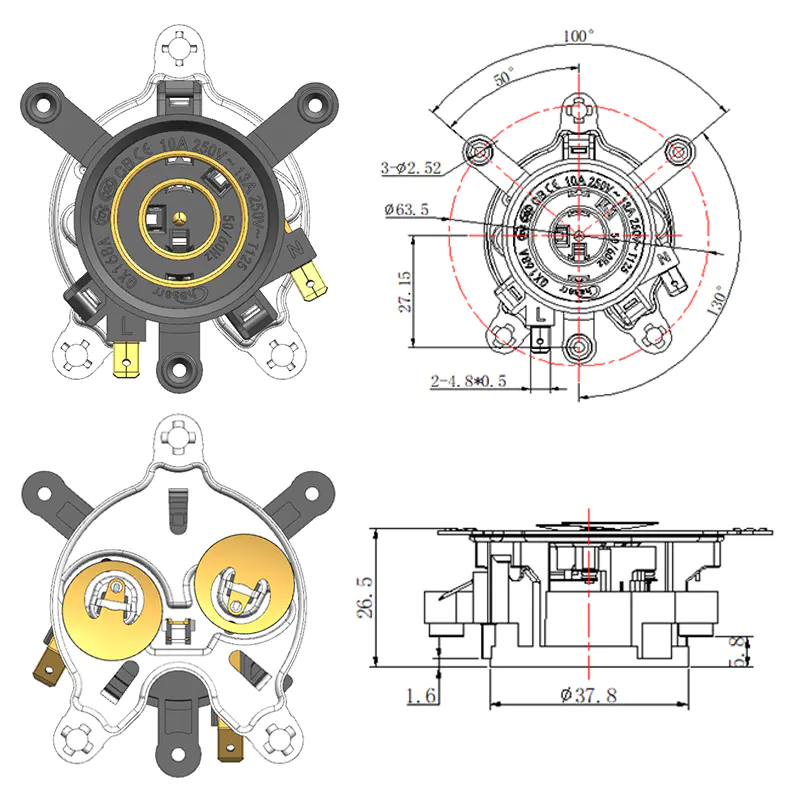
What Is a Kettle Base Connector and Why Does It Matter?
The Kettle Base Connector is the electrical and mechanical interface between the removable kettle body and the powered base unit. Every time the kettle is used, this component is responsible for transferring operating current from the base to the heating element inside the kettle body, and it does this through direct contact between two precisely aligned sets of terminals.
It sounds simple enough, but the design demands are actually quite specific. The connector needs to:
- Handle repeated connection and disconnection cycles without losing contact quality
- Withstand the heat generated during boiling, which includes both ambient heat from the kettle body and heat rising from the liquid inside
- Remain safe under conditions where water or condensation may be present nearby
- Allow the kettle to be placed on the base in any orientation when a 360-degree design is used
Getting any of these requirements wrong has consequences ranging from reduced product lifespan to safety failures, which is why the connector design and material selection receive serious engineering attention from manufacturers who take product reliability seriously.
Common Types of Kettle Base Connectors
Different kettle designs call for different connector configurations, and the category has diversified considerably as product design has evolved.
Standard Fixed-Direction Connector
This configuration uses a directional connector where the kettle must be aligned with the base in a specific orientation to make electrical contact. The contact structure is straightforward: a set of pins or blades on one side mate with corresponding sockets or contacts on the other.
Characteristics of fixed-direction connectors:
- Simple structure with fewer moving or rotating parts
- Suitable for lower-cost product tiers where 360-degree placement isn't a priority
- Contact area can be larger, which supports higher current applications
- Typically less expensive to manufacture than 360-degree variants
These connectors are still widely used in commercial and institutional kettle designs where cost efficiency matters more than rotational convenience.
360-Degree Rotating Base Coupler
The 360-degree electric kettle base coupler is now the dominant design in consumer markets. Instead of aligning specific pin pairs, this configuration uses a ring-based contact system that allows the kettle to be placed and used in any orientation.
How it works structurally:
- A central pin on the base makes contact with a central socket in the kettle regardless of rotation angle
- An outer ring contact on the base connects with a corresponding ring contact in the kettle base
- The ring geometry ensures continuous electrical contact through the full 360 degrees of rotation
The engineering challenge in this design is maintaining consistent contact pressure and low resistance as the kettle is placed from different angles and as the components wear over time. The materials used for the ring contacts, and the precision of the ring geometry, directly affect how long the coupler performs reliably.
Thermostat Connector Configuration
Some connector designs integrate directly with the kettle's thermostat system, meaning the connector doesn't just carry power supply current but also handles the signal or control path that the temperature cutoff mechanism uses.
In these designs:
- The base coupler includes a separate small-area contact dedicated to the thermostat circuit
- Steam from boiling water activates the thermostat, which then signals through this contact path to interrupt the power supply
- The contact assignment within the connector is more complex than a simple two-contact power-only configuration
Understanding this distinction matters for replacement parts procurement, since a thermostat-integrated connector isn't interchangeable with a power-only connector even if the physical dimensions appear similar.
Low-Profile Compact Connector
For slim or travel kettle designs where base height is constrained, compact connector configurations reduce the vertical depth of the connection interface while maintaining the necessary contact surface area and current-carrying capacity.
These tend to appear in:
- Travel kettles with space-saving requirements
- Hotel room kettles where a low-profile aesthetic matters
- Cordless kettle designs that prioritize a certain visual form factor
The engineering trade-off in compact connectors involves balancing reduced contact geometry against the need for reliable electrical performance.
How Does a Kettle Base Connector Work Step by Step?
Breaking down the coupler working process helps clarify why each design element matters.
Step 1: Placement and Physical Contact
When the kettle body is placed onto the base, the connector contacts on both sides align and make physical contact. In a 360-degree design, this happens through ring-to-pin geometry that doesn't require rotational alignment. In a fixed connector, the kettle must be oriented correctly.
Step 2: Circuit Completion
Once contact is made, the circuit between the mains power supply at the base and the heating element inside the kettle is completed. Current flows from the base power input, through the base-side connector terminals, across the contact interface, through the kettle-side connector terminals, and into the heating element.
Step 3: Heating and Steam Generation
The heating element converts electrical energy into heat, raising the water temperature toward boiling. Steam begins to rise toward the kettle's steam outlet and toward the thermostat sensor.
Step 4: Thermostat Response
When steam reaches the thermostat sensor, the bimetal element inside the thermostat flexes due to the heat. The flexing action causes the thermostat contact to open, breaking the circuit through the control path and cutting power to the heating element.
Step 5: Power Disconnection
The kettle stops heating. In designs where the thermostat connector path is separated from the main power path, the interruption signal causes a relay or mechanical latch to open the main power circuit. In simpler designs, the thermostat directly interrupts the main supply path.
Step 6: Removal and Reset
When the kettle is lifted from the base, the contacts separate and the circuit opens completely. As the thermostat cools, the bimetal element returns to its original position, resetting the system for the next use.
How Do Different Connector Types Compare?
| Connector Type | Rotational Freedom | Contact Complexity | Thermostat Integration | Typical Application |
|---|---|---|---|---|
| Fixed-direction connector | Directional only | Low | Optional | Commercial and low-cost consumer kettles |
| 360-degree base coupler | Full rotation | Moderate | Optional | Standard consumer market kettles |
| Thermostat connector design | Varies by model | Higher | Integrated | Kettles with steam-activated cutoff via connector path |
| Compact low-profile connector | Typically 360 degrees | Moderate | Optional | Travel and hotel kettles |
Reading down this comparison, the connector choice traces directly back to the product's intended use, price tier, and the space constraints of the kettle design.
What Materials Are Used in Kettle Base Connectors?
Material selection in the connector determines both electrical performance and service life, and it's one of the factors that separates reliable connectors from those that degrade quickly.
Contact Materials
The actual conductive surfaces that make the electrical connection are typically made from copper alloys, brass, or silver-plated copper. Each has different characteristics:
- Brass contacts are cost-effective and offer decent conductivity for standard current loads, though surface oxidation over time can increase resistance
- Silver-plated contacts resist oxidation better and maintain lower contact resistance across more connection cycles, justifying their higher material cost in products where reliability is prioritized
- Phosphor bronze is sometimes used in spring contact applications because it maintains consistent spring pressure over many cycles
Insulating Body Materials
The housing that holds the contacts and provides electrical isolation is typically engineering-grade thermoplastic. Requirements include:
- High heat deflection temperature to resist distortion near the heating zone
- Flame resistance to meet safety certifications
- Dimensional stability to keep contact alignment consistent as the material ages
Lower-grade housing materials deform under thermal stress, which shifts contact alignment and increases resistance at the connection interface.
What Does Coupler Testing Involve?
For procurement teams and quality engineers evaluating connector components, coupler testing provides the evidence base for supplier selection and incoming quality decisions.
Electrical Resistance Testing
Contact resistance across the connector interface is measured at baseline and after specified numbers of connection cycles. Rising contact resistance indicates surface degradation and predicts performance problems in service.
Cycle Endurance Testing
The connector is mated and separated a specified number of times, representing the expected service life of the kettle. After testing, contact resistance, mechanical fit, and visual condition are evaluated against acceptance criteria.
Thermal Cycling Testing
The connector is subjected to repeated heating and cooling cycles to verify that thermal expansion and contraction don't cause contact degradation or housing deformation over time.
Water Ingress Verification
Since kettles operate in environments where condensation and water spills are realistic, connectors are tested to verify that the housing geometry and sealing design prevent water from reaching live contact surfaces.
Safety Certification Testing
Connectors intended for CE, UL, or other market-specific certifications undergo standardized testing that includes dielectric strength verification, temperature rise under load, and fault condition behavior.
How Should Manufacturers and Buyers Evaluate Connector Suppliers?
For kettle manufacturers and procurement teams sourcing base connectors, a few evaluation dimensions cut through the noise and identify suppliers capable of consistent performance.
- Material specification transparency: Can the supplier provide documentation confirming contact material grade and housing material specification, not just a product name?
- Certification status: Does the connector carry relevant safety certifications, and are those certifications current and verifiable?
- Testing documentation: Can the supplier provide cycle endurance and contact resistance test data for the specific connector being evaluated?
- Customization capability: For OEM applications with specific kettle body dimensions or thermostat integration requirements, can the supplier adapt connector geometry and contact assignment?
- Production consistency: What process controls does the supplier maintain to ensure dimensional accuracy and contact force consistency across production batches?
Suppliers who can answer these questions with documentation rather than general assurances are demonstrating manufacturing maturity that correlates with reliable product performance in the field.
Connecting the Right Component to the Right Kettle Design
Kettle Base Connectors aren't interchangeable, and the choice between connector types has real consequences for product performance, user experience, and service life. A 360-degree base coupler in a premium consumer kettle serves a different design intent than a compact low-profile connector in a travel model or a thermostat-integrated connector in a steam-activated cutoff design. Understanding these distinctions, along with the materials and testing that back up a connector's performance claims, gives both product engineers and procurement teams a much stronger basis for making sourcing decisions that don't create problems after the kettle reaches market.
Wenzhou Qianxun Electrical Technology Co., Ltd. manufactures Kettle Base Connectors and electric kettle base couplers designed for consumer and commercial kettle applications, with technical documentation, material specifications, and testing data available to support OEM and wholesale procurement decisions. If your product development or sourcing process involves kettle connector selection or custom connector design, sharing your application requirements is the practical starting point for finding the right component match.
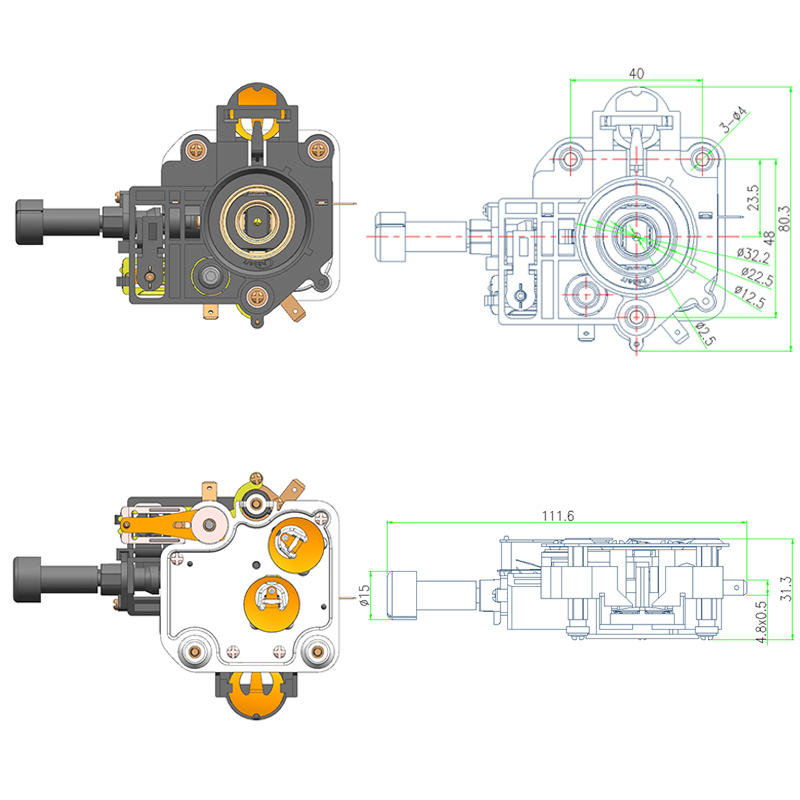
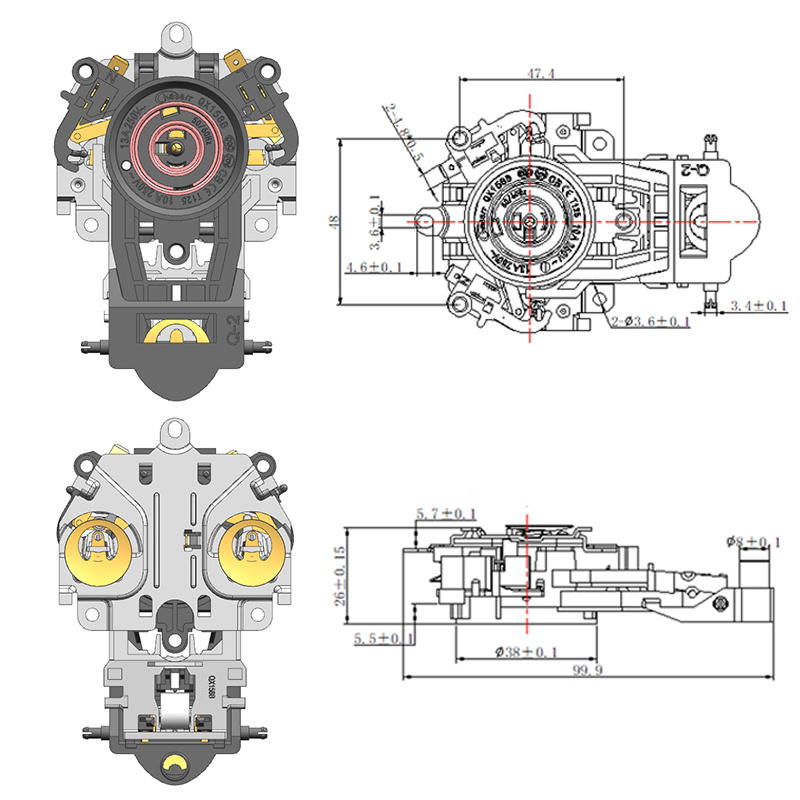
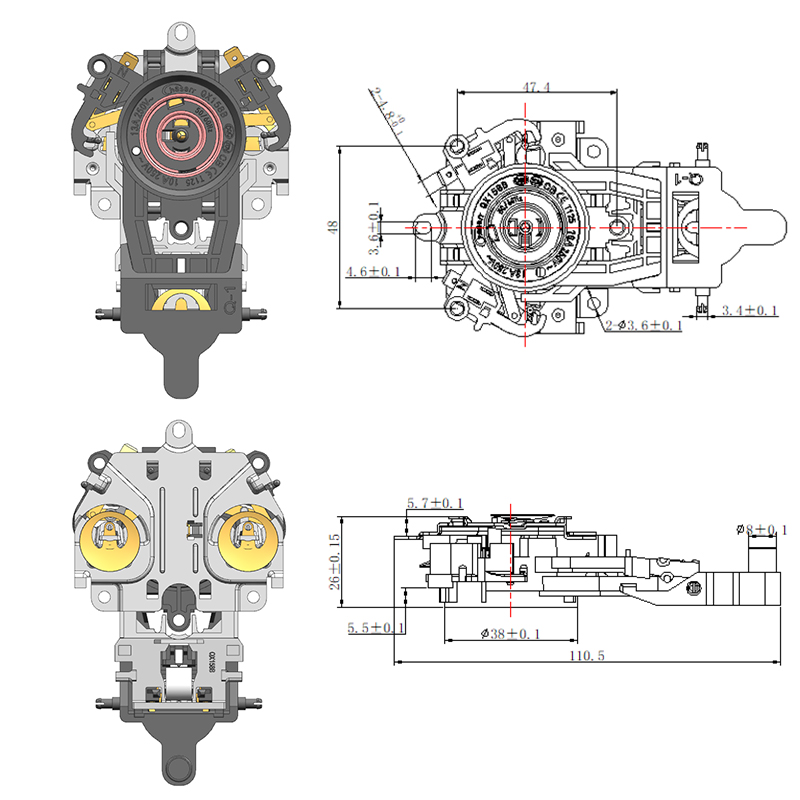
Featured Products


-
No. 2892, Ningkang East Road, Tiancheng Industrial Zone, Yueqing City, Zhejiang Province
-
 Email: Una@chaserr.cc
 -
 Phone: +86-13075775533
- GET IN TOUCH

Electric Kettle Thermostat Coupler Manufacturer