English
  中文简体
中文简体  Español
What a Kettle Base Connector Does and Why It Matters
Anyone who has pulled an electric kettle off its stand only to watch it stop heating knows the frustration firsthand. Nine times out of ten, the culprit hides in a small, overlooked part: the Kettle Base Connector. This little component bridges the gap between the power source and the heating element, and when it wears out, the whole appliance stops working. Understanding what it does, how it fits together, and why it fails can save manufacturers and repair teams a good deal of guesswork.
Why This Small Part Carries So Much Responsibility
Cordless kettles rely on a separated design. The body holds the water and the heating coil, while the base sits on the counter connected to the wall outlet. Something has to carry electricity across that gap every time the kettle gets lifted and set back down, sometimes dozens of times a day in a busy kitchen.
That job falls to a set of contact points built into both the base and the underside of the kettle. Together they form a connection that has to survive constant lifting, tilting, occasional water splashes, and years of daily use without ever giving out mid-boil.
What Does It Actually Look Like?
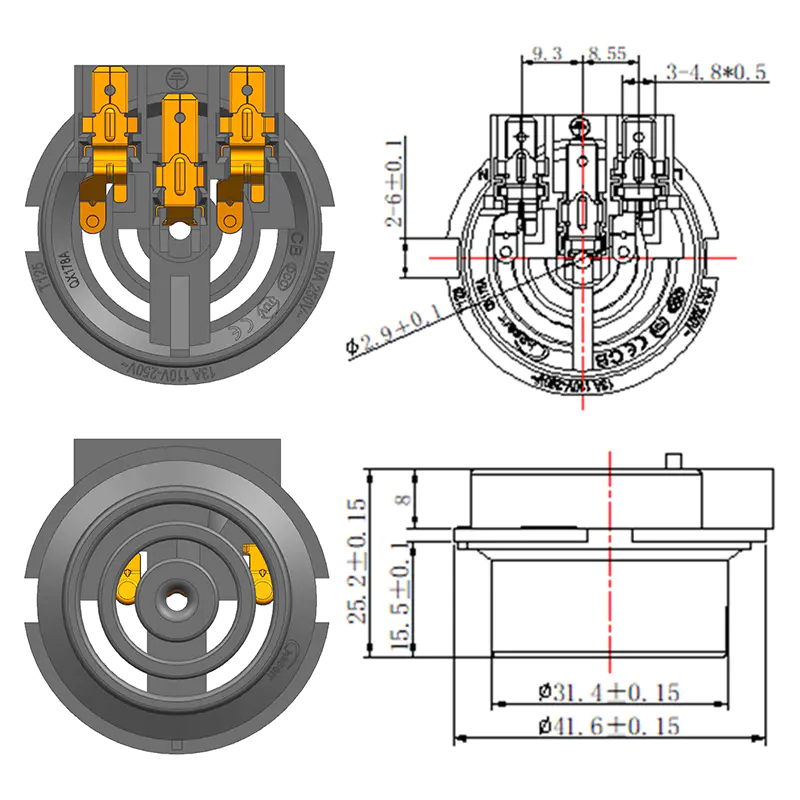
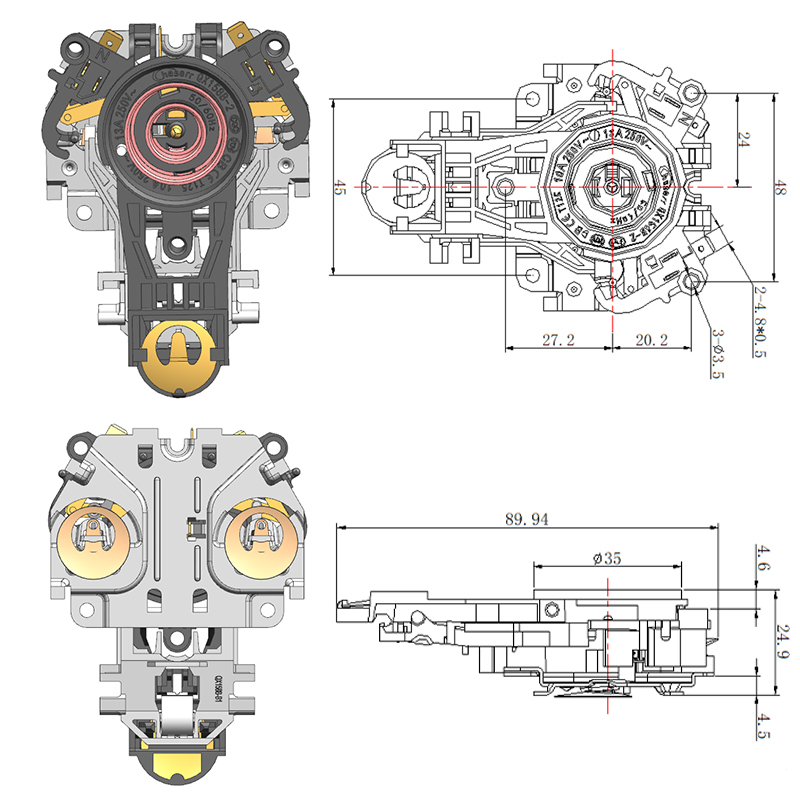
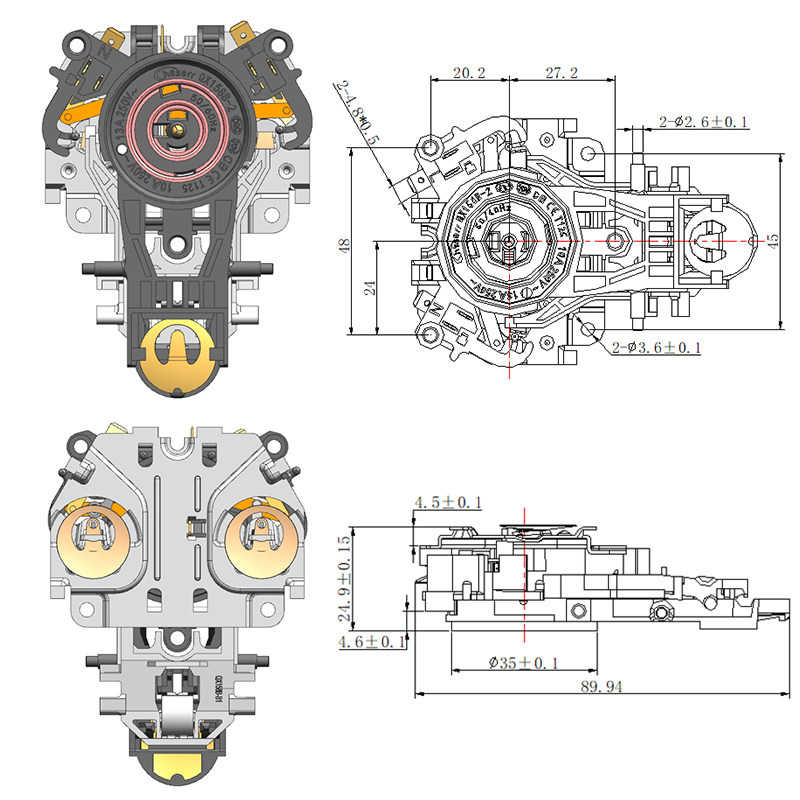
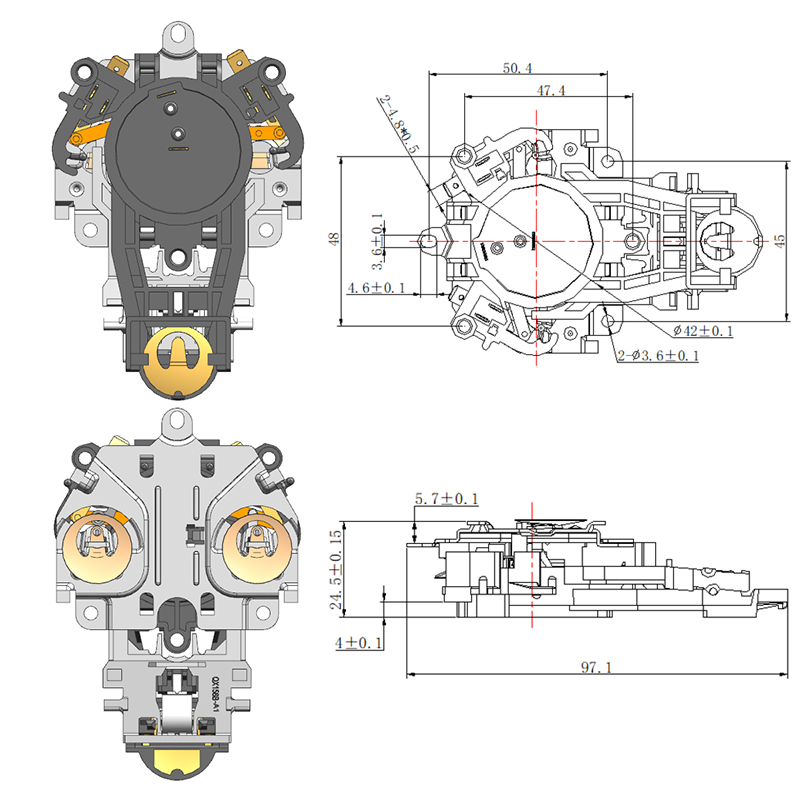
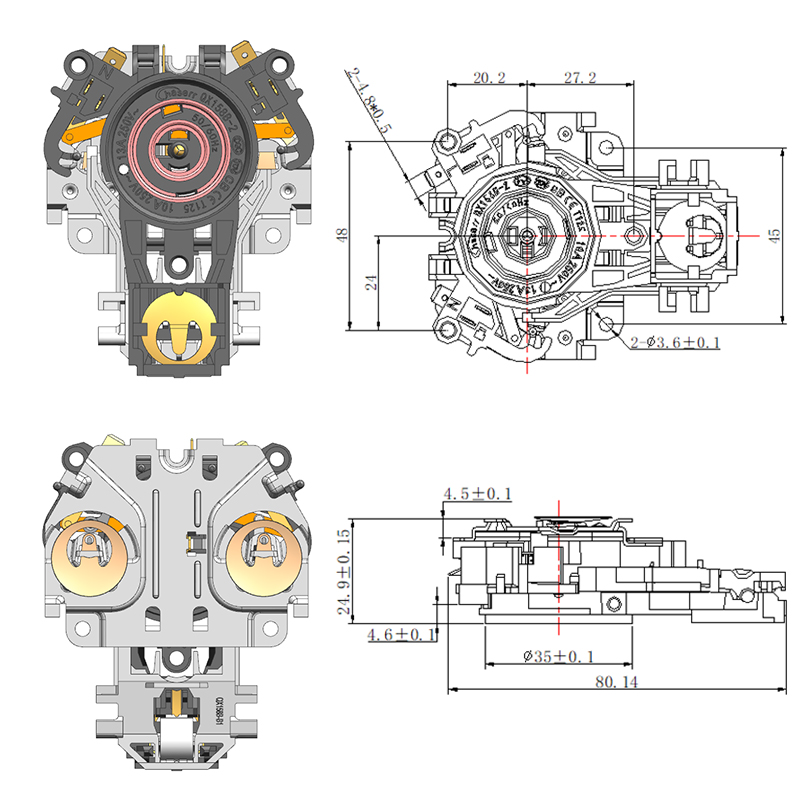
Picture a circular fitting on the bottom of the kettle body, paired with a matching set of raised metal contacts on the base. When the kettle sits down properly, those contacts touch, closing the circuit. Lift the kettle away, and the connection breaks instantly, which is exactly why cordless kettles never shock anyone when you pour.
How Power Actually Travels From Base to Body
Electricity does not care much about elegance, but the path it takes here is worth understanding. Current flows from the wall socket into the base, through the fixed contact points, across to the matching contacts on the kettle body, then into the heating element itself.
A few things need to happen correctly for this to work without a hitch:
- The contacts need to align precisely every time the kettle is placed down
- The metal surfaces need enough spring tension to maintain contact under slight vibration
- The housing around the contacts needs to stay sealed against occasional moisture
- The overall assembly needs to tolerate repeated thermal cycling without warping
Miss any one of these, and the kettle either stops heating altogether or heats inconsistently, which is often more annoying than a full failure because it is harder to diagnose.
Is a Base Coupler the Same Thing as a Connector?
This question comes up constantly, and the honest answer is: mostly yes, with a slight distinction depending on who you ask. A base coupler generally refers to the entire mechanical and electrical assembly that joins the two halves, while a connector sometimes refers more narrowly to the contact pins themselves.
In everyday conversation among appliance engineers, the terms blend together. Ask for an electric kettle base coupler at a components supplier and you will usually get shown the same part as if you had asked for a connector. The distinction matters more in technical drawings than in daily sourcing conversations.
Why the Terminology Gets Blurry
Manufacturers do not always standardize naming across product lines. A part labeled as a coupler in one catalog might appear as a connector assembly in another, even though the internal structure is nearly identical. Buyers sourcing components should focus on the physical specifications and fit rather than getting hung up on which word a supplier uses.
Breaking Down the Coupler Function in Plain Terms
Strip away the technical language, and the coupler function boils down to three simple jobs it has to perform, day after day, without complaint.
- Complete the circuit the moment the kettle is placed on its base
- Break the circuit cleanly the instant the kettle is lifted away
- Resist wear from repeated contact, moisture exposure, and heat radiating from the kettle body
Nothing fancy, really. But doing all three reliably, thousands of times, without corroding or loosening, turns out to be harder than it sounds. Cheap materials or sloppy tolerances show their weaknesses within months rather than years.
Coupler Working: What Happens Step by Step
Walking through the process helps clarify why even a slightly bent contact pin can cause a kettle to misbehave.
Step one — The kettle is placed onto the base, and the contact pins on the base meet the corresponding plates on the kettle underside.
Step two — Physical pressure, usually from spring-loaded pins, keeps the contacts pressed together despite minor shifting.
Step three — Current flows through the closed circuit into the heating element, which begins warming the water.
Step four — Once the water reaches the set temperature, a thermostat or control circuit interrupts the flow, often independently of the base connector itself.
Step five — Lifting the kettle separates the contacts instantly, cutting power before the base is ever exposed to a live current.
That last step deserves particular attention, since it is a core safety feature. Without a clean break on lift-off, exposed live contacts on a kitchen counter would be a serious hazard.
Common Signs That the Connector Is Wearing Out
Kettles rarely fail without warning. There are usually small clues beforehand, and recognizing them early can prevent a returned product complaint from turning into a warranty dispute.
- The kettle needs to be repositioned several times before it starts heating
- Water heats more slowly than it used to, suggesting intermittent contact
- A faint burning smell appears near the base, hinting at contact overheating from resistance buildup
- The kettle occasionally shuts off mid-cycle for no obvious reason
- Visible discoloration or pitting appears on the metal contact points
Any one of these symptoms points toward degraded contact quality, and ignoring them usually leads to complete failure sooner rather than later.
Comparing Common Connector Types Used in Production
Different manufacturers lean toward different contact designs depending on cost targets and expected product lifespan. Here is a general comparison of the approaches commonly seen in production runs.
| Connector Type | Contact Material | Typical Durability | Common Use Case |
|---|---|---|---|
| Flat plate contact | Nickel-plated brass | Moderate wear resistance | Budget-tier kettles |
| Spring pin contact | Stainless alloy | Holds tension longer | Mid-range consumer kettles |
| Sealed ring contact | Coated copper alloy | Better moisture resistance | Premium and commercial units |
| Dual-point contact | Mixed alloy composite | Redundant connection points | Heavy daily-use appliances |
None of these options works perfectly for every product line. A budget kettle destined for light home use does not need the same contact durability as a unit meant for a busy office break room running through dozens of boil cycles daily.
What Should Buyers Test Before Placing a Bulk Order?
Sourcing this component in volume is not the same as picking one off a hardware store shelf. A few checks tend to separate a dependable supplier from one that will cause headaches down the line.
Does the Sample Hold Up Under Repeated Cycling?
Ask for samples and test them through repeated cycles, lifting and placing the kettle to simulate long-term use within a shorter evaluation period. Weak contacts may show looseness or unstable connections during repeated operation.
Coupler Testing Should Include Moisture Exposure
Kitchens are wet environments. Splashes happen. A connector that performs fine in a dry lab setting can behave very differently once exposed to condensation or accidental spills. Request documentation or run independent moisture exposure testing before committing to a large order.
Are Tolerances Consistent Across Production Batches?
A single well-made sample proves very little if the factory cannot replicate that quality across thousands of units. Ask for batch samples pulled at different points in a production run, not just a hand-selected showroom piece.
Where This Component Fits Into the Bigger Appliance Picture
The kettle connector rarely gets much attention in marketing materials, overshadowed by features like exterior finish or boiling speed. Yet it is one of the few parts that gets mechanical stress every single time the product is used. A stylish kettle with a weak base coupler will frustrate customers far faster than a plain-looking one with a solid connection system.
For appliance brands and OEM buyers, this makes the connector one of those parts worth scrutinizing closely rather than treating as an afterthought during sourcing. The Kettle Base Connector might be small, but it sits at the exact point where electrical reliability and everyday mechanical wear intersect, and getting that part wrong tends to generate a disproportionate share of customer complaints and warranty claims relative to its size.
Buyers evaluating suppliers for this component, or looking to source a dependable electric kettle base coupler for an upcoming production run, often benefit from working with a manufacturer that understands both the electrical and mechanical demands this part faces daily. Wenzhou Qianxun Electrical Technology Co., Ltd. works with appliance producers and component buyers on exactly this kind of connector sourcing, offering samples and batch testing support for teams that want to verify reliability before committing to a full order. Reach out to discuss specifications, request testing samples, or talk through production timelines for your next kettle component order.
Featured Products


-
No. 2892, Ningkang East Road, Tiancheng Industrial Zone, Yueqing City, Zhejiang Province
-
 Email: Una@chaserr.cc
 -
 Phone: +86-13075775533
- GET IN TOUCH

Electric Kettle Thermostat Coupler Manufacturer