An electric kettle stops heating before the water boils. Another kettle heats intermittently, cycling on and off for no clear reason. A third kettle sits correctly on its base but does not turn on at all. Many people throw away a perfectly good kettle because they do not understand what failed. The problem often hides in a small component called a Thermostat Coupler. This part connects the kettle body to the base, carries electricity, and communicates temperature information to the heating control system.
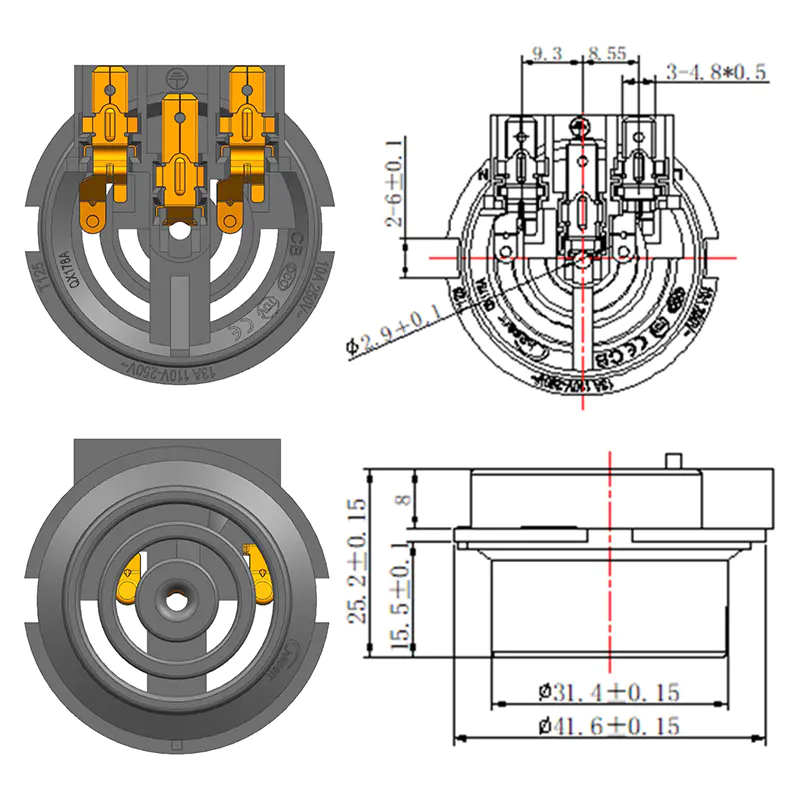
Knowing how this component works helps a technician diagnose failures correctly. It helps a manufacturer select reliable parts. It helps a repair person find a compatible replacement. A Thermostat Coupler is not just a simple plug. It is a carefully designed interface that handles both electrical power and thermal sensing signals. The following sections explain what a Thermostat Coupler is, how it works, and why kettles cannot function safely without it.
Understanding the Thermostat Coupler in Electric Kettles
A Thermostat Coupler sits at the bottom of an electric kettle body. It connects to a matching Base Coupler located on the power base. When someone places the kettle onto its base, these two halves come together. Electrical contacts touch. A signal path for temperature sensing also connects.
Why the Coupler Is More Than a Simple Connector
A simple electrical connector only transfers power. A Thermostat Coupler does more. It carries low voltage signals from a temperature sensor inside the kettle. Those signals tell the base whether the water has reached boiling temperature. The base then cuts power to prevent overheating or dry boiling. A coupler also provides a detachable connection that can be disconnected and reconnected many times. Kettles are lifted and placed back on their bases frequently. The coupler must survive this repeated action without wearing out or losing contact quality.
How It Fits Into the Kettle System Architecture
An electric kettle contains a heating element, a temperature sensor, and a control board or bimetallic thermostat. The base contains the power cord and sometimes additional control electronics. The Thermostat Coupler bridges the gap between these two assemblies. It provides a physical pathway for electricity to reach the heating element. It also provides a pathway for temperature information to travel back to the switching mechanism. Without this coupler system, the kettle body would need a permanently attached cord. That design would be less convenient and harder to clean. The coupler enables cordless convenience while maintaining safety control.
How the Thermostat Coupler Works (Coupler Working Principle)
The working principle of a Thermostat Coupler involves two separate circuits running through the same connector. One circuit carries main power to the heating element. The other circuit carries low voltage or dry contact signals from the temperature sensor.
Step-by-Step Energy Transfer Process
When a user places the kettle onto its base, the coupler halves align. Spring loaded contacts press together. Power flows from the base through the coupler into the kettle. The heating element begins warming the water. Inside the kettle, a temperature sensor continuously measures water temperature. This sensor connects back through the coupler to a control device. Once the water reaches boiling point, the sensor changes state. That change travels through the coupler to the base. The control device then opens a relay or trips a bimetallic switch. Power stops flowing. The kettle shuts off.
Role of Thermal Feedback in Operation
Thermal feedback is the information loop that tells the system when to stop heating. The coupler must transmit this feedback reliably. A poor connection in the signal path may cause the control device to never receive the shut off command. The kettle would continue heating past the boiling point. Water would boil away. The heating element could be damaged. A well designed coupler keeps the signal path separate from the power path. Interference between the two circuits could cause false signals. False signals might shut off the kettle too early or prevent it from shutting off at all.
| Coupler Function |
Electrical Role |
Thermal Role |
| Power transfer |
Carries current to heating element |
None directly |
| Signal transfer |
Carries low voltage temperature data |
Enables shut off coordination |
| Contact alignment |
Ensures stable electrical connection |
Prevents arcing and overheating |
| Insulation |
Separates power and signal paths |
Protects user from shock |
| Wear resistance |
Maintains contact quality over many cycles |
Prevents false shut off signals |
Function of the Kettle Base Connector System
The base connector is the half of the coupler system located in the power base. It contains the receiving contacts for power and signal. It also provides a stable platform for the kettle to sit on.
Why Stable Base Connection Is Critical
A kettle base does not simply hold the kettle. It must keep the coupler contacts aligned even when the kettle is bumped or rotated. The base connector often includes a central guide pin or alignment ring. This feature ensures that the kettle seats correctly regardless of orientation. Stability also affects contact pressure. Contacts that do not press together firmly cause resistance. Resistance creates heat. Heat degrades the contacts over time. Degraded contacts cause intermittent failures. A stable base connector maintains consistent contact pressure across many placement cycles.
How Misalignment Affects Performance
If the base connector or the kettle coupler becomes misaligned, several problems occur. The kettle may not heat at all because power contacts fail to meet. The kettle may heat only when held at a certain angle. The temperature signal may be interrupted, causing the kettle to boil continuously without shutting off. Misalignment often happens from physical damage. Dropping the base, bending the central guide pin, or deforming the kettle bottom all cause alignment problems. Regular inspection of both coupler halves helps catch these issues early.
Thermostat Connector and Safety Control Mechanism
Safety in an electric kettle depends entirely on the Thermostat Coupler Working correctly. A failure in the connector can turn a safe appliance into a hazard.
HS
How the Thermostat Prevents Heating Failure
The thermostat in a kettle monitors water temperature. When the water reaches boiling point, steam travels through a duct to a bimetallic strip. That strip bends and trips a switch. The switch opens the circuit. Power stops. The kettle turns off. The coupler carries the switch signal from the kettle body to the base. Without a reliable signal path, the switch cannot control the base relay. The heating element would stay on even after the water boils away. This condition is called dry boiling. Dry boiling damages the kettle and creates a fire risk.
CS
Why Safety Depends on Connector Stability
Any interruption in the signal path prevents safe shut off. A cracked housing, worn contacts, or loose wiring inside the coupler all cause signal loss. The user may notice nothing wrong until the kettle fails to shut off one day. Safety also depends on insulation between the power and signal circuits. High voltage from the heating circuit should never reach the low voltage signal lines. That condition could send dangerous voltage to parts of the kettle a user might touch. Quality couplers maintain separation between these circuits throughout the life of the appliance.
CF
Common Problems Caused by Coupler Failure
Coupler failure shows up in several ways. Some failures are obvious. Others are subtle and hard to diagnose. Oxidation on contact surfaces increases electrical resistance. Higher resistance creates heat. Heat accelerates oxidation. The cycle continues until the contacts stop conducting entirely. The kettle may work intermittently. Tapping the base or wiggling the kettle temporarily restores function. The user thinks the problem is somewhere else. Contact wear also causes failure. Each time the kettle lifts off the base, the contacts slide against each other. Over many years, the contact material wears down. Worn contacts no longer press together firmly. Arcing occurs when the circuit opens under load. Arcing burns the contact surface and creates carbon deposits.
Coupler Testing Methods in Manufacturing
Before a Thermostat Coupler leaves a factory, it undergoes several checks. These tests ensure the component will perform safely over many heating cycles. A manufacturer that skips testing risks failures in the field.
Electrical Continuity Testing
A continuity test checks whether current flows through the intended path without interruption. A machine probes each contact point and measures resistance. Acceptable resistance values are very low. High resistance indicates a poor crimp, loose connection, or damaged contact. Couplers that fail this test are rejected before they reach assembly lines. Continuity testing also verifies that no unintended paths exist between circuits. The power circuit should remain completely separate from the signal circuit. A short between these circuits would send high voltage into the low voltage signaling system.
Durability Cycle Testing
A kettle coupler faces many insertion and removal cycles during its life. A lab machine simulates years of use in a short time. The coupler mates and unmates thousands of times. After each set of cycles, technicians measure contact resistance and inspect for wear. A coupler that maintains stable contact resistance after many cycles performs well. A coupler that shows increasing resistance or visible wear needs design improvement. Durability testing also reveals weak points in the housing or contact retention system.
Heat Resistance Testing
The coupler sits close to the kettle heating element. Some heat reaches the connector. A heat resistance test exposes the coupler to temperatures higher than normal operation. The housing should not melt, deform, or discolor. Contacts should not loosen or oxidize faster at elevated temperatures. This test also checks the insulation material. Plastics used in coupler housings must withstand heat without releasing smoke or losing structural strength. A material that softens at operating temperature allows contacts to shift out of alignment.
Alignment Verification
Each coupler must fit correctly with a standard base connector. A gauge checks whether the coupler engages and disengages smoothly. A coupler that sticks or requires excessive force to remove may damage the base over time. A coupler that feels loose may have poor contact pressure. Alignment verification also checks the central guide features. A bent or off center guide prevents proper mating. The kettle would rock on the base or fail to make electrical contact.
Thermostat Coupler vs Standard Electrical Connectors
A person looking at a kettle coupler might think it looks like any other connector. A round shape with a few pins. Similar to some audio or power connectors. The resemblance is superficial.
Coupler vs Generic Connector — Key Differences
Thermostat Coupler
- Dual-circuit design: power + temperature signal
- Heat-resistant housing material
- Large, robust contacts for high current
- Integrated safety shut-off function
Generic Standard Connector
- Single-purpose: power or signal only
- Ordinary plastic, softens under heat
- Thin contacts, unsuitable for high current
- No thermal safety integration
Standard connectors are designed for signal transmission or general power delivery. They do not account for the unique demands of a kettle. High operating temperature, steam exposure, and frequent mating cycles require special design. A kettle coupler also carries a safety function. It must work with the thermostat to shut off power at the right moment. A generic connector has no provision for a separate temperature signal path. Using one would bypass the safety control system. The housing material differs as well. A standard connector uses ordinary plastic. A kettle coupler uses heat resistant material that maintains strength at elevated temperatures. Ordinary plastic would soften and deform over time.
Kettle coupler contacts are larger and more robust than signal connector contacts. They carry substantial current without overheating. The contact surface uses materials that resist oxidation at high temperatures. Standard signal contacts use thin plating suitable for low current, dry circuits. Those contacts would overheat and fail quickly in a kettle application. The plating would wear through after a few hundred cycles, exposing base metal that corrodes rapidly.
Materials and Design Considerations
The choice of materials affects every aspect of coupler performance. A small change in contact plating or housing resin changes how the part behaves over time.
CM
Conductive Material Selection
Contacts inside a Thermostat Coupler carry electrical current. The base metal must conduct well and resist fatigue. Brass and copper alloys are common choices. These metals strike a balance between conductivity, strength, and cost. Plating protects the base metal from oxidation. Nickel and tin platings are used in many couplers. The plating must withstand high temperatures and many cycles without wearing through. A plating that flakes or wears away exposes the base metal to corrosion. Corroded contacts increase resistance and generate heat.
HD
Heat-Resistant Housing Design
The plastic housing holds the contacts in position. It must maintain its shape at temperatures found near a kettle heating element. Common materials include thermoset plastics and high temperature thermoplastics. These materials do not soften or creep under heat. The housing also provides insulation between the power and signal circuits. Creepage and clearance distances must be sufficient to prevent arcing or leakage current. A well designed housing keeps these distances even after years of thermal cycling.
WR
Wear Resistance Requirements
Each insertion and removal cycle wears the contact surfaces slightly. The coupler must survive many cycles without failure. Hard platings and well designed contact geometries resist wear. A rounded contact shape wears more slowly than a sharp edge. The housing also experiences wear. Plastic surfaces that guide the coupler into place should not shed debris. Worn plastic particles inside the connector could interfere with contact mating or create fire risk.
Replacement and Compatibility of Base Couplers
A kettle Base Coupler that fails may need replacement. Finding the correct part requires attention to detail.
Identifying Correct Kettle Base Connector
The coupler must match the original in dimensions, contact arrangement, and electrical rating. A coupler that looks similar but has different contact spacing may not seat properly. The kettle might not sit flat on the base. Electrical ratings matter. A replacement coupler must handle the same current and voltage as the original. Undersized contacts overheat. Oversized contacts may not fit the existing base.
Compatibility Issues Across Models
Different kettle manufacturers use different coupler designs. Even within one brand, older models may use different parts than newer ones. A coupler from one brand rarely fits another brand's base. Some aftermarket couplers claim universal fit. These parts often compromise on contact quality or heat resistance. A universal coupler may work for a short time then fail. The failure mode could be dangerous if the coupler fails in the closed position.
Risks of Using Incompatible Couplers
Installing an incompatible coupler creates several risks. The kettle may not shut off at boiling. Water could boil away completely, damaging the heating element. The housing might melt if the plastic cannot handle the temperature. Poor contact fit causes arcing and heat. Arcing produces carbon deposits that increase resistance further. Eventually the contacts weld together or burn open. A welded contact leaves the kettle stuck in the on position. That condition creates a fire hazard.
Role of Thermostat Coupler in Overall Kettle System Efficiency
A coupler that works well does not draw attention to itself. The kettle heats, boils, and shuts off as expected. Efficiency comes from reliable operation.
Why Coupler Stability Improves Appliance Lifespan
Stable contact resistance means less heat generation inside the coupler. Less heat means less stress on the plastic housing and contact platings. The coupler lasts longer. The kettle lasts longer. A stable signal path ensures the thermostat works correctly every time. No false shut offs. No missed shut offs. The heating element cycles only when needed. Unnecessary heating cycles waste energy and wear out components.
Energy Transfer Consistency
Consistent energy transfer means the kettle heats water in a predictable time. Variations in coupler resistance cause variations in heating power. A high resistance coupler delivers less power to the heating element. The kettle takes longer to boil. Users may think the kettle is failing when only the coupler is worn. A clean, stable coupler transfers nearly all available power to the heating element. Energy does not get wasted as heat inside the connector. The appliance operates as designed.
Misunderstandings About Kettle Connectors
Many people underestimate the importance of this small component. Some assume any connector will work. Others ignore signs of coupler wear until the kettle fails completely.
M1
The "It Is Just a Plug" Misconception
A plug and socket arrangement looks simple. The function seems straightforward. The reality is more complex. A Thermostat Coupler integrates power delivery, signal transmission, and safety control into one small package. Replacing it with a generic part removes the safety function.
M2
Ignoring the Thermal Role
Some people focus only on electrical conductivity. They forget that the coupler sits in a hot environment. Material choice matters. A coupler that conducts electricity well but melts at operating temperature is useless.
M3
Underestimating Wear Impact
A coupler that works perfectly for years can fail gradually. Contact wear increases resistance slowly. The user may notice the kettle taking longer to boil. The temperature signal may become intermittent. The kettle may shut off before boiling or not shut off at all. Regular inspection prevents unexpected failure.
Key Takeaways on Thermostat Coupler Function
A Thermostat Coupler is not a simple connector. It serves as an electrical and thermal interface that enables safe heating cycles in an electric kettle. Power travels through the coupler to the heating element. Temperature information travels back through the same coupler to the shut off mechanism. Without reliable signal transfer, the kettle cannot know when to stop heating.
The coupler prevents overheating failures by carrying the thermostat shut off command from the kettle body to the base. A stable signal path ensures the kettle stops at the right moment every time. An unstable path creates risk of dry boiling or continuous heating.
Material choice and design geometry determine how long a coupler performs reliably. Heat resistant housings, oxidation resistant contacts, and durable plating all contribute to long service life. Testing during manufacturing catches defects before they reach finished appliances.
The coupler connects the kettle body and base system together into one functional appliance. A poor coupler makes a good kettle perform badly. A good coupler makes an ordinary kettle perform reliably for many years.
Electric kettles rely on hidden interface engineering, not just heating elements. The Thermostat Coupler sits at the center of that engineering. Every boil, every shut off, every safe use depends on this small component working correctly. For anyone repairing kettles, selecting replacement parts, or designing new products, understanding the Coupler Function is not optional. It is necessary. Examine the coupler in your kettle. Look for signs of wear, discoloration, or loose contacts. A small inspection now prevents a larger failure later. For reliable Thermostat Coupler components and expert guidance, consider Wenzhou Qianxun Electrical Technology Co., Ltd. as a resource for quality Kettle Connector solutions.

 English
  中文简体
中文简体  Español


 Email: Una@chaserr.cc
 Phone: +86-13075775533