English
  中文简体
中文简体  Español
How to Test Electric Kettle Base Coupler Quality Safely?
An electric kettle that stops heating without warning, a base connection that feels loose when the kettle is placed on it, or an automatic shut-off that no longer triggers at the right moment — these are symptoms that frustrate engineers, repair technicians, and procurement teams alike. The cause is often not the heating element itself but the Thermostat Coupler or kettle base connector that links the kettle body to its power base. Choosing the right Thermostat Coupler matters for safety, performance, and long-term product reliability, and yet it is one of the more commonly overlooked components in both manufacturing and maintenance contexts.
What Is a Thermostat Coupler?
Defining the Component and Its Position in the Kettle System
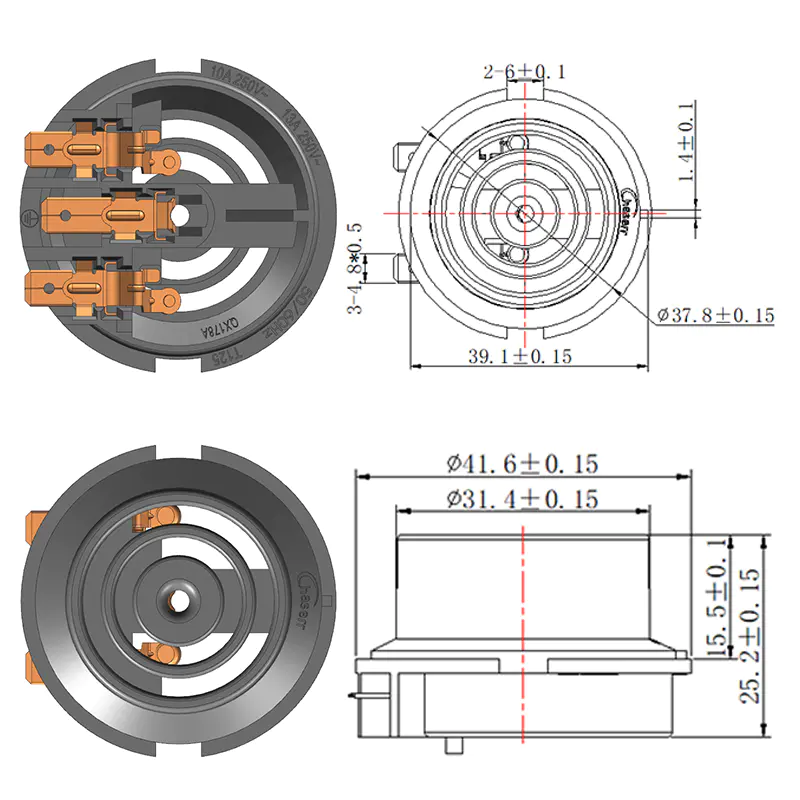
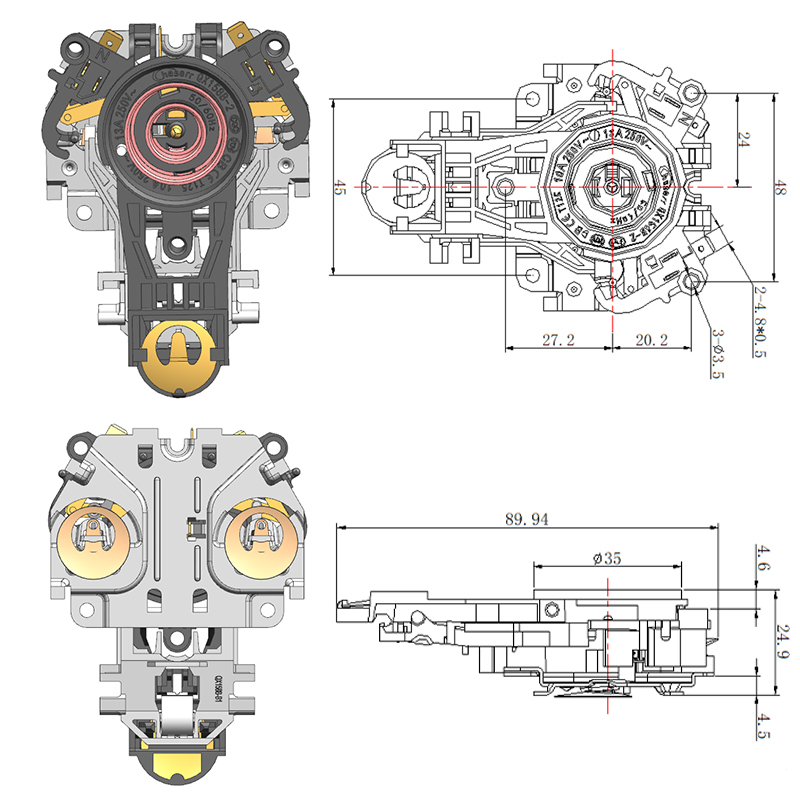
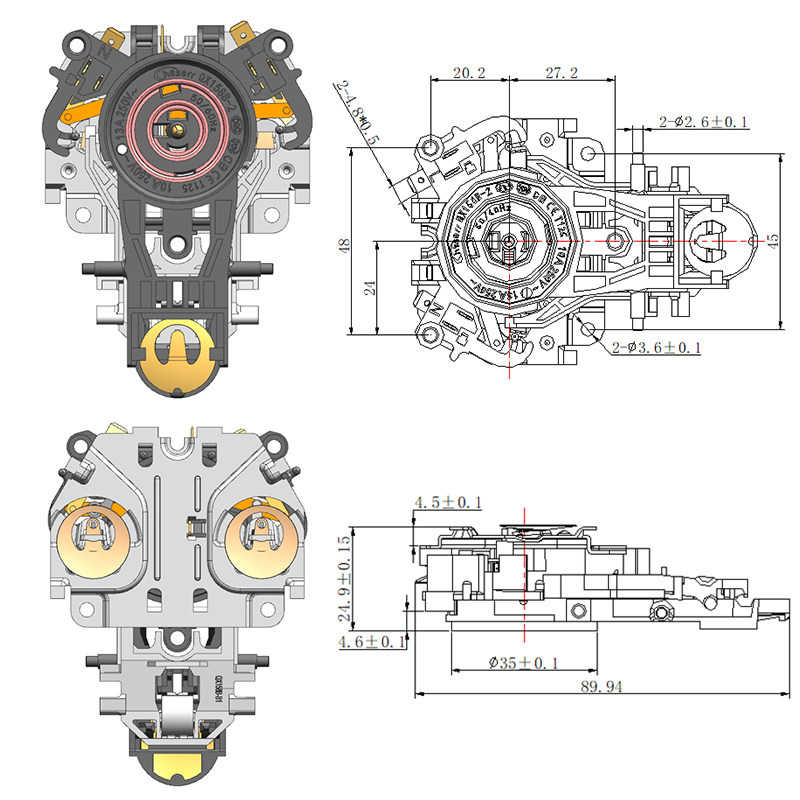
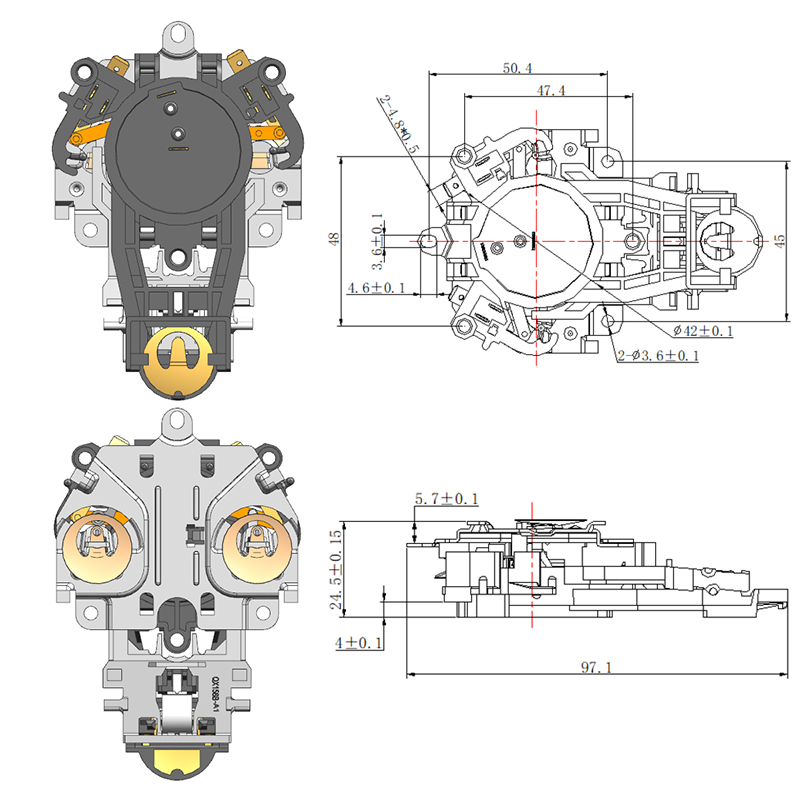
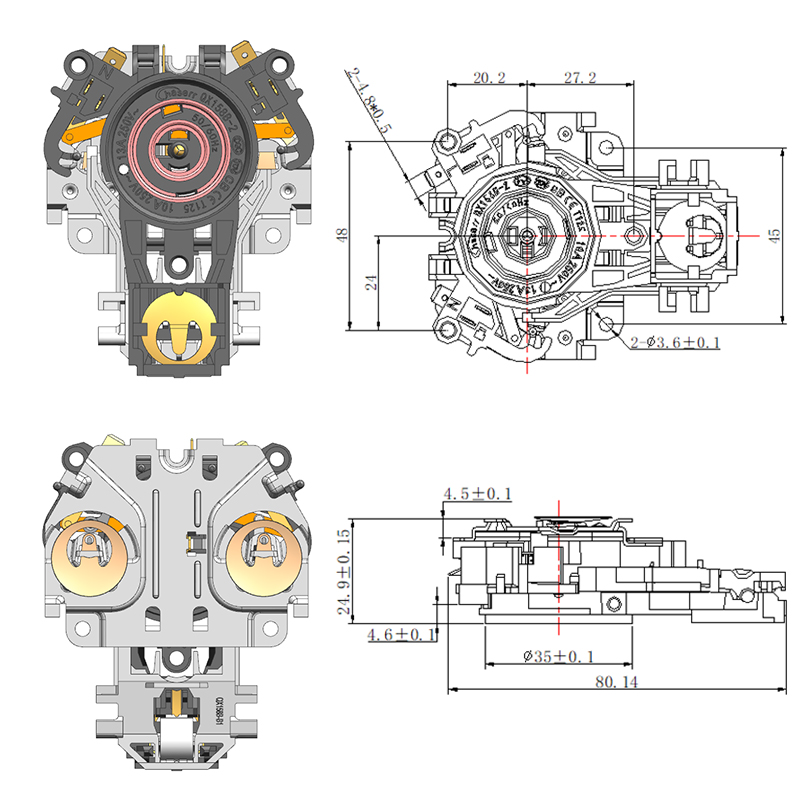
A Thermostat Coupler is the electrical interface component that connects the body of an electric kettle to its power base. It bridges the supply side — the base unit plugged into mains power — and the kettle's internal heating and thermostat circuitry. Without a functioning coupler, no electrical connection exists between the two parts of the appliance, regardless of how well everything else is assembled.
In physical terms, the coupler typically sits at the base of the kettle body. One half is embedded in the kettle bottom; the matching half is built into the power base. When the kettle is placed on the base, the two halves connect and complete the circuit.
Where the Coupler Sits in the Electrical Path
The coupler is not simply a passive connector. It sits at the junction between the external power supply and the internal components — the thermostat, the heating element, and in many designs the safety shut-off mechanism. Every watt of power that heats the water passes through it. That central position makes its electrical integrity critical.
Kettle Connector design has evolved considerably, and the coupler now carries both power and functional responsibilities that a basic terminal block could not adequately serve. The interaction between coupler quality and overall kettle reliability is direct and measurable.
How the Coupler and Thermostat Work Together
The thermostat inside an electric kettle monitors water temperature and triggers disconnection when the target threshold is reached. The coupler is the component through which that signal, and the corresponding power cutoff, is physically executed. When the two work in coordination, the kettle heats reliably and shuts off cleanly. When the coupler degrades — through contact wear, heat cycling, or poor initial specification — the thermostat's ability to function correctly is compromised even if the thermostat itself is intact.
What Does a Thermostat Coupler Do?
Power Transmission Function
At its core, the coupler transmits electrical current from the base to the kettle's heating circuit. That transmission needs to be consistent, low-resistance, and stable across thousands of connection cycles. Poor contact at this interface causes resistance heating at the connection point — which wastes energy, generates unwanted heat, and accelerates wear on the contact surfaces.
The coupler function here is deceptively straightforward: maintain a clean, stable electrical path. Achieving that over a long service life under real-world conditions is where design and material quality become decisive.
Thermostat Support Function
The coupler also carries the control signals that allow the thermostat to do its job. In many kettle designs, the thermostat mechanism is housed partly within the kettle body and interfaces with the base through the coupler. If the coupler's contact surfaces become oxidized, pitted, or mechanically inconsistent, the thermostat signal becomes unreliable — producing erratic shut-off behavior or no shut-off at all.
Safety Protection Function
Overtemperature protection in electric kettles depends on the entire circuit functioning within specification. A degraded electric kettle Base Coupler can defeat safety protections not by causing a direct fault but by introducing intermittent or high-resistance contact that distorts how the safety circuit reads the system state. This is why coupler condition is part of any thorough appliance safety evaluation.
Mechanical Coupling Function
Beyond the electrical functions, the coupler provides the mechanical interface between kettle and base. It needs to seat consistently, resist rocking, and maintain contact alignment across a range of placement angles. Many modern designs support full rotational placement — allowing the kettle to be picked up and set down in any orientation — which adds mechanical complexity to a component that must also perform electrically under load.
How Does a Thermostat Coupler Work?
The Electrical Contact Process
When the kettle is placed on the base, the male and female halves of the coupler engage. Spring-loaded or shaped contacts on one side press against fixed contacts on the other, completing the circuit. The contact pressure needs to be high enough to ensure low resistance but not so high that it causes mechanical wear faster than the design accounts for.
Contact geometry, surface material, and spring tension all affect how reliably this engagement happens. Couplers designed for higher-cycle life use contact geometries that wipe the surface slightly on engagement, removing surface oxidation that would otherwise increase resistance over time.
Current Flow Between Base and Kettle
Once engaged, current flows from the base supply terminals through the coupler contacts and into the kettle's internal wiring. The path continues to the heating element, where it converts to thermal energy. The coupler's job during this phase is to maintain the connection without adding meaningful resistance. Even a modest increase in contact resistance generates localized heating at the junction — which is both a performance issue and a potential safety concern in sustained use.
Interaction With Automatic Shut-Off Systems
When the thermostat detects that boiling temperature has been reached, it triggers the shut-off mechanism. In many kettle designs, part of this mechanism operates mechanically through the coupler interface. Steam pressure or thermal actuation deflects a bimetallic element, which disengages part of the contact assembly and breaks the circuit. The coupler working in this mode is not passive — it is actively involved in the shut-off sequence, and its mechanical condition directly affects whether that sequence executes reliably.
Common Signs of Thermostat Coupler Problems
Kettle Does Not Heat
When a kettle sits on its base and gives no sign of heating—no sound, no warmth, no indicator light—the coupler connection is among the items to check. A faulty contact on either side of the base coupler stops current from reaching the heating element altogether.
Power Connection Becomes Intermittent
A kettle that heats inconsistently, or that only works when the kettle is repositioned on the base, often has worn or corroded coupler contacts. The physical connection exists, but it is not stable enough to maintain consistent electrical contact under normal use conditions.
Automatic Shut-Off Stops Working
When the kettle boils dry or fails to shut off at the correct temperature, the problem may lie not in the thermostat itself but in the coupler's ability to execute the shut-off signal. Worn contact surfaces can prevent the mechanical shut-off action from completing fully.
Visible Wear or Burn Marks
On inspection, coupler contacts showing discoloration, pitting, or carbonized residue indicate that arcing or sustained high-resistance contact has occurred. These are not cosmetic issues — they represent electrical degradation that will worsen without intervention.
Loose Base Connection
If the kettle rocks or shifts on the base during use, the mechanical fit between the two coupler halves has deteriorated. This affects both electrical contact reliability and user safety, since a poorly seated kettle can tip more easily.
How to Test a Thermostat Coupler
Visual Inspection
Begin with a close look at both halves of the coupler. Check for discoloration around the contacts, any signs of melting or distortion in the housing, and the condition of the contact surfaces themselves. Oxidation appears as a dull or dark coating on what should be bright metal surfaces. Burn marks indicate past arcing.
Clean, undamaged contacts with consistent surface appearance are a positive sign. Any visible damage is grounds for further electrical testing or replacement.
Checking Electrical Contacts
With the kettle unplugged and the base disconnected from mains power, examine the contact pins or plates physically. They should be firm, properly aligned, and spring back smoothly if deflected. Contacts that feel loose, that do not return to position after deflection, or that show surface irregularities have likely reached the end of their reliable service life.
Continuity Testing
Using a multimeter set to continuity mode, test whether a complete circuit can be established through the coupler when the kettle is seated on the base. No continuity, or continuity that appears and disappears with minor movement, confirms a contact problem at the coupler interface. This coupler testing step should be part of any systematic appliance fault diagnosis process.
Evaluating Mechanical Stability
Place the kettle on the base and observe how it seats. There should be no play or rocking, and the kettle should not shift when picked up at an angle and replaced. Any instability in the mechanical connection will also manifest as electrical instability under use conditions.
When Replacement Is Necessary
Visible damage, failed continuity testing, or intermittent contact behavior all indicate that replacement rather than cleaning or adjustment is the appropriate response. Attempting to restore function in a mechanically or electrically degraded coupler introduces ongoing reliability risk that replacement eliminates.
Different Types of Kettle Connectors and Base Couplers
Standard Kettle Connector
The standard Kettle Connector uses a fixed orientation — the kettle must be placed in a specific position relative to the base. These designs are simpler and suited to lower-cost kettle models where manufacturing cost is the driving constraint. Contact reliability is adequate for the expected cycle life of the product.
360-Degree Base Coupler
Rotational Base Couplers allow the kettle to be placed and picked up in any direction without requiring alignment. This is achieved through a circular contact ring design that maintains electrical connection regardless of rotational position. The mechanical complexity is higher, but user convenience is significantly improved — particularly relevant for kitchen environments where the kettle is handled frequently.
High-Power Thermostat Coupler
Commercial or high-wattage kettle applications require couplers rated for higher current loads than standard household designs. The contact geometry, material grade, and heat dissipation characteristics of these components differ from standard variants and should not be substituted interchangeably.
Integrated Safety Coupler Designs
Some coupler designs incorporate a secondary safety function — a thermal fuse or cut-out that activates if the coupler itself reaches unsafe temperatures, independent of the main thermostat. This adds a layer of protection in cases where the primary shut-off fails, and it is increasingly required in markets with stricter appliance safety standards.
Compatibility Factors When Choosing a Thermostat Coupler
Voltage Requirements
The coupler must be rated for the supply voltage of the market where the kettle will be used. Using a component rated below the actual supply voltage introduces safety risk regardless of how well everything else in the design is specified.
Current Rating
The coupler's current rating must match or exceed the kettle's power draw. Undersized contacts heat up under load, accelerate contact degradation, and in severe cases represent a fire risk. The rating should include a margin above the nominal operating current to account for transient loads and aging.
Connector Dimensions
Physical compatibility between the coupler halves requires that dimensions match the design of both the kettle body and the base. Non-standard or mismatched dimensions produce poor mechanical fit that undermines both electrical contact quality and mechanical stability. Always verify dimensional compatibility against the original specification rather than assuming visual similarity is sufficient.
Thermostat Compatibility
Where the coupler interacts with the thermostat mechanism, the mechanical interface between the two components must be designed to work together. A coupler from one manufacturer may not actuate a thermostat from another correctly, even if the electrical ratings are compatible. This is particularly relevant in OEM manufacturing where components from different suppliers are combined.
Base Design Compatibility
The Base Coupler must seat correctly in the specific base design it is intended for. Tolerances, housing geometry, and retention mechanisms vary between designs. Confirm that replacement components are specified for the actual base model in use, not just the general appliance category.
Certification Requirements
Markets with mandatory appliance safety certification require that components used in certified appliances either carry the relevant certification themselves or have been evaluated as part of a complete appliance certification. Using uncertified couplers in markets where certification is required creates both safety and regulatory compliance risk.
Comparison: Electric Kettle Base Coupler vs Thermostat Connector
These two terms are sometimes used interchangeably, but they refer to components with different scopes in the overall system.
| Factor | Kettle Base Coupler | Thermostat Connector |
|---|---|---|
| Primary function | Mechanical and electrical base-to-kettle interface | Electrical interface between thermostat and power circuit |
| Location | Base/bottom of kettle body | Internal, near thermostat housing |
| User-facing | Yes — visible and handled during normal use | No — internal component |
| Replacement scope | Full coupler assembly | Connector terminals or wiring interface |
| Mechanical wear exposure | High — repeated placement cycles | Lower — not engaged by user |
| Safety function involvement | Direct — part of shut-off execution | Indirect — signal path component |
Understanding this distinction matters in fault diagnosis. A kettle that fails to heat may have a problem at the external Base Coupler, or it may have an internal connector fault near the thermostat. Testing both is more reliable than assuming one without eliminating the other.
How Material Quality Affects Coupler Reliability
Contact Material Quality
The conductive contact surfaces in a coupler are the point at which electrical and mechanical performance intersect. Contact materials need to be both electrically conductive and mechanically durable. Silver alloys, phosphor bronze, and certain copper alloys are commonly used for different performance profiles. Lower-cost materials may be adequate for light-duty use but degrade faster under the repetitive thermal and mechanical cycling that kitchen appliances experience.
Heat Resistance
Every heating cycle in the kettle stresses the coupler thermally, not just through the current it carries but through the radiant and conductive heat from the kettle body itself. Housing materials and contact components must maintain dimensional and electrical stability across the full temperature range the component will experience in service.
Wear Resistance
Thousands of engagement cycles over the service life of a kettle wear the contact surfaces, the alignment features, and the mechanical retention elements of the coupler. Components that hold their geometry and contact quality across the expected cycle count deliver consistent performance. Those that degrade in dimensional accuracy begin exhibiting the loose connection and intermittent contact symptoms described earlier.
Long-Term Electrical Stability
Resistance at the contact interface should remain stable over the coupler's service life. Materials that oxidize readily or that develop high surface resistance over time undermine this stability. Contact plating, alloy selection, and surface treatment all affect how resistance behaves over tens of thousands of use cycles.
Common Mistakes When Selecting a Kettle Base Connector
Choosing by Appearance Alone
Two couplers that look similar may differ in current rating, dimensional tolerance, or thermostat interface geometry. Visual matching is not a sufficient basis for component selection, particularly in manufacturing or repair contexts where performance under load matters.
Ignoring Electrical Ratings
A coupler selected without verifying its current and voltage ratings against the actual application requirements introduces a risk that may not manifest immediately. The component may function initially but degrade faster than expected, or fail in ways that create safety hazards.
Overlooking Thermostat Compatibility
Where the coupler participates in the thermostat shut-off sequence, selecting a replacement that is electrically compatible but mechanically incompatible with the thermostat mechanism produces a kettle that passes basic electrical testing but fails in its safety function.
Using Non-Certified Components
Certification requirements exist because appliances carry real risk if components do not meet established safety standards. Substituting non-certified components may reduce cost in the short term but creates liability exposure in markets where certification compliance is legally required.
Ignoring Mechanical Fit
A coupler that does not seat firmly and consistently in the base housing will exhibit intermittent behavior regardless of its electrical quality. Mechanical fit should be verified physically rather than assumed from dimensional data alone, since manufacturing tolerances can produce variation that causes problems in practice.
Questions Buyers and Technicians Commonly Ask
Can a Faulty Coupler Prevent a Kettle From Heating?
Yes, completely. A coupler with failed contacts breaks the electrical path between the base and the heating element. The kettle will show no heating response regardless of the condition of the heating element or thermostat.
How Long Does a Thermostat Coupler Typically Last?
Lifespan depends on use frequency, contact material quality, and the thermal environment. A well-specified coupler in a household kettle used multiple times daily should maintain reliable performance across years of normal use. Components selected below the application's actual requirements degrade faster.
Can a Coupler Be Repaired Instead of Replaced?
In many cases, no. Once contact surfaces are pitted, oxidized beyond what cleaning can remove, or mechanically deformed, the degradation cannot be reversed in a reliable way. Cleaning may handle minor surface oxidation, but structural or substantial surface damage calls for replacement.
What Causes Connector Overheating?
Overheating at the connector is caused by high-resistance contact — either from undersized contacts for the current load, surface degradation, or poor mechanical fit that reduces contact area. Any of these produces resistive heating at the junction that accumulates over time.
Are All Kettle Connectors Universal?
No. While some dimensional standards have been widely adopted, significant variation exists across manufacturers and product generations. Compatibility needs to be verified specifically rather than assumed.
How Can I Verify Compatibility?
Cross-reference the physical dimensions, electrical ratings, and mechanical interface requirements against the specification of the kettle and base. For OEM applications, work directly with the component supplier to confirm compatibility with the intended design rather than relying on generic catalog matching.
What Is the Difference Between a Base Coupler and a Thermostat Connector?
A Base Coupler is the external interface component between the kettle body and its power base — the part that engages when the kettle is placed on the base. A Thermostat Connector is an internal component linking the thermostat to the kettle's power circuit. They serve related but distinct functions in the electrical system.
Can a Worn Connector Affect Safety?
Yes. A worn connector introduces resistance heating at the interface, which can affect the thermal environment around the thermostat, alter shut-off trigger behavior, and in severe cases generate enough localized heat to damage surrounding materials.
How Often Should Couplers Be Tested?
In manufacturing, testing should occur as part of incoming component inspection and finished product quality checks. In field maintenance, inspection should be triggered by any symptom suggesting intermittent connection, unexpected shut-off behavior, or mechanical instability at the base connection.
What Features Indicate a High-Quality Coupler?
Stable low-resistance contact across the rated cycle life, consistent mechanical fit across the dimensional tolerance range, appropriate current and voltage ratings with meaningful margin above nominal use conditions, and certification compliance for the intended market are all indicators that a coupler has been designed for reliable service rather than simply for low cost.
Selecting the right Thermostat Coupler is not purely an electrical decision — it is a systems decision that affects safety, performance consistency, and service life across every unit in which the component is installed. The choice requires understanding what the component does, how it interacts with the rest of the kettle's electrical and mechanical design, and whether the specifications align with the actual conditions of use rather than a simplified catalog description. For manufacturers sourcing at volume, for engineers specifying replacement components, and for maintenance technicians diagnosing appliance faults, getting this decision right at the start prevents a category of problems that compounds over time. Wenzhou Qianxun Electrical Technology Co., Ltd. specializes in Thermostat Couplers and Kettle Connector components for electric appliance applications, with product lines covering household, commercial, and OEM manufacturing requirements. For technical inquiries, compatibility assessments, or sourcing discussions, reaching out to their engineering and sales team is a practical next step toward a reliable component solution.
Featured Products


-
No. 2892, Ningkang East Road, Tiancheng Industrial Zone, Yueqing City, Zhejiang Province
-
 Email: Una@chaserr.cc
 -
 Phone: +86-13075775533
- GET IN TOUCH

Electric Kettle Thermostat Coupler Manufacturer