English
  中文简体
中文简体  Español
How Does Contact Pressure Affect Electric Kettle Base Couplers
An electric kettle may look genuinely simple from the outside, but the connection between the kettle and its base has a genuinely important role during everyday use, much like a phone charger that needs to seat properly every time it gets plugged in. The kettle needs to receive electrical power through a removable connection, while the contacts must remain stable as the appliance gets placed on and lifted from the base repeatedly.
Contact pressure is part of this relationship at its core. It affects how firmly terminal contacts meet and how well the connection remains genuinely stable during normal handling throughout the day. A flexible contact structure needs to provide enough pressure to maintain contact, without creating unnecessary resistance to assembly or removal each time.
This makes the Electric Kettle Base Coupler genuinely more than a simple connection point sitting on a counter. Its contact structure, terminal arrangement, supporting parts, and flexibility all influence how the electrical connection behaves during repeated use over the appliance's life.
Why Does Contact Pressure Matter in a Kettle Base Connection?
Contact pressure describes the force that keeps two conductive contact surfaces genuinely against each other. In an electric kettle base, this pressure helps maintain the connection whenever the kettle gets positioned on the base.
If contact pressure stays inconsistent, the contact surfaces may not meet in the same way every single time. Small changes in position can then affect the connection between the kettle and the power supply feeding it.
A practical contact structure needs to balance several requirements at once.
| Contact Consideration | Connection Role |
|---|---|
| Contact pressure | Helps maintain electrical contact |
| Contact position | Supports correct alignment |
| Contact flexibility | Allows movement during placement |
| Terminal shape | Provides a suitable contact area |
| Structural support | Keeps contacts in their intended position |
The relationship between these parts matters because contact pressure doesn't work independently on its own. A flexible terminal may provide genuinely useful movement, but its supporting structure still needs to guide that movement carefully. This is exactly why contact design stays closely connected with the overall construction of the kettle base as a whole.
How Does a Flexible Contact Structure Work?
A flexible contact structure allows a terminal to move slightly whenever the kettle gets placed onto the base. Instead of relying on a completely rigid connection, the contact can respond to small differences in position each time.
This movement can help the terminal remain genuinely in contact with the corresponding surface underneath. It also gives the assembly some tolerance during normal placement, rather than demanding good alignment every time.
The flexibility needs to stay genuinely controlled, though. If the contact moves too easily, its position may become unstable over repeated use. If the structure is too rigid, it may not adapt well to normal placement differences that naturally occur.
A balanced design can allow the terminal to move while keeping its intended contact position throughout.
| Flexible Structure | Possible Function |
|---|---|
| Spring-supported contact | Provides controlled movement |
| Flexible terminal section | Allows contact adjustment |
| Guided contact housing | Limits unwanted movement |
| Supporting frame | Holds the contact in position |
The supporting structure is particularly important in this equation. A flexible contact needs a genuinely defined range of movement, so it can respond to the kettle without becoming genuinely difficult to control.
What Happens When Contact Pressure Is Too Low?
Low contact pressure can make the electrical connection genuinely more sensitive to movement of any kind. When the kettle gets positioned on the base, the terminal may touch the corresponding contact but fail to remain firmly engaged with it.
This can increase the possibility of unstable contact during ordinary handling around the kitchen. The issue may become genuinely more noticeable whenever the kettle gets moved slightly while sitting on the base, perhaps bumped during a busy morning.
The contact surfaces also need to meet in a genuinely suitable position from the start. Pressure alone can't correct poor alignment on its own, no matter how much force gets applied.
Several factors can influence the result together. Contact shape matters alongside terminal position, and flexible support plays a role too. Surface condition contributes as well, along with kettle and base alignment rounding out the picture.
When these elements work together as one system, the contact can remain genuinely stable during normal use. When one element gets poorly matched with the others, contact pressure may not produce the intended result no matter how well-designed that single piece is.
This is exactly why manufacturers often need to examine the complete contact structure, rather than treating pressure as an isolated feature to tune in isolation.
Can Excessive Contact Pressure Create Problems?
More pressure doesn't automatically create a genuinely better connection, despite what intuition might suggest. Excessive pressure can make the kettle genuinely harder to place or remove and can place additional mechanical stress on the contact structure over time.
The contact surface may also experience genuinely greater friction during repeated movement across many uses. Over time, this can influence the condition of the contact area and the surrounding support holding it in place.
A kettle base needs to accommodate two genuinely different actions at once. The kettle must connect securely once placed on the base, but it must also stay easy to lift away during normal use throughout the day.
| Pressure Condition | Possible Effect |
|---|---|
| Low pressure | Contact may become less stable |
| Uneven pressure | Contact behavior may vary |
| Excessive pressure | Placement may become less smooth |
| Balanced pressure | Supports stable contact and handling |
The appropriate design therefore depends heavily on the relationship between contact pressure and mechanical movement together. A useful structure allows the terminal to provide contact force, without making the overall connection unnecessarily difficult to operate day after day.
How Do Terminal Contacts Influence Connection Stability?
Terminal contacts form the direct electrical interface between the kettle and its base sitting on the counter. Their position and shape influence how the connection gets established each time the kettle is placed down.
A terminal contact needs enough surface engagement to maintain the connection, while allowing the kettle to sit genuinely naturally on the base without forcing anything. Its surrounding structure also needs to prevent unnecessary movement that could disrupt the connection.
The contact area can get supported by a housing or flexible element working together. This arrangement allows the terminal to respond to the kettle while keeping the contact within its intended position throughout use.
A stable terminal structure can help reduce variation during repeated placement over the appliance's working life. This proves particularly relevant for products designed for everyday household use like this one. The kettle may get placed on the base many times throughout a week, often without the user paying any attention to the exact position of the connection underneath.
The design therefore needs to accommodate genuinely ordinary user behavior, rather than assuming careful placement every time.
How Does a Thermostat Coupler Relate to Contact Pressure?
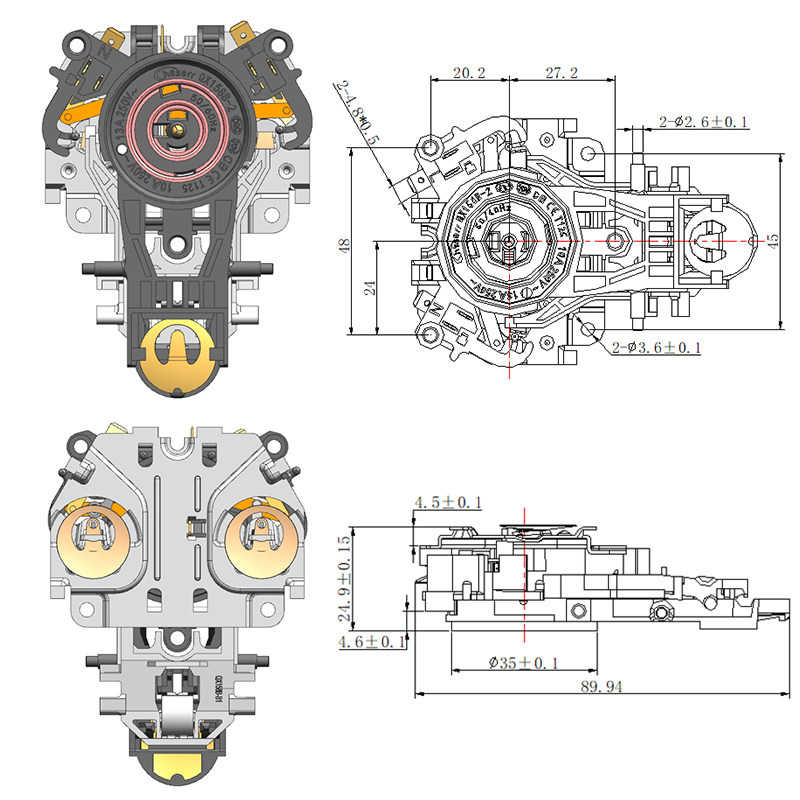
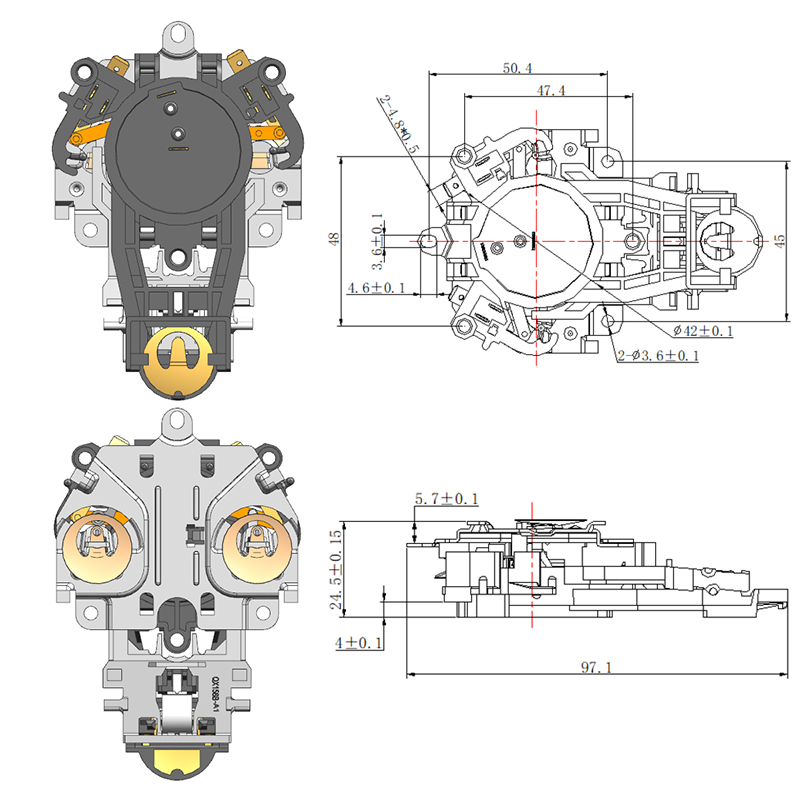
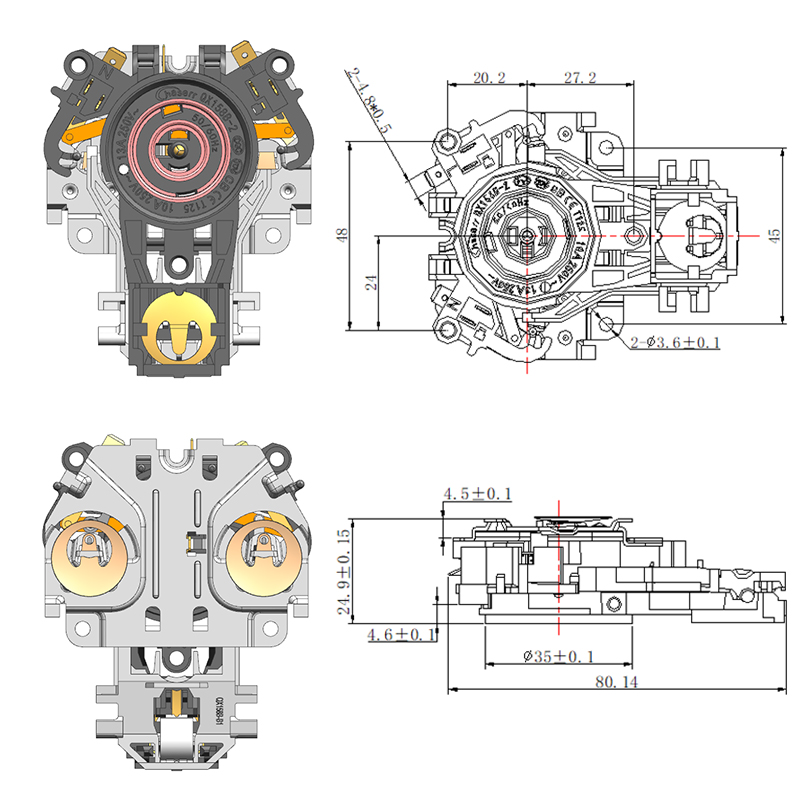
A Thermostat Coupler is part of the broader electrical and control structure found in kettle assemblies generally. It connects with related components, so the appliance can respond to operating conditions and control functions as intended.
Its relationship with contact pressure depends heavily on the design of that particular kettle assembly. The coupler needs a genuinely stable connection with its corresponding terminal or contact structure, so the intended electrical path can get maintained throughout operation.
The concept can get understood genuinely more clearly by looking at the complete connection path as one system.
| Component Area | General Role |
|---|---|
| Kettle base | Provides the electrical connection point |
| Terminal contacts | Transfer electrical connection |
| Thermostat-related connection | Links control components |
| Flexible support | Allows controlled contact movement |
| Housing | Keeps components positioned |
The Thermostat Coupler should therefore get considered as part of a connected system, rather than as an isolated component sitting apart from everything else. A stable interface can help the different parts of the assembly work together as genuinely intended by the design.
What Does the Bimetal Thermostat Working Principle Have to Do With the Connection?
The Bimetal Thermostat Working Principle gets based on the movement of a bimetal element responding to temperature changes over time. As the materials respond differently to heat, the element changes position and can operate a switching mechanism as a result.
In an electric kettle, this type of temperature-responsive function can get connected with the electrical control path running through the appliance. The thermostat-related components need suitable electrical and mechanical connections, so the switching action can occur exactly as designed.
Contact pressure stays relevant here because a control connection still depends on genuinely stable contact between conductive parts, regardless of what triggers the switching.
If the contact interface becomes unstable, the behavior of the connected circuit may become genuinely less predictable over time. The thermostat itself may get designed correctly on paper, but its connection with surrounding components also needs appropriate support to function as intended.
This illustrates exactly why the Bimetal Thermostat Working Principle shouldn't get viewed separately from the physical connection structure found in an appliance.
How Can Contact Shape Affect Pressure Distribution?
Contact pressure gets influenced by the shape of the terminal and the surface it touches during connection. A contact with a genuinely suitable shape can distribute pressure across the intended area, rather than concentrating it in an unsuitable location that wears unevenly.
The shape also affects how the contact moves whenever the kettle gets placed on the base. A flexible terminal may bend, slide, or move within a genuinely controlled path built into the design. Each movement pattern creates a genuinely different contact experience worth understanding.
Designers may therefore consider contact surface shape first, followed by terminal position and flexible section geometry. Supporting housing matters too, alongside movement during placement rounding out the list.
These elements should get considered together as one connected system, rather than tuned separately. Changing the shape of a terminal can also change how much movement gets required from the flexible support surrounding it.
A suitable structure allows the contact to respond naturally, while remaining within its intended position throughout normal use.
Why Is Connection Alignment Important for an Electric Kettle?
Contact pressure can only work genuinely effectively once the corresponding terminals get positioned correctly from the start. If the kettle and base contacts don't align properly, pressure may get distributed unevenly across the connection.
This can make one contact carry genuinely more mechanical pressure than another sitting nearby. It may also reduce the useful contact area available for the electrical connection to work through.
The base therefore needs to guide the kettle into a genuinely practical connection position without requiring conscious effort from the user.
| Alignment Factor | Connection Consideration |
|---|---|
| Contact location | Supports correct terminal meeting |
| Base support | Helps keep the kettle stable |
| Contact orientation | Influences surface engagement |
| Flexible movement | Allows small placement differences |
The user doesn't normally think about these details while using the appliance each morning. The kettle simply gets placed on the base without a second thought.
That makes passive alignment a genuinely important part of the product structure underneath. The connection should accommodate normal placement, without requiring precise user positioning every time someone reaches for their morning tea.
How Does Repeated Placement Affect Contact Pressure?
An electric kettle can experience genuinely repeated connection and separation during ordinary use over its lifespan. Each placement creates another mechanical interaction between the kettle contacts and the base terminals underneath.
Repeated movement can affect flexible structures, contact surfaces, and supporting parts over time. The design therefore needs to consider not only the condition of a brand-new component, but also how the contact behaves after repeated handling across months of use.
The flexible section should continue to move within its intended range throughout the appliance's life. The terminal should also remain genuinely securely connected to its support, even after thousands of placements.
This makes material selection and structural arrangement genuinely relevant to long-term contact behavior. A contact that performs well during an individual placement may behave genuinely differently if its supporting structure changes after repeated movement accumulates.
Manufacturers can therefore inspect contact assemblies for both immediate connection behavior and physical consistency during repeated operation over time.
What Role Does Contact Surface Condition Play?
Contact pressure can't fully compensate for an unsuitable contact surface, no matter how well-tuned the mechanical force is. Dirt, oxidation, mechanical damage, or other surface changes can influence how conductive surfaces interact with one another.
The condition of the contact area therefore matters alongside pressure and alignment together. A clean and properly supported contact surface can maintain the intended interface genuinely more consistently over time.
If the surface becomes damaged or contaminated, the electrical connection may get affected even when the mechanical structure remains genuinely unchanged underneath. This is exactly why contact design should include consideration of protection and enclosure from the start.
The surrounding housing can help keep the contact area positioned and reduce exposure to unnecessary handling that might introduce contamination. For an Electric Kettle Base Coupler, these details are genuinely part of the overall connection design, rather than separate concerns tacked on afterward.
How Can Manufacturers Check Contact Stability During Production?
Manufacturing inspection can look at several aspects of the connection at the same time, rather than checking one thing in isolation. Checking only the appearance of a terminal may not reveal whether the flexible structure is genuinely working as intended underneath.
A practical inspection process can consider contact position alongside terminal movement, and flexible support condition together with contact engagement. Housing stability matters too, along with repeated placement behavior rounding out the review.
The purpose stays understanding how the complete assembly actually behaves as one system. This approach proves particularly useful whenever a Thermostat Coupler or another electrical connection forms part of the same product structure being built. The components need to work together, rather than simply meet individual appearance requirements on a checklist.
Production consistency also matters quite a bit here. Small differences in contact position or flexible support can change how the assembled connection genuinely feels during use once it reaches a customer.
How Can Electric Kettle Base Couplers Support Stable Everyday Connections?
An Electric Kettle Base Coupler needs to balance several physical requirements at the same time, rather than optimizing for just one. The terminal contacts must meet correctly each time, the flexible structure needs controlled movement built in, and the supporting housing must keep the connection organized throughout.
Contact pressure sits genuinely at the center of this interaction. Too little pressure may allow contact instability to creep in, while too much pressure can make placement genuinely less smooth and increase mechanical stress over time.
The relationship between these factors becomes genuinely clearer once the kettle base gets viewed as a complete assembly, rather than separate parts. Contact shape, terminal position, flexible support, housing structure, and surface condition all contribute to how the connection actually behaves in someone's kitchen.
For manufacturers, this means contact pressure should get considered alongside the wider connection structure as one unit. The same principle applies whenever integrating thermostat-related components, including a Thermostat Coupler, into the electrical path running through the appliance.
When flexible structures and terminal contacts get designed around the way the kettle actually gets placed and removed in daily life, the connection can remain genuinely organized through repeated everyday handling, without requiring the user to manage the underlying electrical structure themselves.
Featured Products


-
No. 2892, Ningkang East Road, Tiancheng Industrial Zone, Yueqing City, Zhejiang Province
-
 Email: Una@chaserr.cc
 -
 Phone: +86-13075775533
- GET IN TOUCH

Electric Kettle Thermostat Coupler Manufacturer