English
  中文简体
中文简体  Español
How Does Bimetal Thermostat Work in Modern Kettles?
Fill an electric kettle, press the switch, walk away to grab a mug, and come back to find it's already clicked off on its own. That small moment, the kettle knowing when to stop, comes down to a piece of physics working quietly inside the base. The Bimetal Thermostat Working Principle sits at the heart of that behavior, letting the kettle track rising temperature and cut off heating without anyone standing there watching a thermometer.
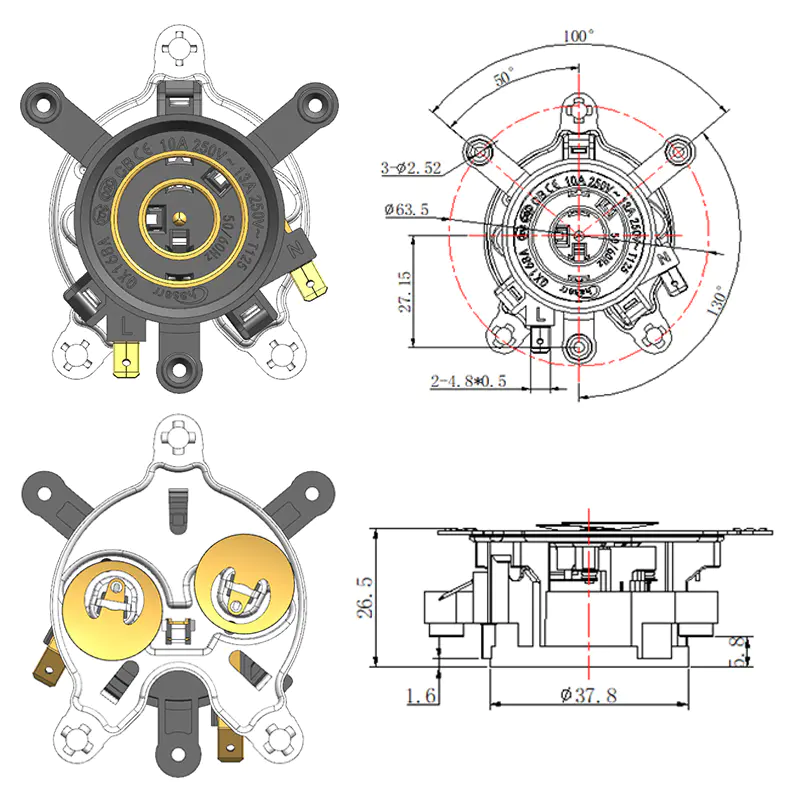
Getting that timing right has become a real expectation in kettle design, not just a nice extra. People want water heated quickly, but they also want the appliance to know when to stop on its own. That takes more than just a heating coil at the bottom. The sensing mechanism, the switching parts, and the electrical connections all need to cooperate for the whole thing to actually work reliably, morning after morning.
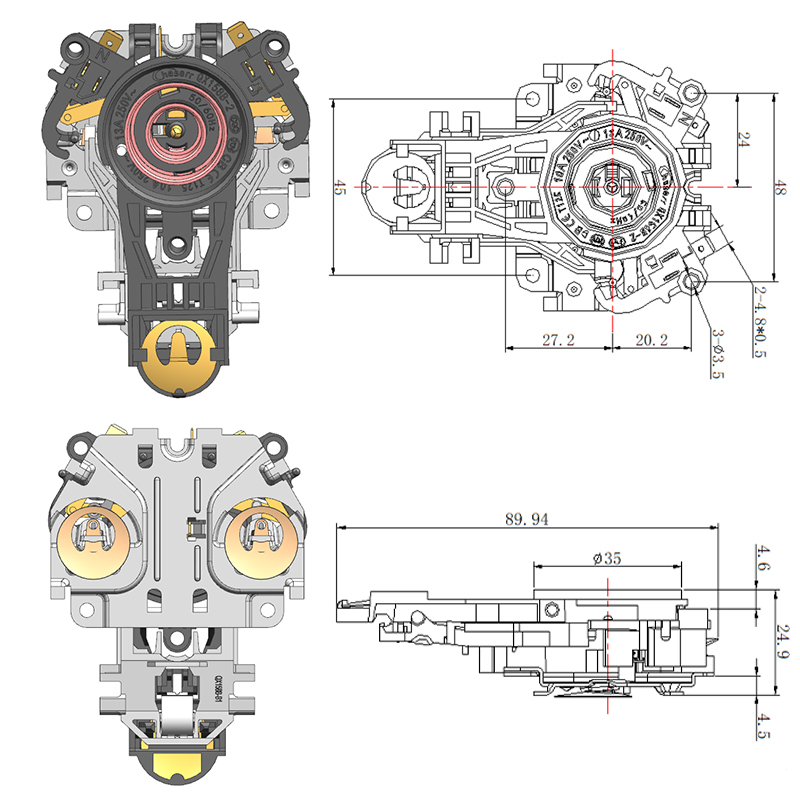
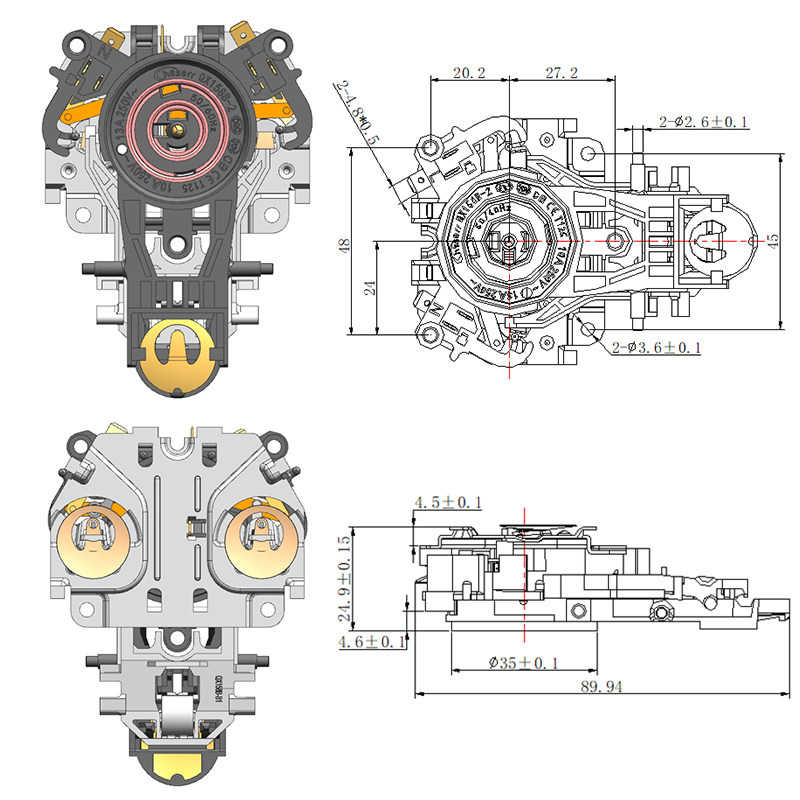
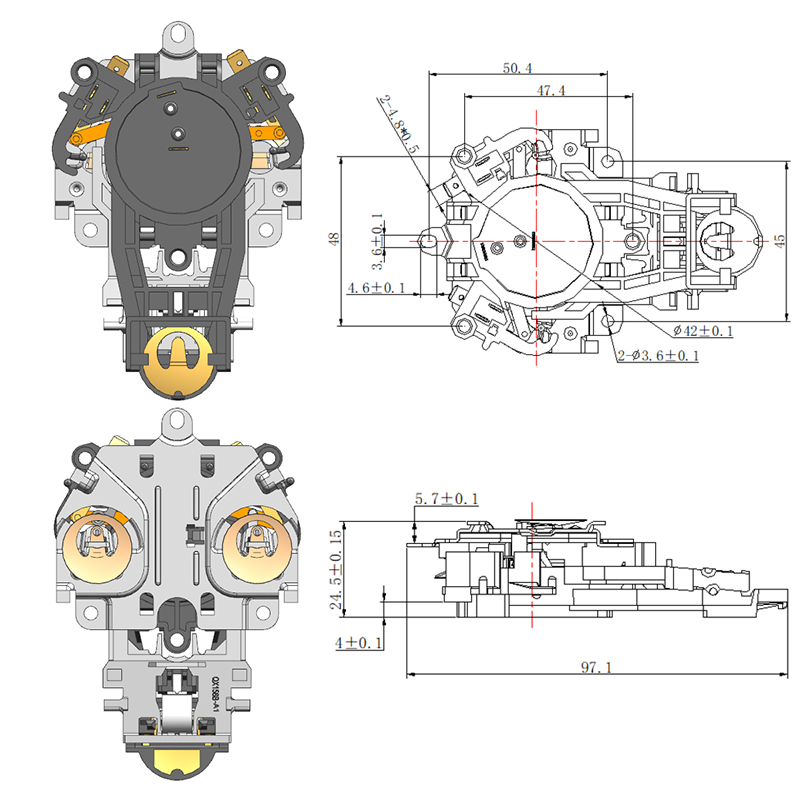
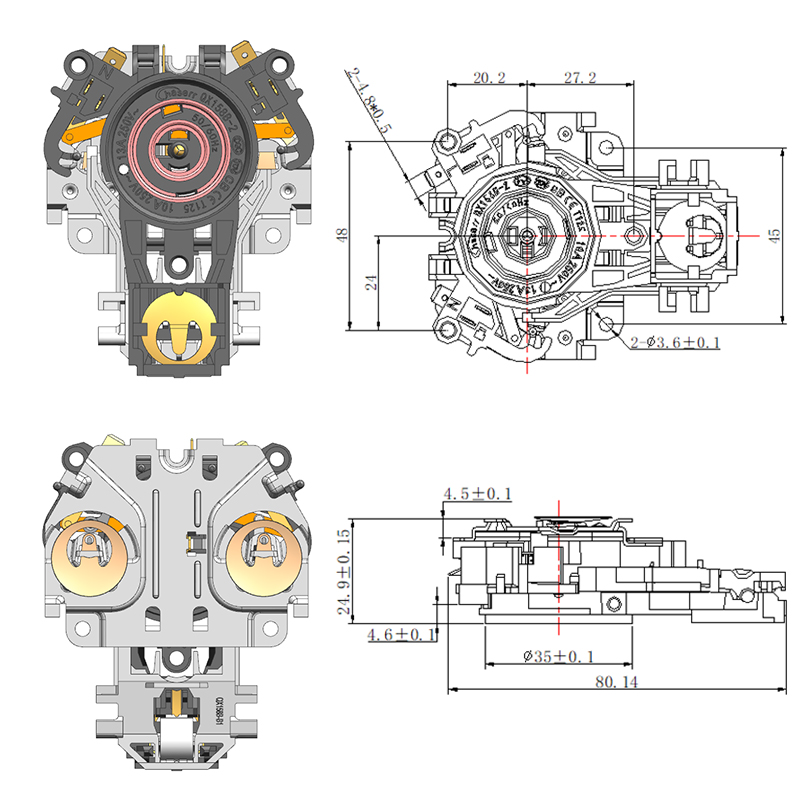
A handful of components make that cooperation possible, including a Thermostat Coupler, a Kettle Base Connector, and an Electric Kettle Base Coupler. Each one plays a specific role, and understanding how they fit together explains why a fairly small, unglamorous part can shape whether a kettle feels dependable during everyday use.
What Actually Happens Inside a Bimetal Thermostat
The Bimetal Thermostat Working Principle comes down to how two different metals behave when they heat up.
Bonded together into a single strip, these two metals expand at different rates as temperature climbs. Because they're joined rather than separate, that mismatch forces the whole strip to bend or curve rather than expand evenly.
That bending motion is what actually does the work.
The whole sequence plays out something like this:
Rising temperature → Metal bends → Electrical contact shifts → Heating stops
As the kettle heats, this bimetal strip gradually curves further in response to the growing heat around it. Once it reaches a certain point, that bending motion physically pushes or pulls an electrical contact, breaking the circuit and stopping the heating element.
Once things cool back down, the strip relaxes back toward its earlier shape, ready to respond again the next time someone boils water.
| Stage in the Process | What's Actually Happening |
|---|---|
| Heat source | Warms the water inside the kettle |
| Bimetal strip | Bends in response to rising heat |
| Contact mechanism | Shifts based on how far the strip bends |
| Switching action | Cuts power to the heating circuit |
None of this requires a screen, a button, or any input from whoever's making tea. The whole thing happens mechanically, tucked away inside the kettle base where nobody ever needs to look.
Why Kettles Actually Need This Kind of Temperature Control
Heating water is really just half the job an electric kettle does.
The other half is knowing when to stop. Without some kind of control mechanism, a heating element would just keep drawing power and generating heat indefinitely, which isn't just wasteful, it's a genuine safety concern once water starts boiling dry.
Temperature control gives the kettle a way to react as conditions actually change.
Someone fills the kettle with cold tap water. The heating element switches on, and as it runs, the water gradually warms. That heat eventually travels through the kettle's structure to wherever the bimetal thermostat sits, and that's when the control mechanism actually kicks in.
The full sequence tends to look like this:
- The kettle gets connected to power
- The heating element starts producing heat
- Water temperature climbs steadily
- Heat reaches the thermostat mechanism
- The bimetal strip bends in response
- The electrical contact shifts position
- The heating circuit gets interrupted
Exact placement and design can differ between kettle brands and models, but the overall sequence of operation remains similar across electric kettles available today.
How the Bimetal Element Actually Responds to Rising Heat
The bending behavior of the bimetal strip is really the core of the whole mechanism.
Think of two metal strips bonded together, each one reacting differently to the same rise in temperature. One naturally expands more than the other under identical heat exposure.
Since they're physically joined, neither strip can expand on its own without affecting the other. That mismatch is exactly what forces the combined strip to curve as things heat up.
That curving motion gets channeled directly into a switching mechanism.
What makes this genuinely practical is that it doesn't need any circuitry or programmed logic to figure out when the water's hot enough. The metal itself, just through basic physical behavior, provides the motion needed to flip the electrical connection.
| Temperature Stage | How the Bimetal Responds | Effect on Heating |
|---|---|---|
| Heating just started | Strip stays close to its resting position | Heating continues normally |
| Temperature climbing | Strip gradually curves further | Contact edges toward its switching point |
| Target condition reached | Strip pushes the contact into a new position | Heating circuit breaks |
| Water cooling down | Strip eases back toward its resting shape | System resets for the next cycle |
That interaction between heat and physical movement is really what gives this kind of thermostat its everyday usefulness, no batteries, no sensors, just metal responding to its environment.
How the Thermostat Actually Connects to the Kettle Base
The thermostat is just one piece of the kettle's overall electrical and mechanical setup.
Reliable power delivery to the kettle starts with the base assembly working correctly.
Electric kettles are generally made up of two main parts: a removable body that contains the water and a powered base connected to the wall outlet. The base manages the electrical connection that allows power to reach the internal components of the kettle.
That's where the Kettle Base Connector comes into play.
It's not responsible for sensing temperature at all. Its job is purely electrical, forming part of the pathway that lets the kettle draw power once it's sitting properly on its base.
| Component | Main Job |
|---|---|
| Kettle base | Provides the physical power connection structure |
| Kettle Base Connector | Handles the electrical linkage itself |
| Thermostat | Reacts to changing water temperature |
| Heating element | Converts electricity into heat |
| Control mechanism | Switches the heating circuit on or off |
None of these parts work in isolation. A thermostat can bend and respond to heat perfectly well, but if the electrical pathway feeding the heating element isn't solid, nothing downstream actually functions.
What a Thermostat Coupler Actually Does
A Thermostat Coupler typically forms part of the connection and control setup found inside an electric kettle.
The exact shape and function can vary depending on how a particular manufacturer designs their product, but the underlying purpose stays consistent. It links the thermostat mechanism to other parts of the kettle so information, or in this case physical motion, can pass between them.
Temperature sensing and electrical switching need some kind of physical link connecting them, and that's essentially what a coupler provides.
A small connecting piece like this helps transfer motion or hold an electrical relationship steady between two components that would otherwise sit disconnected from each other.
That's exactly why a part this small still gets real attention during kettle development. Manufacturers need to think through:
- Whether the connection stays reliable over repeated use
- Whether it's positioned correctly relative to the heat source
- Whether it transfers mechanical movement cleanly
- Whether the electrical contact stays consistent
- Whether it's actually practical to assemble on a production line
- Whether it fits properly with the surrounding parts
A thermostat never really works alone inside a kettle. How well it performs depends heavily on how it's positioned and connected to everything around it.
How the Electric Kettle Base Coupler Fits Into the System
The Electric Kettle Base Coupler is part of the connection setup linking the kettle body to its base.
Modern kettles are designed so the water container can be lifted away from the base, making pouring and refilling easier compared with models that stay permanently connected to a power source.
Setting the kettle back down onto the base means that electrical connection needs to reconnect cleanly, every single time, without someone needing to fuss with wires or plugs.
That's the coupler's job.
A well-designed base needs to balance genuine convenience with a connection that just works reliably. Someone should be able to plop the kettle back onto its base without thinking twice about whether it's actually connected properly.
| Design Focus | What It Means for the User |
|---|---|
| Connection placement | Makes setting the kettle down feel natural |
| Base structure | Keeps the kettle sitting stable and secure |
| Electrical contact | Ensures power actually flows through |
| Mechanical fit | Keeps everything properly aligned |
| Lift-off and replacement | Makes daily handling straightforward |
The coupler ends up shaping more than just the electrical side of things. Its design also affects how the kettle physically feels to pick up and set back down, dozens of times a week, in a typical household.
Featured Products


-
No. 2892, Ningkang East Road, Tiancheng Industrial Zone, Yueqing City, Zhejiang Province
-
 Email: Una@chaserr.cc
 -
 Phone: +86-13075775533
- GET IN TOUCH

Electric Kettle Thermostat Coupler Manufacturer