English
  中文简体
中文简体  Español
How Anti-Drying Kettle Thermostat Ensures Appliance Safety
Introduction to Multi-Layered Kettle Safety
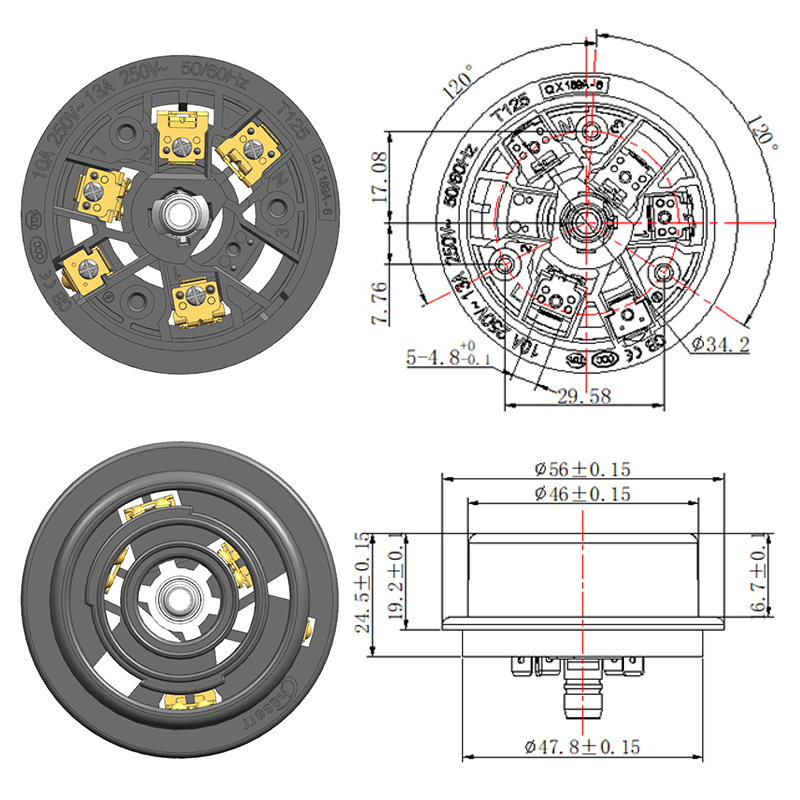
The Anti-Drying Kettle Thermostat is a crucial safety component in modern electric kettles, designed to prevent the kettle from operating when there is insufficient water. However, it does not function in isolation. Most electric kettles incorporate multiple safety protection mechanisms, including fuses, thermal cutoffs, and circuit breakers, to ensure that the appliance remains safe under various conditions. By understanding how these devices work together, manufacturers can provide reliable protection against overheating, electrical faults, and dry boiling, while users gain confidence in using the appliance safely.
Role of the Anti-Drying Thermostat
The Anti-Drying Kettle Thermostat primarily monitors water levels and heating conditions within the kettle. It detects when the water has reached a dangerously low level or when the heating element is overheating due to insufficient water. Once triggered, it interrupts the electrical circuit to the heating element, effectively shutting off power and preventing dry burning. This mechanism is highly sensitive and acts quickly to protect both the appliance and the user. The thermostat is designed to react to temperature changes caused by the absence of water or excessive heating, providing real-time protection.
Complementary Safety Devices
While the thermostat handles thermal and water-level protection, fuses and circuit breakers protect against electrical overloads and short circuits. A fuse is a sacrificial device that melts when current exceeds a predetermined limit, stopping the flow of electricity and preventing potential fire hazards. Circuit breakers, on the other hand, are reusable devices that automatically switch off the electrical circuit when excessive current is detected. Both devices complement the Anti-Drying Kettle Thermostat by addressing risks that the thermostat alone cannot mitigate. For example, even if the kettle is filled with water, a sudden electrical surge could damage internal components; in this case, the fuse or breaker intervenes.
Coordinated Operation
The coordination between the Anti-Drying Kettle Thermostat and other protective devices is essential for comprehensive safety. Typically, the thermostat operates continuously during normal use, monitoring water levels and temperature. If a dry condition is detected, it immediately interrupts the heating circuit. In contrast, fuses and circuit breakers remain passive until an electrical anomaly occurs. By combining these layers of protection, manufacturers ensure that both thermal and electrical risks are addressed. This redundancy is critical, as it prevents a single point of failure from causing a dangerous situation.
Maintenance and Reliability
To maintain the effectiveness of these protective systems, proper installation and regular inspection are necessary. Users should ensure that the thermostat and other safety devices are free from damage, corrosion, or debris that could interfere with operation. Periodic testing of circuit breakers and replacement of fuses, if necessary, ensures that the kettle continues to operate safely. Understanding the interactions between the Anti-Drying Kettle Thermostat and other protective mechanisms helps users troubleshoot issues and maintain long-term reliability.
The Anti-Drying Kettle Thermostat works in concert with fuses, circuit breakers, and other safety devices to provide multi-layered protection for electric kettles. The thermostat guards against dry burning, while electrical protective devices manage overloads and short circuits. This coordinated approach ensures comprehensive safety, extends the lifespan of the appliance, and enhances user confidence. By combining thermal and electrical protection mechanisms, manufacturers achieve a reliable and safe design that reduces risks during everyday use.
Featured Products


-
No. 2892, Ningkang East Road, Tiancheng Industrial Zone, Yueqing City, Zhejiang Province
-
 Email: Una@chaserr.cc
 -
 Phone: +86-13075775533
- GET IN TOUCH

Electric Kettle Thermostat Coupler Manufacturer