English
  中文简体
中文简体  Español
Why Is My Electric Kettle Not Turning On?
You press the switch, nothing happens. Press it again, still nothing. That quiet, dead silence where you expect a click and a hum is one of the more annoying small appliance failures out there, mostly because it derails your morning before it even starts. An Electric Kettle Base Coupler issue can be responsible for many of these situations, though it is worth checking a few simpler causes before assuming the part has failed. Below, we work through the usual suspects, starting with the boring checks nobody wants to do and moving toward the internal components that genuinely control whether power ever reaches the heating element.
Rule Out the Boring Stuff First
Before assuming something inside the kettle has failed, it pays to eliminate the obvious. A surprising number of "my kettle is broken" situations turn out to have nothing to do with the appliance at all.
- Test the outlet with a different device to confirm it's actually delivering power
- Look over the power cord for fraying, cracks, or bent prongs
- Make sure the kettle body sits flush and properly aligned on its base
- Check whether a breaker tripped, especially if nearby outlets seem affected too
- Confirm the switch itself isn't physically jammed or stuck
Once these come back clean and the kettle still refuses to respond, the issue is probably sitting somewhere inside the unit rather than in the wall or cord.
Could the Whole Problem Really Just Be the Outlet?
Yes, and honestly, this happens more than people expect. It's tempting to assume an expensive internal component has died, when really the fix might be as simple as switching outlets or swapping out a worn cord. Getting this ruled out early saves a lot of wasted effort before diving into more involved troubleshooting later.
What the Base Coupler Actually Does
Once the basics check out fine, attention usually turns toward the connection point between the kettle body and its base. This is where a lot of these failures actually originate, and understanding the mechanism explains why a bad connection can knock out power completely.
The Kettle Connector lives at the bottom of the kettle, built to line up precisely with matching contact points on the base unit. Set the kettle down correctly, and those contacts touch, completing a circuit that lets electricity flow from the wall, through the base, and into the heating coil.
Let that connection point corrode, get physically damaged, or simply wear thin from years of daily use, and the circuit never quite closes the way it should. From the outside, the kettle just looks dead, even though power is reaching the base perfectly fine the whole time.
Why Does This Connection Break Down in the First Place?
A handful of factors usually pile up together rather than acting alone.
- Constant heating and cooling cycles slowly wear down the metal contact surfaces
- Steam and spilled water introduce moisture that leads to oxidation over time
- Dropping or rough handling can knock the connector slightly out of position
- Ordinary aging reduces the spring tension holding contacts firmly together
Any single one of these can interrupt steady power flow enough to leave you with a kettle that seems totally lifeless, despite the cord and outlet working exactly as they should.
Checking the Connector Yourself
If you're reasonably comfortable poking around a small appliance, inspecting the connector doesn't require anything fancy, just patience and a close look at the contact area.
Coupler testing usually starts with a visual once over, checking for discoloration, corrosion, or gaps where the contacts aren't meeting the way they're supposed to. Sometimes a light cleaning with a dry cloth is genuinely all it takes to clear minor oxidation and get things working again.
If that doesn't do the trick, a multimeter can confirm whether continuity exists once the kettle sits properly on its base. No reading at all, even with everything cleaned and seated correctly, usually points toward actual internal damage that cleaning alone won't fix.
Is This a DIY Job, or Should You Call Someone?
Basic inspection and light cleaning are suitable for people who are comfortable handling small appliances. Anything beyond that, multimeter testing, opening the base casing, starts venturing into territory where a bit more caution matters, since you're dealing with mains electricity here. When you're unsure, it's genuinely safer to hand it off to a professional.
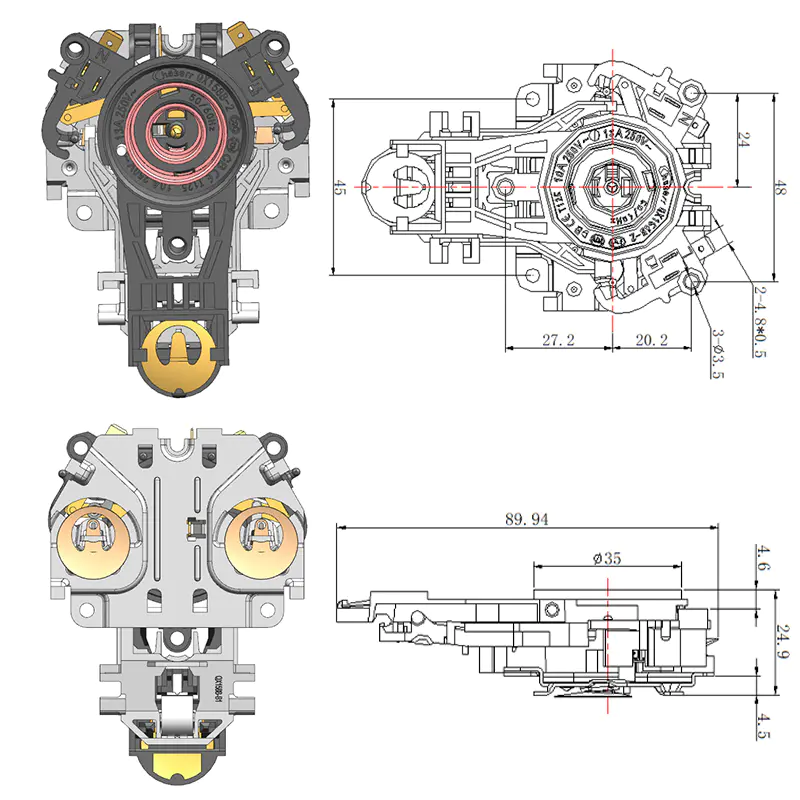
The Bimetal Thermostat and Its Job
Beyond the connector, another frequent cause behind a kettle that won't start, or one that shuts off unpredictably, traces back to the thermostat mechanism managing temperature and safety cutoffs.
Bimetal thermostat function relies on a genuinely clever bit of physics. Two different metals bonded together expand at different speeds as they heat up, and that mismatch causes the whole strip to bend once temperature rises. That bending motion physically opens or closes an electrical contact depending on how hot things get.
So How Does a Bimetal Thermostat Actually Work Day to Day?
Inside a kettle, this mechanism functions as the automatic shutoff, the thing that stops water from boiling dry or the unit from overheating. As the water approaches its boiling point, rising heat bends the bimetal strip enough to break the circuit, cutting power to the heating element without anyone needing to touch a switch.
If this thermostat becomes stuck in the closed position, sometimes due to mineral buildup or normal wear over time, it may prevent the circuit from completing correctly. That blocks power from reaching the heating element entirely, producing symptoms that look almost identical to a connector failure.
Two Likely Suspects, Side by Side
| Component | Common Failure Symptom | Typical Cause | Fix Difficulty |
|---|---|---|---|
| Base coupler or Kettle Connector | Nothing happens at all when switch is pressed | Corrosion, misalignment, worn contacts | Moderate, sometimes solved by cleaning alone |
| Bimetal thermostat | Kettle starts but cuts off early, or won't engage | Mechanical wear, mineral buildup, general fatigue | Moderate to higher, often needs replacing |
| Power cord or outlet | Total absence of power reaching the appliance | External damage or outlet issue | Simple, quick to test and swap |
Working through this systematically, starting with the easy external stuff before digging into internal parts, tends to narrow things down faster than guessing at random.
When Replacement Just Makes More Sense
Once testing points clearly toward connector corrosion that cleaning won't fix, or a thermostat that's mechanically failed, replacement becomes the more practical route rather than continuing to troubleshoot a dying part.
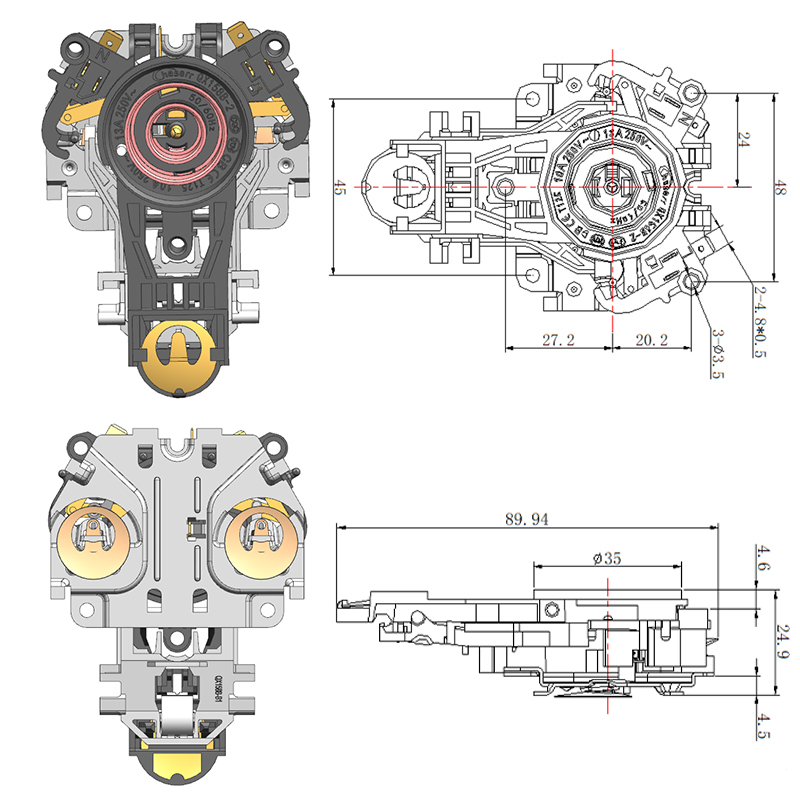
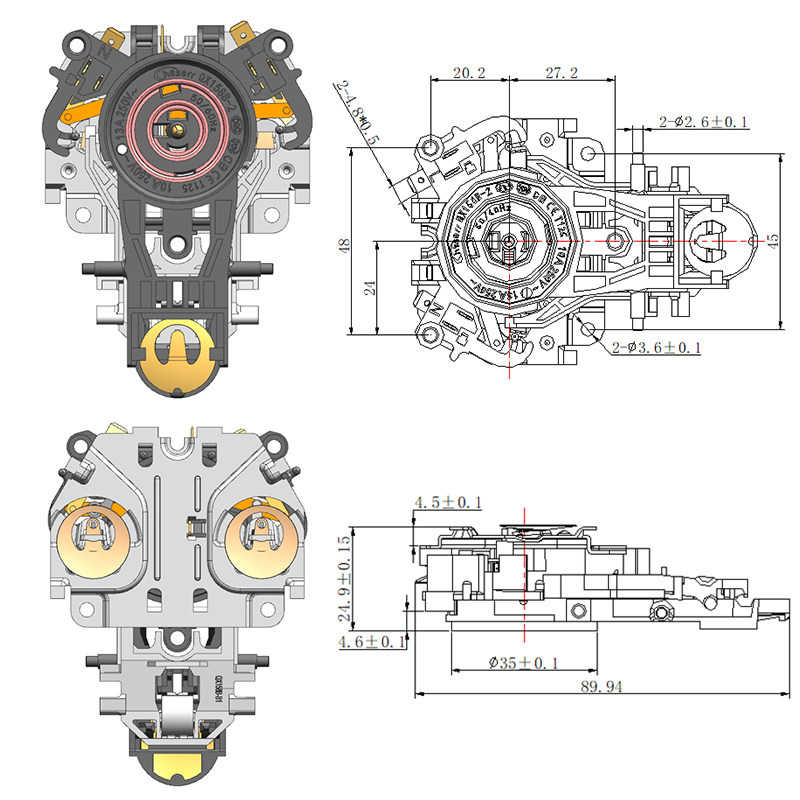
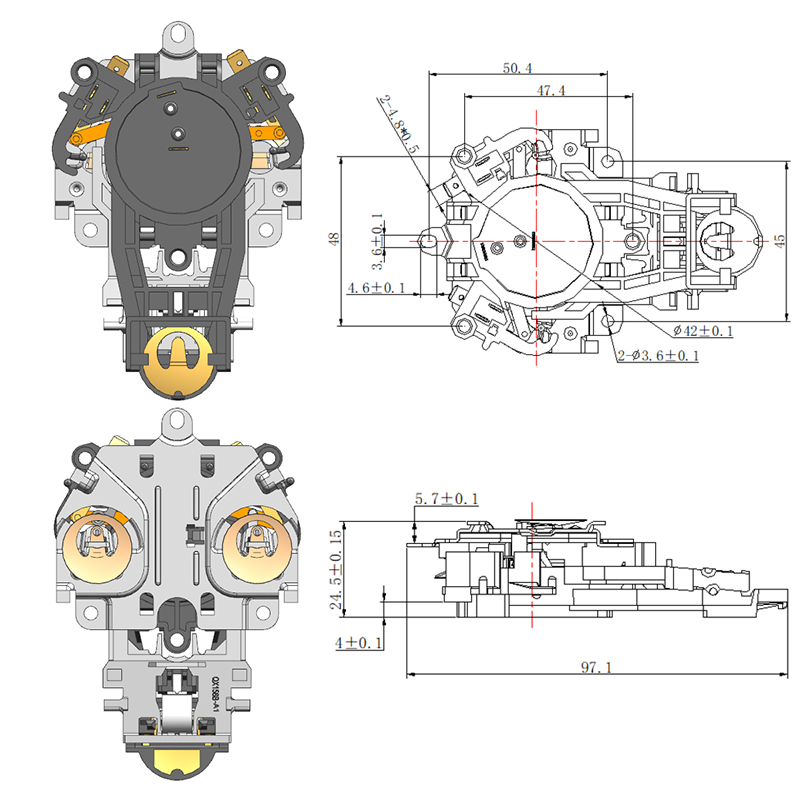
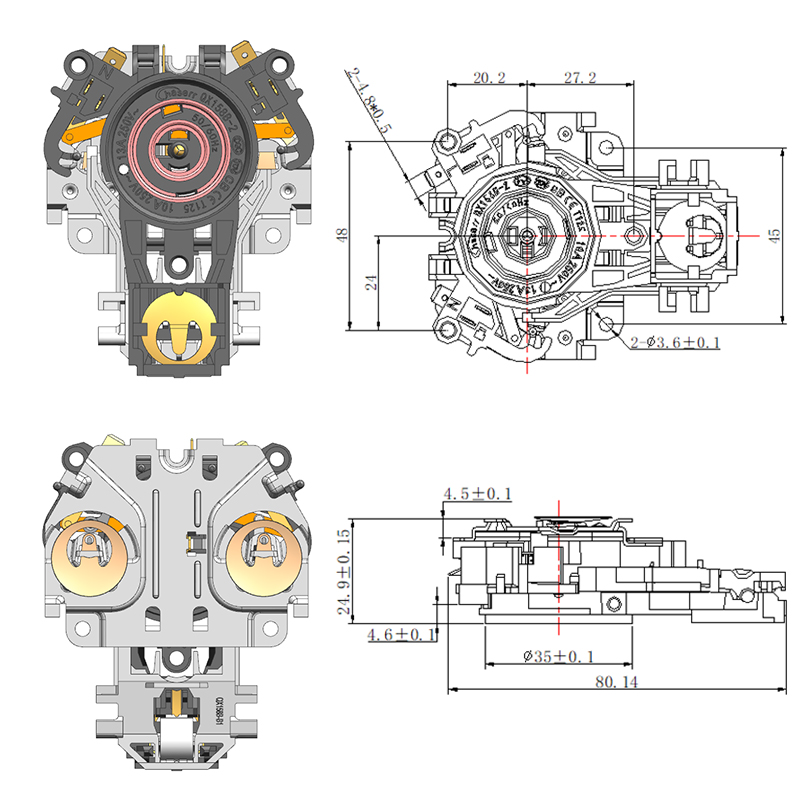
Swapping in an automatic temperature control thermostat restores that critical safety cutoff, preventing dangerous overheating down the line. A new Kettle Connector reestablishes solid, reliable contact between the kettle body and its power base. Trying to nurse a worn component past its useful life tends to introduce real safety concerns rather than solving anything long term.
Should You Replace Both Parts at Once, or Just the One That Failed?
Depends on the appliance's age and overall condition. If one part has already given out from years of wear, there's a fair argument the other one isn't far behind either, particularly in older units that have seen heavy regular use. For manufacturers or repair shops handling higher volume, though, testing each component separately before replacing anything usually makes more sense economically than assuming both need swapping out together.
What Manufacturers and Repair Shops Should Look For
For small appliance makers, repair technicians, and OEM buyers sourcing replacement parts at scale, consistency matters every bit as much as basic functionality.
Worth confirming before settling on a supplier:
- Documentation showing consistent contact quality across connector production runs
- Testing standards covering thermostat response accuracy and cutoff reliability
- Compatibility across different kettle base designs and voltage requirements
- Willingness to support OEM or private label sourcing at production volume
A supplier able to answer these questions directly and without hedging tends to signal a more dependable long term sourcing relationship, especially for manufacturers trying to maintain consistent quality across large production batches.
Pulling It All Together
A kettle refusing to turn on rarely comes down to one single cause, and working through the process methodically, checking the outlet and cord before moving on to the connector and thermostat, saves a lot of unnecessary guesswork along the way. Understanding how the base coupler completes the circuit, and how a bimetal thermostat handles both temperature regulation and safety shutoff, gives everyday users and repair professionals alike a clearer route toward figuring out what actually went wrong instead of assuming the entire appliance needs tossing out. For manufacturers and repair businesses handling these issues at scale, sourcing reliable connector and thermostat components is just as important as understanding the causes behind these failures. Wenzhou Qianxun Electrical Technology Co., Ltd. works with small appliance manufacturers and repair suppliers navigating exactly these sourcing needs, offering production capability across connector and thermostat solutions built for varying kettle designs, and welcomes an inquiry from any team ready to talk through specifications for an upcoming order.
Featured Products


-
No. 2892, Ningkang East Road, Tiancheng Industrial Zone, Yueqing City, Zhejiang Province
-
 Email: Una@chaserr.cc
 -
 Phone: +86-13075775533
- GET IN TOUCH

Electric Kettle Thermostat Coupler Manufacturer