English
  中文简体
中文简体  Español
Brass vs Copper Contacts in Thermostat Coupler Comparison
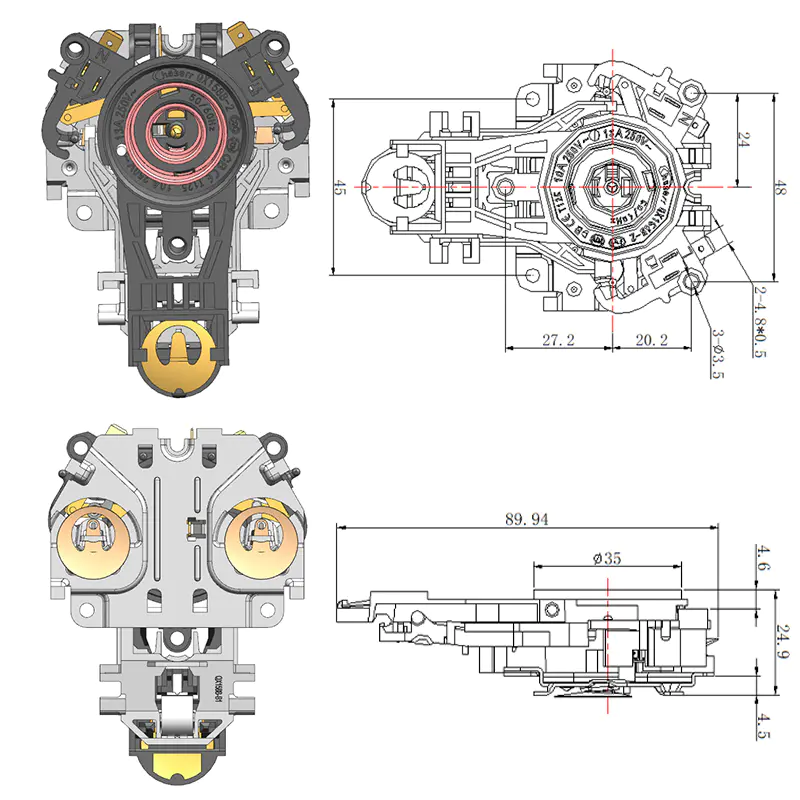
Picking the wrong contact material inside a Thermostat Coupler rarely announces itself on day one. It shows up later, after months of daily plugging and unplugging, when the base connector starts running warmer than it should, or when a customer complaint about uneven heating lands on somebody's desk. Anyone sourcing parts for electric kettles or similar small appliances has probably run into this exact scenario, and nine times out of ten it traces back to a contact material that looked fine on a spec sheet but didn't survive actual daily wear and tear. Weighing brass against copper for this job means looking past whatever general reputation each metal carries and zeroing in on what actually happens right at the contact point, cycle after cycle, inside a coupler that gets used several times a day for years on end.
Why Does the Contact Material Even Matter This Much?
A Thermostat Coupler's whole job is creating a dependable electrical connection between the kettle body and its base, one that has to break and reform repeatedly without falling apart. Whatever material sits at that junction carries the actual electrical load, and its properties decide how well that connection holds up over the coupler's entire working life.
Pick the wrong material and you'll see it eventually. Resistance creeping upward. Warm spots developing right at the connection. Physical wear that slowly chips away at reliability. None of this shows up immediately, which is exactly the problem. It's why material selection deserves real thought before production, not a lesson learned after field failures start rolling in.
What's Actually Happening at That Point of Contact?
Every time someone lifts a kettle off its base and sets it back down, the contacts inside separate and then rejoin. Do that enough times and friction wears down whatever's sitting on the contact surface. How gracefully a material handles that wear, without bleeding conductivity or piling up resistance, is basically what determines whether the coupler stays reliable for years or starts failing after months.
Once you picture that repeated mechanical grinding, it makes more sense why a material that shines in a static electrical setup doesn't automatically translate into something that survives constant separation and reconnection.
Conductivity: Copper's Clear Advantage
Copper simply carries current better than brass. That's just atomic structure at work, since brass is really a copper-zinc alloy rather than a pure metal to begin with. This conductivity gap matters directly for how much resistance builds up right at the connection during normal use.
Less resistance generally means less heat generated while current's flowing, which matters a good deal for appliances pulling meaningful current during operation. Copper's stronger conductivity gives it a genuine edge wherever minimizing resistance and heat sits at the top of the priority list.
Does Better Conductivity Automatically Mean Better Real-World Performance?
Not really, and that gap between paper specs and actual performance trips up a lot of buyers comparing these two materials. Sure, copper conducts better, but brass brings other things to the table, wear resistance especially, plus easier machining, that can offset copper's conductivity edge depending on what the application actually demands.
Judging contact material purely on conductivity numbers misses half the story. Real coupler performance hinges just as much on how the material survives repeated mechanical cycling as it does on how efficiently it moves current during any single connection.
Wear Resistance: Where Brass Usually Wins
Brass typically resists wear better than pure copper, mostly thanks to the zinc content adding hardness copper simply doesn't have on its own. That hardness edge becomes genuinely relevant wherever connections get made and broken frequently, exactly the kind of daily grind a Thermostat Coupler goes through.
Softer materials like pure copper deform more easily under that repeated mechanical stress, which can gradually mess with connection quality as the contact surface slowly changes shape from accumulated wear.
Why Does This Matter So Much More for High-Cycle Applications?
Something like an electric kettle gets lifted and replaced on its base multiple times a day in plenty of households, racking up a huge number of connection cycles over the appliance's lifetime. A contact material that wears down under that kind of repeated stress starts showing performance problems earlier than one built to shrug off that mechanical cycling.
That's really the whole reason brass shows up so often in coupler applications despite copper's conductivity advantage. The wear resistance benefit solves a practical failure mode that pure conductivity comparisons just don't capture.
Brass Versus Copper, Side by Side
| Property | Brass Contacts | Copper Contacts |
|---|---|---|
| Electrical Conductivity | Moderate | Strong |
| Wear Resistance Under Repeated Cycling | Strong | Moderate |
| Corrosion Resistance | Good | Moderate, benefits from plating |
| Machining and Manufacturing Ease | Strong | Moderate |
| Relative Material Cost | Lower | Higher |
| Typical Suited Application | High-cycle connectors, general appliance use | Applications prioritizing minimal resistance |
Corrosion Resistance: A Factor Easy to Overlook
Brass generally resists corrosion decently well, again thanks to zinc, which offers some natural protective quality against oxidation that pure copper lacks. Copper, despite being a fantastic conductor, can develop surface oxidation over time once exposed to air and moisture, which can chip away at contact quality if nothing's done about it.
Plenty of copper contacts get around this through surface plating, adding a protective layer that keeps conductivity intact while cutting down on oxidation-related performance loss. That plating adds cost and manufacturing complexity though, worth weighing against brass's more built-in corrosion resistance.
Does This Matter More Specifically for Kitchen Appliances?
It does, given how much moisture kitchen environments naturally throw around. Electric kettle base couplers deal with repeated steam exposure, occasional splashes, general kitchen humidity, conditions that turn corrosion resistance into a real practical concern rather than some abstract spec on paper.
Manufacturers building for this environment need to weigh corrosion resistance right alongside conductivity and wear properties, since a contact material that conducts beautifully but corrodes under kitchen conditions won't deliver reliable performance no matter how good its initial electrical numbers looked.
Manufacturing Realities: Machining and Production Cost
Brass generally machines easier than copper, a practical point that affects production efficiency and cost for coupler components made at scale. This machinability edge partly comes from brass's harder, more brittle structure compared to copper's greater ductility, which can actually complicate precision machining in certain manufacturing setups.
Buyers and manufacturers weighing contact material shouldn't brush past this production-side detail, since manufacturing efficiency directly hits final component cost, particularly on high-volume runs common across appliance parts manufacturing.
Should Manufacturing Ease Outweigh Performance When Choosing Material?
It should factor in, sure, just not at the cost of genuine performance needs. A material that's cheaper and easier to produce but falls short on actual application performance ends up costing more down the line through warranty claims, complaints, reliability headaches, all of which outweighs whatever manufacturing savings the material choice offered upfront.
Balancing manufacturing practicality against real performance requirements, rather than picking based purely on ease of production, tends to land manufacturers on components that hit both cost targets and genuine reliability expectations.
The Cost Gap Worth Understanding
Brass is generally more cost-friendly than copper as a raw material, which can influence material selection in large-scale production where small differences in unit cost can affect overall manufacturing expenses.
This cost advantage, together with brass’s wear resistance and easier machining characteristics, helps explain its continued use in coupler applications, even though copper offers stronger electrical conductivity. Material selection often depends on balancing multiple properties rather than relying on a single characteristic, and the overall combination of performance and practicality plays an important role in many applications.
Can Picking the Cheaper Material Backfire?
It can, particularly if the application genuinely needs copper's conductivity for reasons beyond just saving money upfront. Applications pulling higher current loads, or ones where cutting resistance and heat carries real safety or performance stakes, might justify copper's added cost despite brass being cheaper.
Buyers shouldn't just default to whichever material costs less without confirming the cheaper option actually meets the real electrical and mechanical demands at hand, since premature failure from an inadequate material choice usually costs a lot more than whatever was saved initially.
What Actually Fits Electric Kettle Couplers Best?
Electric kettle base couplers and connectors need to handle a specific combination of requirements, including frequent cycling, moisture exposure, and moderate current loads. These operating conditions influence which material characteristics are important for maintaining reliable performance in everyday use.
- Wear resistance under frequent connection cycling sits near the top given how often households use these daily
- Corrosion resistance matters a lot given kitchen humidity and the occasional splash
- Conductivity needs to handle whatever current kettle heating elements typically draw without piling up excess resistance
- Manufacturing cost efficiency matters for staying competitively priced across high-volume appliance production
Why Do So Many Electric Kettle Couplers Go With Brass?
That combination of wear resistance, decent corrosion resistance, and cheaper manufacturing often makes brass the practical pick for this specific application, even with copper offering better raw conductivity. Daily cycling from kettle use just weighs wear resistance more heavily than the relatively moderate current loads typical of kettle heating elements weigh conductivity requirements.
That said, some manufacturers do go with copper contacts, often plated, for kettle lines prioritizing minimal resistance above everything else, particularly in premium product tiers where that added material cost fits comfortably within the broader pricing strategy.
How Should Manufacturers Actually Make This Call?
Rather than defaulting to either metal based on general reputation, working through a more structured evaluation helps match contact material to what the application genuinely needs.
- Nail down expected cycling frequency and daily usage patterns for the specific coupler in question
- Assess moisture and corrosion exposure conditions the part will realistically face
- Calculate actual current load requirements to see whether conductivity differences genuinely move the needle
- Weigh manufacturing cost and machining ease against actual performance requirements
- Consider whether plating or surface treatment could patch up weaknesses in either material choice
Running through this before locking in component specs helps manufacturers dodge the unpleasant surprise of discovering material mismatches only after field failures start piling up post-production.
Finding Suppliers Who Understand Both Options
Manufacturers sourcing Thermostat Coupler parts do better working with suppliers capable of producing both brass and copper contact options, rather than getting stuck with whatever single material a more limited supplier happens to stock. That flexibility lets material choice actually match product positioning, whether that's a cost-competitive standard line or a premium product prioritizing conductivity performance above all else.
Buyers evaluating potential suppliers should ask about:
- Experience producing both brass and copper contact configurations for comparable appliance applications
- Testing and quality control that actually confirms contact performance across repeated cycling
- Plating or surface treatment capability for either material
- Customization capability for OEM buyers with specific material or performance needs
Choosing between brass and copper contacts for a Thermostat Coupler really comes down to matching material properties to what the application actually demands, rather than assuming one metal just wins across every use case. Brass generally serves high-cycle, cost-sensitive applications well thanks to its wear resistance and easier manufacturing, while copper earns its place wherever conductivity and minimal resistance matter more than cycling durability alone. Wenzhou Qianxun Electrical Technology Co., Ltd. works with appliance manufacturers and OEM buyers navigating exactly this kind of material decision, helping match contact material to the specific performance, durability, and cost demands each coupler application actually presents. Reach out with application specs or performance requirements, and the conversation about which contact material actually fits can start from there.
Featured Products


-
No. 2892, Ningkang East Road, Tiancheng Industrial Zone, Yueqing City, Zhejiang Province
-
 Email: Una@chaserr.cc
 -
 Phone: +86-13075775533
- GET IN TOUCH

Electric Kettle Thermostat Coupler Manufacturer