English
  中文简体
中文简体  Español
Why Does a KSD301 Steam Iron Thermostat Matter in Ironing Performance
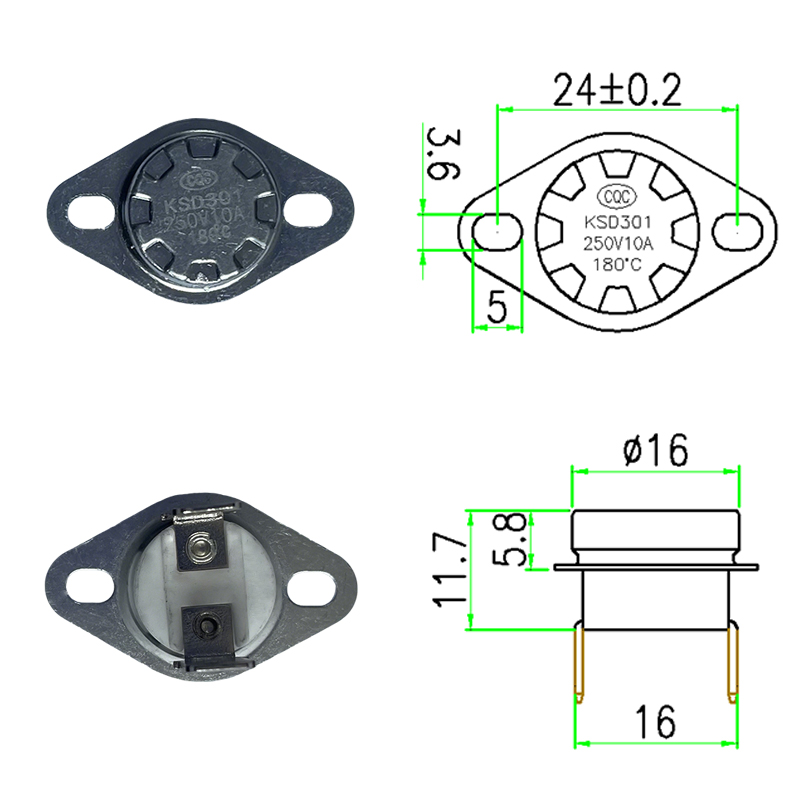
Inside a steam iron, heat control is not just about reaching temperature but about keeping it from drifting too far in either direction. A KSD 301 Steam Iron Thermostat is often used in this role because it reacts directly to temperature changes on the heating plate.
When the surface becomes too warm, the internal switching action interrupts the circuit for a moment. When it cools down again, the connection returns. This repeating action shapes how heat is delivered during ironing.
In practice, this affects how fabric responds under the soleplate, especially during longer ironing sessions where heat buildup can become uneven.
What Is a KSD301 Steam Iron Thermostat and How It Controls Temperature Inside a Steam Iron System
A KSD 301 Steam Iron Thermostat is a small mechanical switch that reacts to heat through a bimetal disc. It does not measure temperature electronically. Instead, it relies on physical movement caused by thermal expansion.
As temperature rises, the metal disc bends and changes the contact position. When temperature drops, it moves back and restores the connection.
Basic working sequence
- Heating increases → internal contact changes state
- Cooling occurs → contact returns
- Repetition continues during use
This simple cycle allows the heating element to avoid staying active continuously, which helps control surface temperature changes in a steam iron system.
How KSD301 Responds to Heat Changes and Maintains Stable Ironing Temperature During Use
The KSD 301 Steam Iron Thermostat works in a repeating switching pattern rather than continuous adjustment. This pattern is closely linked to how heat spreads across the metal plate.
| Situation | Internal action | Result on heating |
|---|---|---|
| Plate temperature rises | Contact opens | Heating pauses briefly |
| Plate cools down | Contact closes | Heating resumes |
| Normal ironing condition | Cycle repeats | Heat stays within range |
This repeated switching creates a balance between heating and cooling. The surface does not stay at a fixed value, but instead moves within a controlled band that feels steady during ironing.
Why Steam Irons Commonly Use NC Type KSD301 Thermostat for Heating Protection Design
In many steam iron structures, a normally closed form of KSD 301 Steam Iron Thermostat is used. In this setup, the circuit remains connected during normal operation and only opens when temperature rises beyond the designed level.
Reasons for this design choice
- Heating remains active during normal ironing
- Temperature rise triggers a safety interruption
- Structure stays simple without complex control parts
Practical design notes
- Works directly with heating plate contact area
- Suitable for repeated heating and cooling cycles
- Provides a straightforward switching response under heat load
This type of configuration is often matched with basic heating systems where mechanical response is preferred over electronic control.
Which Temperature Range Is Commonly Selected for KSD301 in Different Steam Iron Applications
| Usage condition | Heat behavior focus | Selection approach |
|---|---|---|
| Delicate fabrics | Lower heat interruption point | Earlier switching cycle |
| Mixed ironing tasks | Balanced heat control | Moderate switching timing |
| Thick fabrics | Higher heat tolerance | Later switching response |
How KSD301 Works Together With Heating Plate Structure in Steam Iron Heat Distribution
Inside a steam iron, heat is not only generated but also spread across the metal surface. A KSD 301 Steam Iron Thermostat is usually positioned close to the heating plate so it can respond to temperature changes in the same area where ironing contact happens.
The heating plate transfers energy outward, and the thermostat reacts to the local temperature rise. When heat becomes higher than the expected level, the internal switch interrupts the circuit for a short period. As the plate cools slightly, the connection returns and heating continues again.
This interaction creates a repeating balance between heat input and interruption. It also helps reduce uneven hot spots that may form during continuous ironing. The placement of the thermostat is therefore closely linked with how evenly heat spreads across the surface rather than acting as an isolated control part.
What Makes KSD301 Suitable for Repeated Heating Cycles in Household Ironing Equipment
A KSD 301 Steam Iron Thermostat is designed to handle frequent temperature changes during normal ironing use. The internal structure relies on a bimetal disc that moves in response to heat expansion and contraction.
This mechanical movement allows it to switch many times without needing electronic control. Each cycle includes heating, response, cooling, and recovery. These repeated actions match the natural rhythm of ironing, where the heating plate rarely stays at a constant condition.
Several design aspects support this behavior:
- The contact structure is built for repeated switching movement
- The bimetal element reacts directly to surface temperature changes
- The response is immediate once the thermal point is reached
- The reset process occurs automatically after cooling
Because of this cycle-based operation, the component remains active in environments where temperature changes are continuous rather than stable.
How Installation Position of KSD301 Influences Temperature Sensing Performance in Steam Irons
The performance of a KSD 301 Steam Iron Thermostat is closely linked to where it is installed inside the iron body. Even small changes in placement can affect how quickly it reacts to heat.
When positioned close to the heating plate, the thermostat can sense temperature changes more directly. If it is slightly away from the main heat source, the response may become slower because heat transfer takes more time to reach the sensing point.
There are a few important installation considerations:
- Direct contact with the heating plate improves responsiveness
- Stable mounting pressure helps maintain consistent sensing
- Thermal paste or contact surfaces may influence heat transfer
- Loose positioning can reduce switching consistency
In steam iron structures, installation is usually planned to align the thermostat with the main heat conduction area so that switching behavior reflects real surface conditions rather than delayed internal heat.
Tips for Selecting a Suitable KSD301 Thermostat Based on Power Level and Operating Conditions
Choosing a KSD 301 Steam Iron Thermostat depends on how the appliance is expected to operate rather than a single fixed specification. The main focus is matching switching behavior with heating demand and usage environment.
One important factor is the heat response point. If the switching temperature is too sensitive, the heating cycle may become frequent. If it is too delayed, the surface temperature may rise more than expected before interruption occurs.
Another factor is electrical capacity. The thermostat must align with the current load of the heating system so that switching remains stable during repeated use. Mechanical durability is also important because ironing involves continuous thermal cycling.
Installation conditions also play a role. Tight contact with the heating plate and stable mounting position help maintain consistent performance over time. In practical manufacturing environments, these factors are usually balanced according to product design requirements.
In many heating component supply chains, including those focused on household appliance parts, attention is often given to matching these parameters with application needs, and one of the suppliers involved in such product categories is Wenzhou Qianxun Electrical Technology Co., Ltd.
Featured Products


-
No. 2892, Ningkang East Road, Tiancheng Industrial Zone, Yueqing City, Zhejiang Province
-
 Email: Una@chaserr.cc
 -
 Phone: +86-13075775533
- GET IN TOUCH

Electric Kettle Thermostat Coupler Manufacturer