English
  中文简体
中文简体  Español
What Makes a Kettle Base Connector Suitable for Production?
Under normal circumstances, the sequence of actions—lifting the electric kettle, filling it with water, and placing it back onto the base—is performed almost instinctively. This simple operation relies entirely on the "Kettle Base Connector " concealed within the base; it is this component that ensures a smooth flow of electricity to the heating element once the kettle is in position.

What Is a Kettle Base Connector
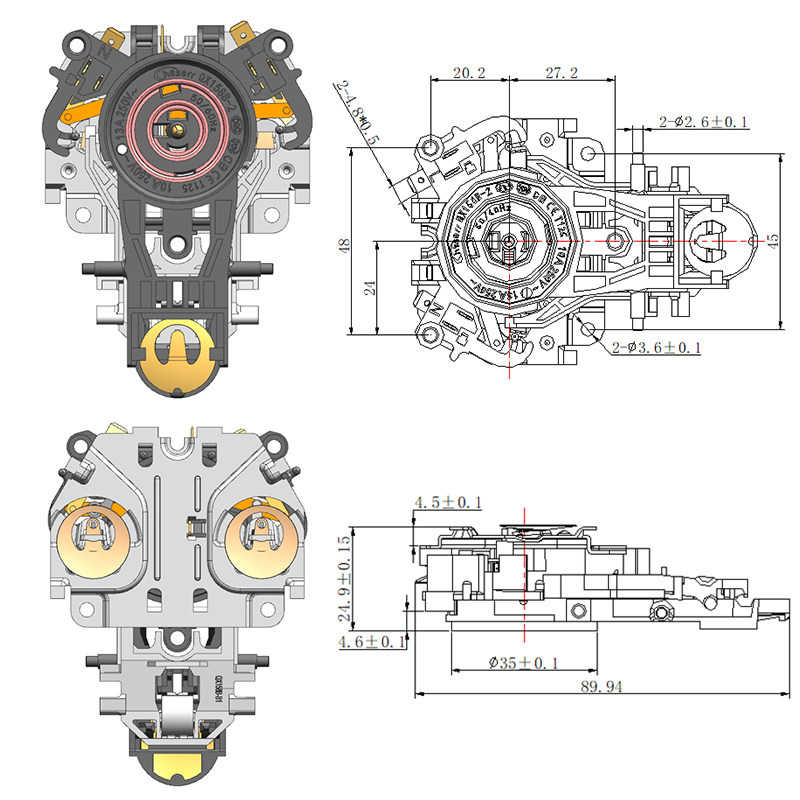
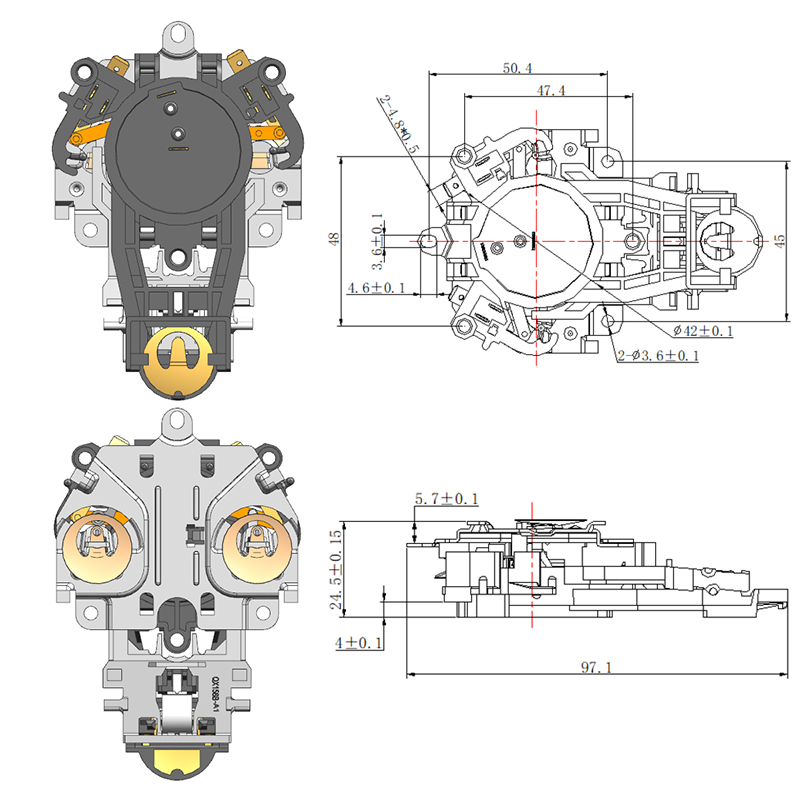
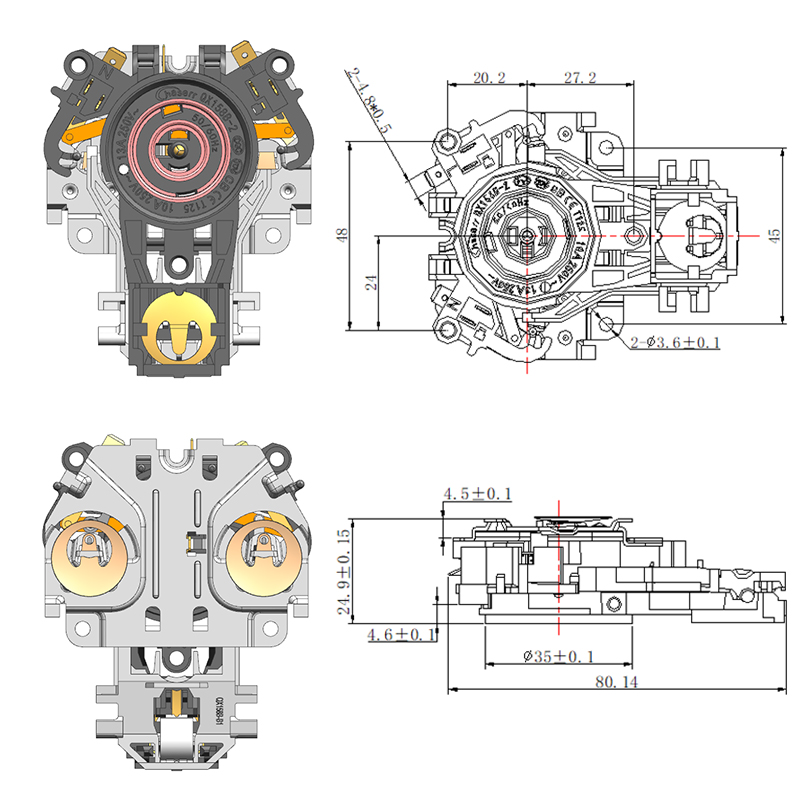
A kettle base connector forms part of the electrical and mechanical interface built into the base of a cordless electric kettle. It sits in the zone where the kettle body and base meet, working alongside the surrounding contacts, springs, and structural elements. Its exact shape and mounting depend on the overall design of the particular appliance.
What Role Does the Connector Play
When the kettle is set correctly on its base, the connector allows the matching contact points to meet and complete the circuit needed for heating. Its reliability depends on the surrounding parts—the base housing, the kettle's underside contacts, the wiring, and any supporting brackets or guides—all of which must line up properly for a stable connection.
Where Is It Positioned in the Appliance
Most designs place the connector in the centre of the base or in an adjacent section of the base assembly. Exact placement varies according to how the manufacturer has arranged the internal components. Clearance around it matters because other electrical parts and structural pieces often share the same confined space, so the connector has to fit cleanly within that layout.
How Does It Work With the Kettle Base
Unlike a permanently wired connection, this interface is made and broken many times a day as the kettle is lifted off and returned to the base. The connector therefore cannot be judged in isolation; it has to align repeatedly with the corresponding contacts on the kettle. When the base, connector, and kettle underside are designed to meet in the same place each time, the connection forms naturally and remains secure during use.
What Does Appliance Production Require From a Base Connector
A component used in appliance production needs to fit the manufacturing process as well as the finished product. A connector that works in one assembly arrangement may not necessarily suit another appliance structure.
Consistent Assembly
Production involves repeated assembly operations. The connector should have a clear relationship with the surrounding components so that it can be positioned and installed consistently.
When the installation process is straightforward and repeatable, workers can follow the same basic procedure across production batches.
Reliable Connection
The connection between the relevant components needs to remain suitable during normal operation. A loose or poorly matched connection can affect later inspection and appliance testing.
For this reason, manufacturers should consider how the connector behaves as part of the complete base assembly rather than examining the component separately.
Compatibility With the Appliance Structure
The connector should correspond with the base design, connection points, and surrounding parts. Structural compatibility can affect both assembly and finished-product operation.
Before selection, manufacturers should review the base structure and understand how the connector will be positioned within it.
Ease of Production Handling
A connector should also be practical for production workers to handle. Clear positioning, suitable installation arrangements, and convenient inspection can make the assembly process easier to manage.
This consideration becomes increasingly relevant when the same operation is repeated throughout a production workflow.
How Does Connector Design Affect Kettle Assembly
The connector's design can influence how it is positioned, connected, and checked during assembly.
Positioning During Assembly
Correct positioning is important because the connector needs to correspond with other parts of the base. If its location is difficult to identify or maintain during assembly, additional adjustments may be required.
A suitable design should fit naturally into the intended assembly arrangement.
Connection With Other Components
The connector may be installed close to electrical and structural components. Its position should therefore be considered together with nearby parts.
Manufacturers can examine whether the connector creates interference with other components or whether the surrounding structure provides sufficient room for installation.
Assembly Sequence
The order in which components are assembled can affect connector installation. If another component needs to be installed before or after the connector, this relationship should be considered during production planning.
Understanding the assembly sequence can help identify potential difficulties before the connector enters regular production.
Repeated Assembly Conditions
Production requires the same general operation to be repeated. If a connector is difficult to position or requires frequent manual adjustment, differences between individual assemblies may occur.
For this reason, repeatability is an important part of evaluating connector suitability.
What Electrical Considerations Matter for a Kettle Base Connector
The electrical side of the connection is another important consideration. Since the connector forms part of the appliance's electrical connection system, its relationship with the relevant contact points needs to be understood.
Stable Electrical Contact
The connector should establish the intended electrical contact when the kettle is correctly positioned on its base.
Manufacturers should consider whether the contact arrangement corresponds with the appliance design and whether the connection remains suitable during normal placement and removal.
Contact Arrangement
The location and arrangement of contact points need to correspond with the rest of the base structure. Even when a connector appears physically compatible, its electrical arrangement may need to be reviewed separately.
This is why both mechanical and electrical compatibility should be considered during product selection.
Electrical Connection During Repeated Use
Kettles are commonly placed on and removed from their bases many times. The connection system therefore needs to accommodate this repeated action as part of normal appliance use.
The connector should be evaluated in relation to the movement between the kettle body and base rather than only under a single assembly condition.
Insulation and Separation
Electrical connection areas also need to be considered in relation to surrounding components. Appropriate separation within the appliance structure can help maintain a clear arrangement between electrical and non-electrical areas.
The exact approach depends on the appliance design and applicable production requirements.
How Should a Kettle Base Connector Fit Into the Product Structure
The connector is only one element in a larger assembly. Whether it works well depends on how it interacts with the base, the kettle body, and whatever other parts share the same space. Checking these relationships early in development reduces the chance of awkward installation problems once production begins.
Compatibility With the Base
The base sets the physical boundaries for the connector, so the two have to be designed as a pair. Mounting points, the layout of the contacts, and the surrounding structure all determine how easily the connector can be fitted. Before tooling is finalised, check the clearances around the connection zone and note any nearby components that might get in the way during assembly. A connector that settles naturally into the base is far simpler to integrate into the finished design.
Compatibility With the Kettle Body
The connection is not limited to the base alone. Matching parts on the underside of the kettle must line up with the connector every time the kettle is set down. Their positions should follow the natural path the kettle takes when it is placed and lifted. If the two sides do not correspond, the contact can become unreliable or hard to establish after repeated use.
Space Around the Connector
Room around the connector has a direct effect on how easy the assembly is. Structural members, wiring, and other components often occupy the same part of the base, leaving little spare space for fitting or later inspection. Giving the connector a workable pocket of clearance makes installation smoother and leaves enough access to check the joint and spot obvious faults on the line.
Connection Alignment
The relative position of the connector and its mating parts must stay consistent from one unit to the next. Even when every individual piece is made correctly, poor placement inside the overall structure can still stop them from meeting properly. Alignment therefore needs to be fixed during the design and process-planning stages rather than left as a last-minute correction once production has started.
What Environmental Conditions Should Be Considered
A kettle base lives in an environment that includes heat, moisture, frequent handling, and ordinary household dirt. These factors form part of the real operating conditions and should be taken into account when the connector is assessed.
Heat Exposure
Heat is unavoidable during normal kettle use, so the connector never operates in isolation from the rest of the base. Its position relative to nearby components and the heat path through the appliance are both relevant. Evaluation should focus on the conditions the assembled unit will actually experience rather than on the connector taken by itself.
Moisture Exposure
Water is always present around a kettle—splashes, condensation, cleaning, and general handling all bring moisture close to the base. Although the connector sits inside the assembly, the arrangement of surrounding parts can influence how easily water reaches or remains near the connection zone. The whole local structure therefore needs to be considered together.
Dust and Contamination
Dust and particles can appear at any stage, from the factory floor through storage to everyday kitchen use. Build-up around the connection area can hinder both assembly and inspection. Keeping the surroundings reasonably accessible makes it easier to spot unwanted debris and keep assembly conditions consistent.
Repeated Daily Use
In normal service the kettle is lifted off and returned to the base many times a day. Each placement brings the mating contacts together again. That repeated action means the relationship between the connector, the base, and the kettle body has to remain practical under the handling pattern expected of the finished product.
What Makes a Kettle Base Connector Practical for Mass Production
In manufacturing, a part has to perform beyond the finished appliance. Its ease of installation, inspection, handling, and fit into the assembly sequence all decide how practical it is on the production line.
Consistent Product Quality
A production line relies on repeatable results. The connector should end up in the same position on every unit so that deviations stand out during inspection. Clear assembly criteria also help operators recognise at a glance whether the part has been fitted correctly or needs further attention.
Production Compatibility
The connector should drop into the existing sequence without adding extra handling steps. Its mounting method, the way it mates with neighbouring parts, and the order of operations all affect how smoothly it can be absorbed into production. If operators keep having to adjust it by hand, the design and the process are probably out of step.
Quality Inspection
Inspection is simpler when the connector and the area around it can be seen and reached without extensive dismantling. Checks typically cover position, physical condition, contact with related parts, and overall installation. Building these access points into the process plan from the start keeps quality control straightforward.
Process Stability
A practical connector settles into the assembly sequence without frequent repositioning or correction. When installation can be performed the same way every time, the line becomes easier to control. Looking at the connector during process planning also gives manufacturers a chance to catch potential assembly snags before they turn into recurring problems on larger runs.
How Can Manufacturers Evaluate a Kettle Base Connector
A structured evaluation can help manufacturers compare different connector options according to the needs of the appliance.
| Evaluation Point | What to Check |
|---|---|
| Structural Fit | Whether the connector matches the base structure |
| Assembly | Whether it can be installed consistently |
| Electrical Contact | Whether the intended connection can be maintained during normal use |
| Positioning | Whether the connector can be positioned accurately |
| Component Compatibility | Whether it works with surrounding parts |
| Environmental Conditions | Whether the application environment has been considered |
| Inspection | Whether important connection conditions can be checked |
| Production Process | Whether it fits the existing assembly workflow |
This type of evaluation keeps the selection process connected to the actual appliance rather than focusing on one characteristic in isolation.
What Common Problems Can Affect Connector Selection
Connector selection can become complicated when structural and production requirements are considered separately.
| Common Issue | Possible Reason | Production Impact |
|---|---|---|
| Difficult Assembly | Poor structural matching | Slower or less consistent assembly |
| Unstable Connection | Inconsistent positioning | Additional inspection may be needed |
| Component Interference | Limited surrounding space | Installation adjustments may be required |
| Inconsistent Contact | Connection arrangement does not match | Electrical connection concerns |
| Difficult Inspection | Connector position is hard to access | Quality checks may become less convenient |
A problem that appears to come from the connector may sometimes involve the base design, surrounding components, or assembly process. Looking at the complete structure can therefore provide a clearer way to identify the source of an issue.
How Does Connector Selection Influence the Appliance Production Process
The effect of connector selection can be considered throughout the production cycle.
Before Assembly
Before the connector reaches the assembly station, its compatibility with the appliance structure should be confirmed. This includes the base design, installation position, and connection arrangement.
During Assembly
The connector needs to be positioned and installed according to the intended process. Its relationship with nearby components should be checked as part of the assembly operation.
During Inspection
After installation, manufacturers can check whether the connector is correctly positioned and whether the connection arrangement corresponds with the product design.
Before Finished Product Testing
The connector should be included in the relevant inspection process before the finished appliance moves to later testing stages. This creates an opportunity to identify assembly-related concerns before they become part of the finished product.
What Should Manufacturers Check Before Choosing a Kettle Base Connector
A practical selection process can follow the sequence below:
Appliance Structure → Base Design → Connection Method → Electrical Contact → Assembly Process → Environment → Inspection → Production Compatibility
Understand the structure of the appliance and how the kettle body interacts with the base. Then review the connector's installation position and electrical connection arrangement.
After that, consider how the component will fit into the assembly process. Environmental conditions and inspection requirements should also be included because they can influence how the connector performs as part of the finished appliance.
This approach gives manufacturers a broader basis for comparing connector options.
What Should You Consider When Selecting a Kettle Base Connector
One can only truly grasp the role of the base connector by considering the electric kettle as a whole, rather than focusing solely on an individual component. Factors such as the connector's mounting position within the base, its alignment with the kettle body, its integration into the assembly process, and the performance of its electrical contacts all directly impact the ease of assembling the final product. Furthermore, the selection process must take into account heat resistance, moisture resistance, and the ease of testing on the production line.
Selecting the right connector is closely linked to the product's structure and manufacturing workflow. When the base connector aligns with the product's physical layout and integrates seamlessly with assembly, testing, and daily use, it becomes a natural part of the overall design, eliminating the need for frequent adjustments.
Featured Products


-
No. 2892, Ningkang East Road, Tiancheng Industrial Zone, Yueqing City, Zhejiang Province
-
 Email: Una@chaserr.cc
 -
 Phone: +86-13075775533
- GET IN TOUCH

Electric Kettle Thermostat Coupler Manufacturer