English
 中文简体
 Español

Steam Kettle Switch Reset: What Should the Appliance Trial Record?
An appliance trial should tell reviewers more than whether a kettle switched off once. The next user action matters too. What happens when the user tries to operate the control again, and what conditions must be present before normal operation can resume? These questions belong in a model-specific reset review.
The word reset can describe different actions on different components. It may be used informally for moving a lever, waiting for a condition to change or following a recovery instruction. Before writing a manual or approving a sample, appliance manufacturers should establish the terminology and sequence for the exact switch and appliance combination.
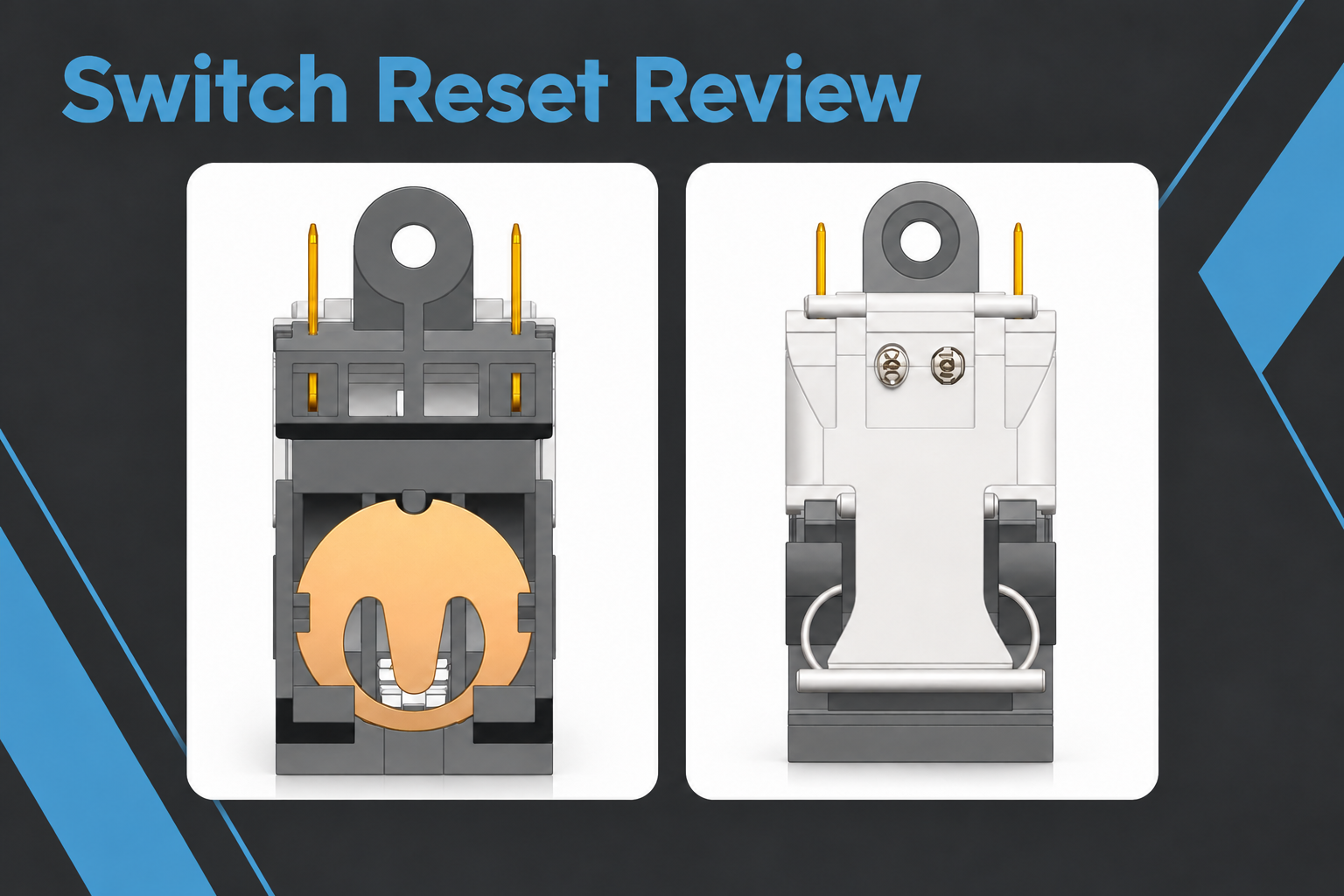
Define the sequence before the trial
Begin with the chosen steam kettle thermostat switches and request the current operating information for the specific model. Identify which function is being discussed. Normal steam-actuated switching and other protective functions should not be combined into a single description merely because they share an assembly.
Ask the supplier which conditions and user actions are relevant to the intended operation. Record the complete appliance configuration used for the review. A switch tested separately cannot establish how the final kettle's control linkage, steam path and user interface behave together.
The responsible appliance engineering team should define the evaluation plan and any applicable safety requirements. This article outlines information to record, not an energised test procedure. Operational checks should be performed by appropriately qualified people using the approved equipment and method for the appliance under review.
Start from an identified condition
A useful record identifies what happened immediately before the reset attempt. Note the operating state, the event that changed it and the relevant appliance conditions required by the approved plan. Avoid describing the start simply as after use, because different reviewers may interpret that phrase differently.
Keep observations separate from explanations. Record what the control did and what the appliance indicated before deciding why it happened. If the switch could not be re-operated as expected, the team needs the actual sequence and conditions rather than a conclusion that the part is defective.
| Record item | What to describe | Why it matters |
|---|---|---|
| Starting condition | State immediately before the action | Makes the sequence interpretable |
| User action | Control movement specified in the plan | Distinguishes operation from handling variation |
| Appliance response | Observed change without speculation | Provides usable evidence |
| Relevant timing | Timing method and reference event | Avoids an ambiguous waiting period |
| Configuration | Switch, housing and linkage versions | Connects the result to the assembly |
Avoid inventing a universal waiting time
Do not put a fixed reset delay in the customer manual because it appeared in an unrelated product's instructions. The relevant behavior depends on the model and appliance arrangement. Ask the supplier and responsible engineers what can be stated for the actual product and what evidence supports the wording.
If time is measured during an agreed evaluation, define where the measurement starts and what marks its end. A number without those boundaries is difficult to compare. Also identify the conditions under which the observation was made and avoid turning one sample observation into a guarantee for every environment.
Where an instruction says to allow the appliance to cool or follow another recovery step, preserve its intended meaning. The manual should be clear enough for the intended user without adding unsupported technical claims or implying that repeated attempts can replace the documented process.
Look at the control linkage as well as the switch
A lever or button may not transmit the intended movement if surrounding parts restrict it. Review the assembled interface using the component's installation guidance and the appliance drawing. A loose switch can behave differently from a switch installed behind a user control.
The trial record should identify changes to the linkage, housing and component mounting. If a reviewer adjusts the assembly during investigation, document the change before comparing results. Otherwise, a later reviewer may believe two observations came from the same configuration when they did not.
- Identify the exact switch and appliance assembly versions.
- Agree the starting condition and authorized evaluation method.
- Record the prescribed user action and observed response.
- Separate any adjustment from the original observation.
- Confirm the final instruction against the approved configuration.
Turn the result into understandable instructions
An engineering record may contain detail that does not belong in a consumer manual. Use it to support concise instructions that explain the intended action and the appropriate response when normal operation cannot be restored. Do not add instructions that ask a user to bypass a protective feature or modify the switch.
Check illustrations against the final control. If the manual shows a lever moving in one direction while the delivered appliance uses a different arrangement, even accurate text can become confusing. Language review should include the sequence of actions, not just a literal translation of component terminology.
Ask the responsible reviewers to distinguish routine operation from a condition requiring service. The manual should provide an appropriate service route when behavior differs from the instructions. Repeated forcing of a control is not a substitute for investigation of the actual assembly.
Keep the reviewed sequence with the production version
A switch substitution or housing revision may require the operating sequence and manual to be reviewed again. Link the approved instruction to the controlled component and appliance references. Purchasing should know when an alternate quotation is a genuine repeat and when it introduces a change needing engineering approval.
The final record should support a simple answer: under the defined conditions, what should the authorized user do, and what response has the responsible team approved? Establishing that sequence produces better appliance documentation without claiming that every steam switch resets in the same way.
Featured Products


-
No. 2892, Ningkang East Road, Tiancheng Industrial Zone, Yueqing City, Zhejiang Province
-
 Email: Una@chaserr.cc
-
 Phone: +86-13075775533
- GET IN TOUCH

Electric Kettle Thermostat Coupler Manufacturer