English
  中文简体
中文简体  Español
Snap Disc Thermostat Selection: Appliance Purchasing Guide
A replacement thermostat may carry the expected temperature marking and still perform the wrong function in an appliance. Its contacts may act differently, its reset method may not suit the application, or its mounting arrangement may place the sensing surface away from the intended thermal location. Matching the marking alone leaves those questions unanswered.
Snap disc thermostat selection therefore starts with the role of the control in the appliance. Procurement needs a specification that the design and quality teams have reviewed, rather than a photograph and a request for an equivalent part. This is especially important when a component change affects a protection function or an already approved appliance design.
Define the switching function first
When reviewing KSD301 thermostats, identify what the contacts are intended to do under the specified conditions. State whether the circuit needs to open or close as temperature changes, and ask the manufacturer to confirm the proposed operating behaviour. Avoid relying on abbreviations without agreeing their meaning.
Distinguish normal temperature regulation from a protective function. A control used repeatedly during normal operation may have a different role from a device intended to respond to an abnormal condition. The appliance design determines that role; the purchasing team should not choose it from the available price list.
Include the relevant circuit information in the technical enquiry. A component described as suitable for household appliances is not automatically suitable for every circuit within one. Record the selected part's function in the approved bill of materials so that a later substitution does not silently change the design.
Specify operating and return conditions
A thermostat specification should state the required operating temperature information and the associated tolerances, using the manufacturer's terminology. Ask how the return behaviour is defined for an automatic reset version. The operating point and the conditions under which the contacts return are separate pieces of information.
Temperature markings need to be interpreted with the product documents. Two components carrying a similar nominal marking may have different tolerance bands or return characteristics. Request the actual specification rather than treating a marking as a complete performance description.
The appliance team should decide the acceptable behaviour in its application. It should also define how that behaviour will be evaluated in the finished assembly. No generic article can establish an appropriate operating temperature for an unknown appliance, heater, enclosure or protection circuit.
Confirm the thermostat reset method
The thermostat reset method must match the intended control strategy. An automatic reset design and a manually reset design can lead to different behaviour after a temperature event. Confirm which version is quoted and how its reset operation is described in the supplier's instructions.
For a protective application, the appliance designer needs to evaluate the complete sequence following operation. Do not assume that automatic return is preferable because it is convenient. Equally, do not select manual reset without checking access and the intended service procedure.
Keep the reset requirement visible in the purchasing code and inspection documents. A reset feature that disappears into a long catalogue description can be overlooked when repeat orders are placed. Supplier and buyer records should identify the same version without requiring someone to compare photographs.
Review the mounting interface
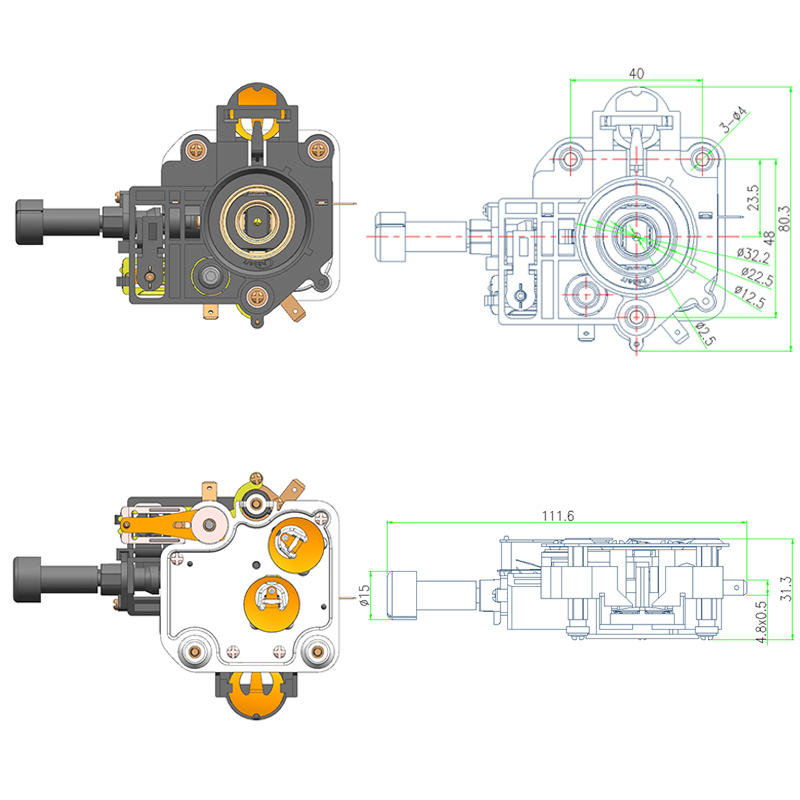
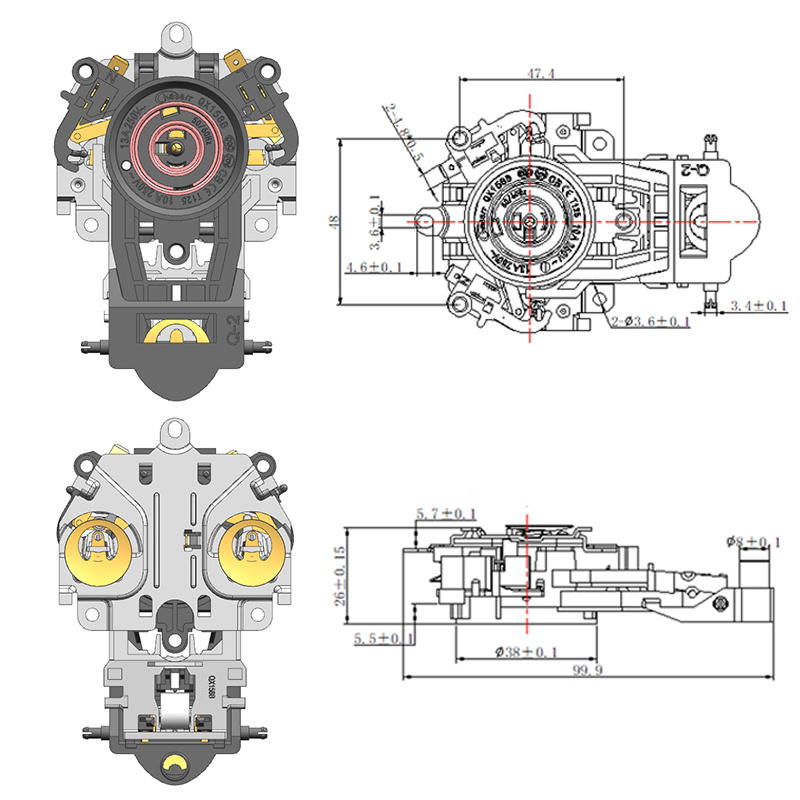
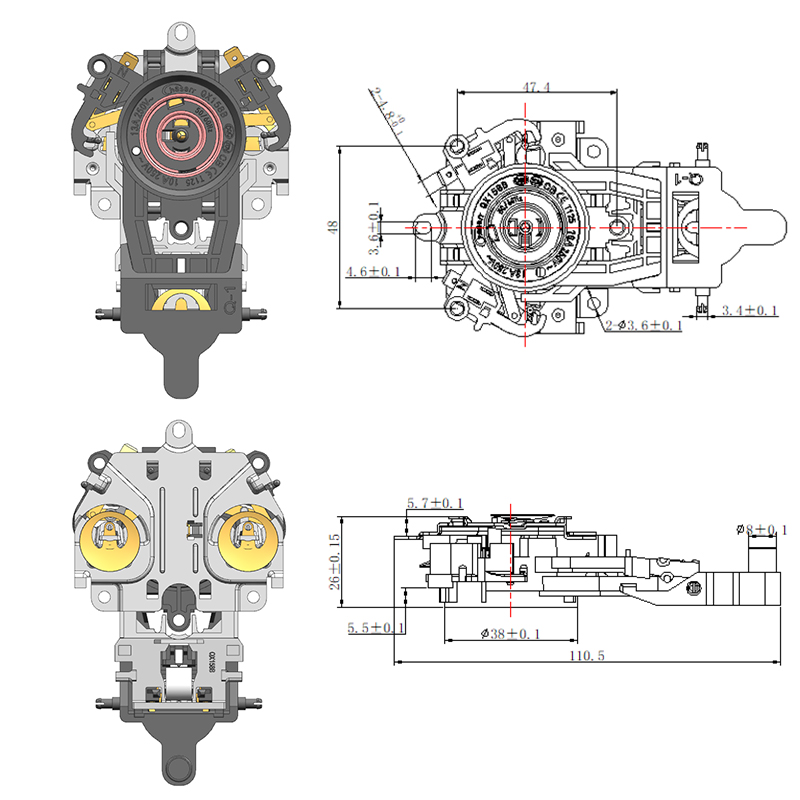
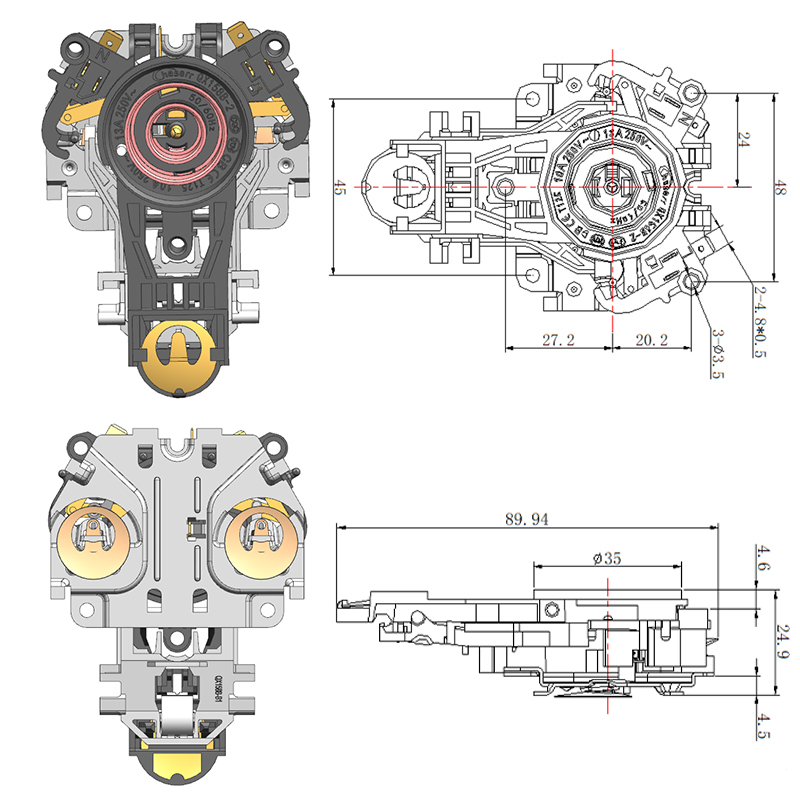
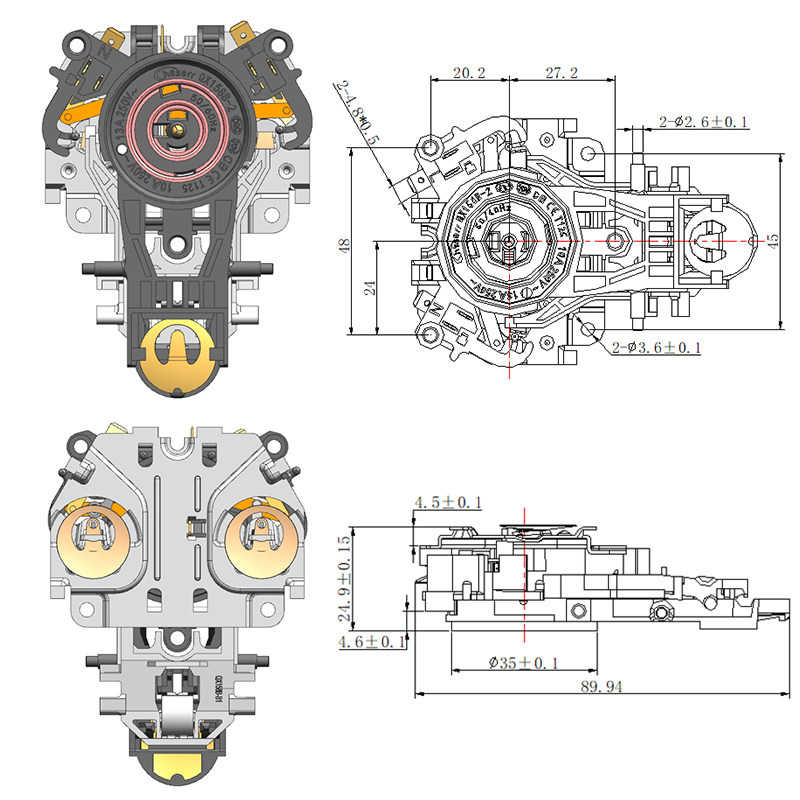
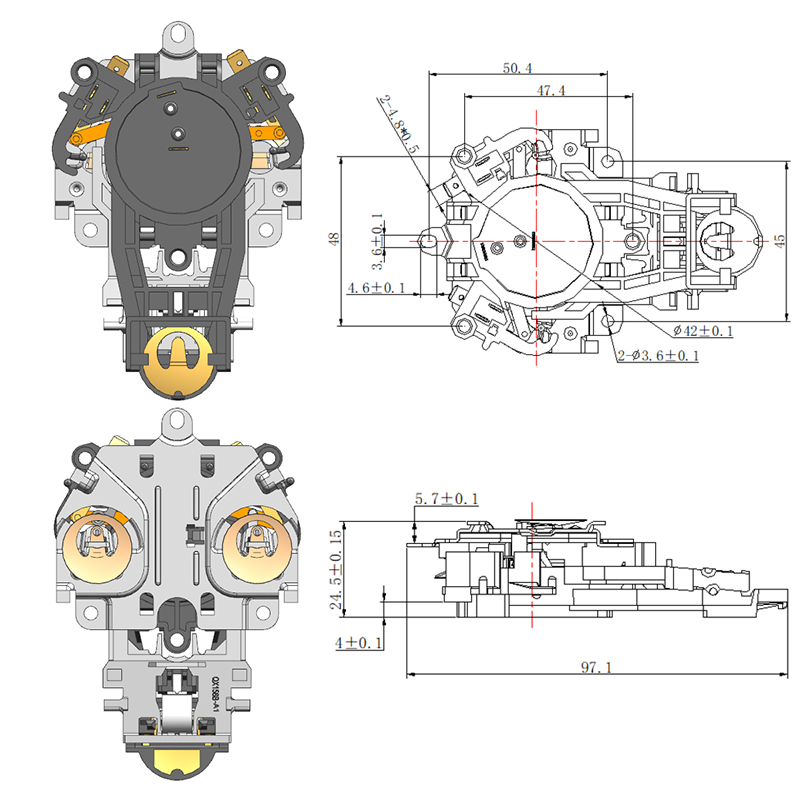
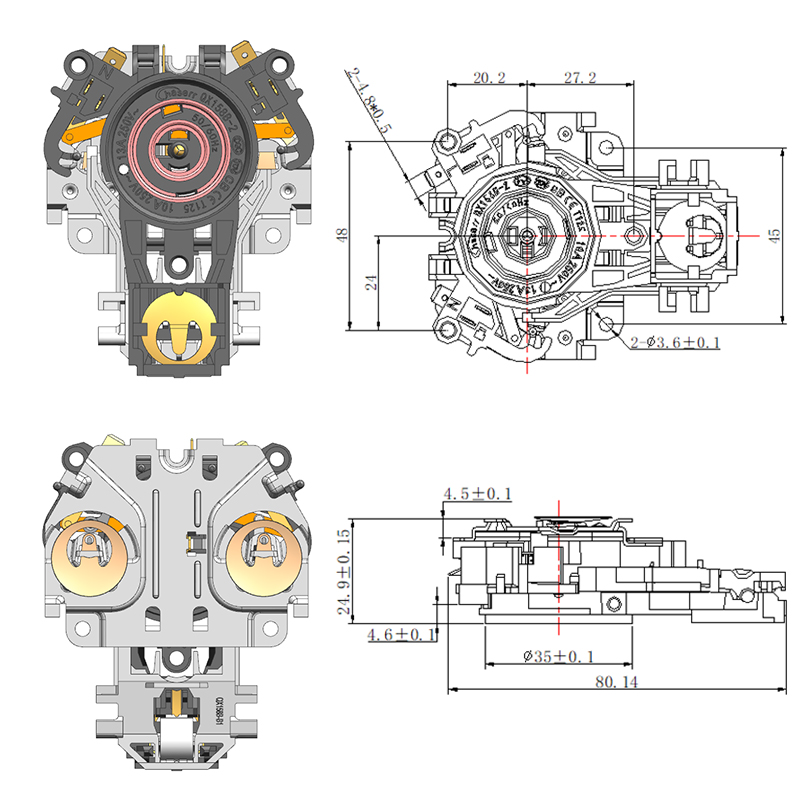
Show the proposed installation location, mounting surface and fixing arrangement. Request the drawing for the exact bracket or body configuration. Compare the sensing interface with the appliance construction and identify any intervening materials. The assembly influences how the control experiences the appliance's temperature conditions.
Ask for installation instructions, including any manufacturer requirements concerning contact, orientation or handling. Do not introduce a mounting pad, adhesive or fixing change simply because it makes assembly easier. Have the design team assess such changes before they enter production.
An illustrative appliance thermostat replacement might use a part with the same visible disc size but a different bracket offset. That offset can change the relationship with the heated surface. The proper comparison is between the installed assemblies, not only between the loose component dimensions.
Check ratings and terminal details together
Electrical ratings must be reviewed for the circuit and load conditions in which the control will operate. Send the application information required by the supplier and have the qualified design team verify the proposed component. A current figure without its stated voltage and conditions is not a complete selection basis.
Terminal orientation, connection method and available space also matter. Confirm the terminals against the wiring design and assembly instructions. Similar looking terminals should not be treated as identical when the connection, insulation or installation clearance differs.
The KSD301 thermostat specification should link these mechanical and electrical details in one record. A drawing for one version and a rating sheet for another create uncertainty even when each document appears plausible on its own. Ask the supplier to identify the exact part covered by each document.
Plan validation in the finished appliance
Component checks are one part of an appliance review. IEC publishes separate standards addressing automatic electrical controls and household appliance safety; this distinction is a useful reminder that component documentation and appliance assessment have different scopes. The applicable editions and requirements must be established for the actual product and destination market.
Do not describe a thermostat certificate as approval of the complete appliance. Ask a qualified compliance or engineering team what evaluation is required after a component change. Keep the scope of any supporting report clear, including the models and configurations it covers.
For the sample review, record the installed component code, mounting arrangement and agreed observations. Any safety related testing should follow the appropriate controlled procedure and be performed by qualified personnel. An informal bench demonstration is not a substitute for that assessment.
Prepare a complete purchasing specification
Use the bimetal thermostat range to identify candidate designs, then prepare a model specific specification for quotation. Include switching function, operating information, reset method, mounting drawing, ratings, terminals and documentation requirements. Mark unresolved items so they cannot be mistaken for agreed values.
After approval, establish how substitutions and revisions will be reviewed. An alternative bracket, reset version or terminal can affect the appliance even if the supplier considers it a minor change. Purchasing should have a clear route back to the design team whenever the approved configuration changes.
A useful thermostat enquiry makes the control's job understandable. It gives the supplier enough information to propose a specific version and gives the appliance team a basis for checking that proposal. That connection is what turns a catalogue item into a controlled production component.
Featured Products


-
No. 2892, Ningkang East Road, Tiancheng Industrial Zone, Yueqing City, Zhejiang Province
-
 Email: Una@chaserr.cc
 -
 Phone: +86-13075775533
- GET IN TOUCH

Electric Kettle Thermostat Coupler Manufacturer