English
 中文简体
 Español

Kettle Coupler Packaging: Protect Terminals Without Losing Identification
A kettle coupler may reach an assembly line in a small package, but its terminals, mounting features and identification all need attention during transport. A carton that looks intact does not establish that every internal component has remained properly separated. Kettle coupler packaging should be reviewed as part of the component purchase, using the actual part and the intended handling route.
For appliance manufacturers and component distributors, the aim is practical protection without losing traceability. Packing must preserve the approved component condition while allowing receivers to confirm the part reference and quantity. It should also suit the factory's incoming inspection and line-feeding process rather than creating unnecessary unpacking or mixing similar versions.
Identify the component and its vulnerable features
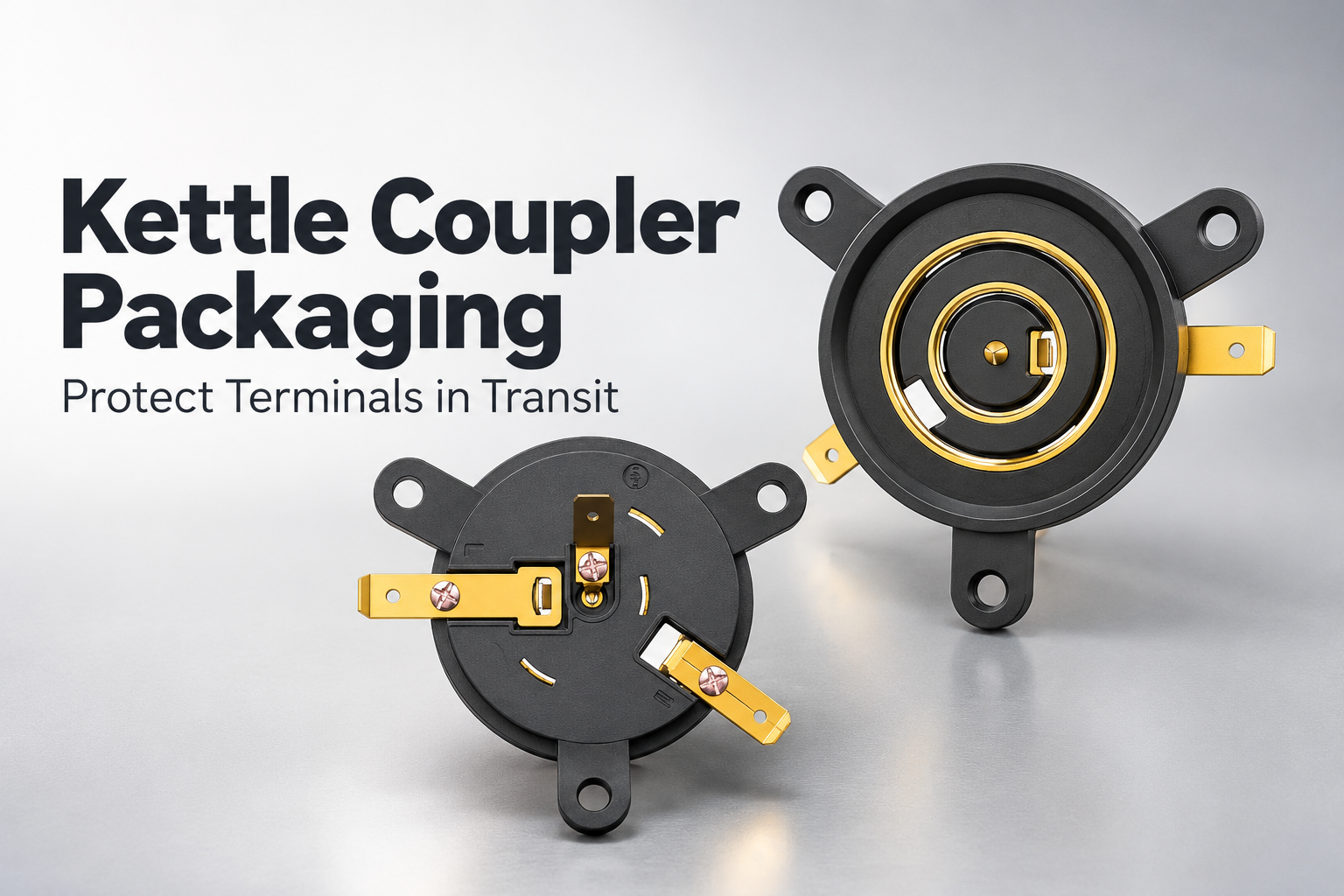
Start with the exact model and drawing revision. When reviewing the automatic three ring kettle coupler range, select the actual proposed component rather than treating all products in the category as equivalent. Terminal positions, mounting details and overall geometry may vary between versions.
Ask the supplier to identify the features requiring protection during shipment. Exposed terminals, contact surfaces, projecting tabs and mounting features deserve a model-specific review. Do not assume the body is an acceptable load-bearing surface or that terminals can be used to restrain the part inside a tray.
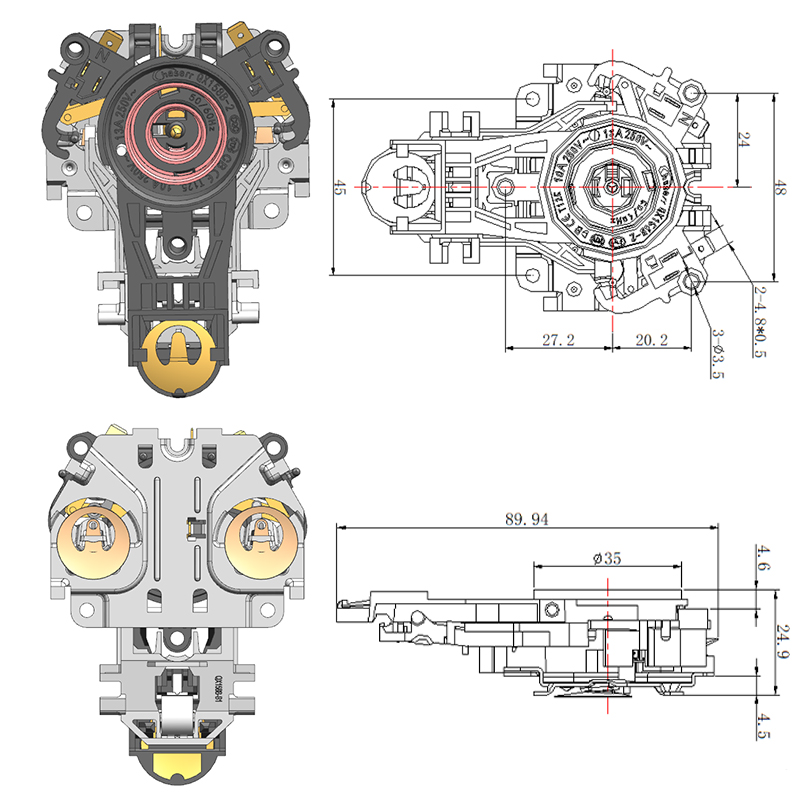
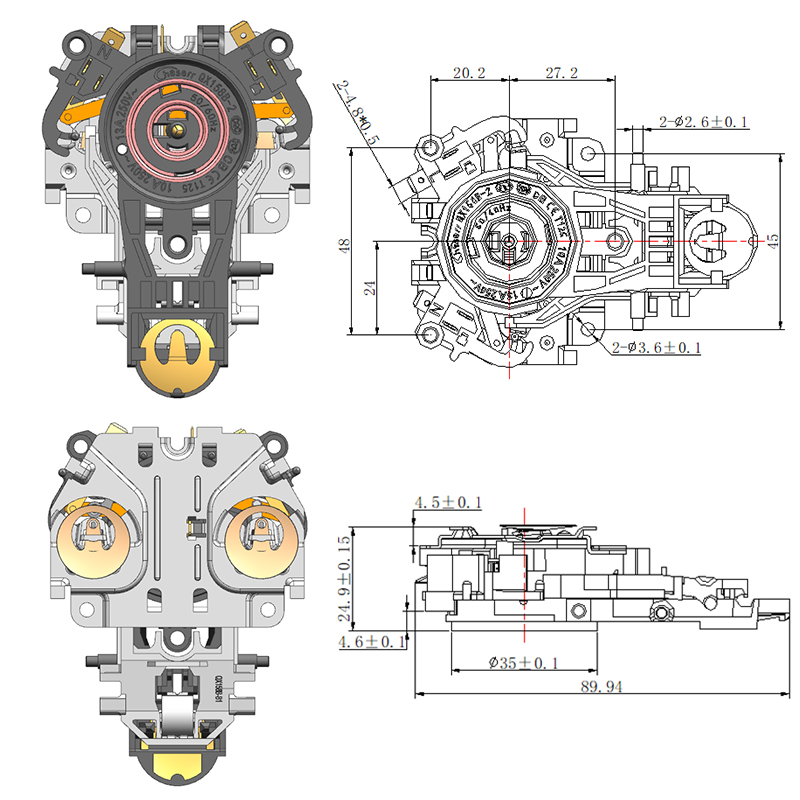
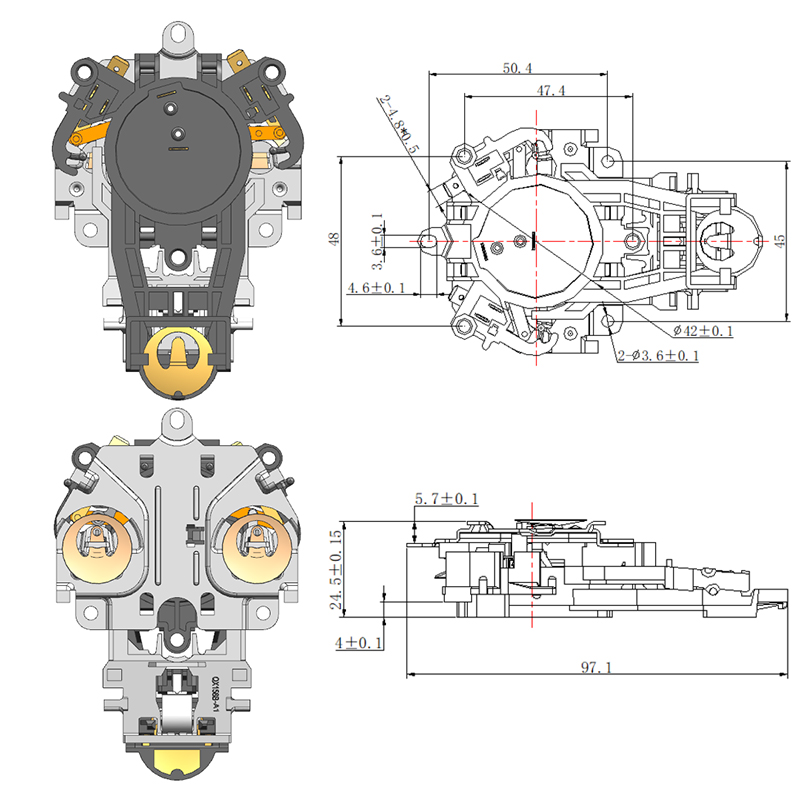
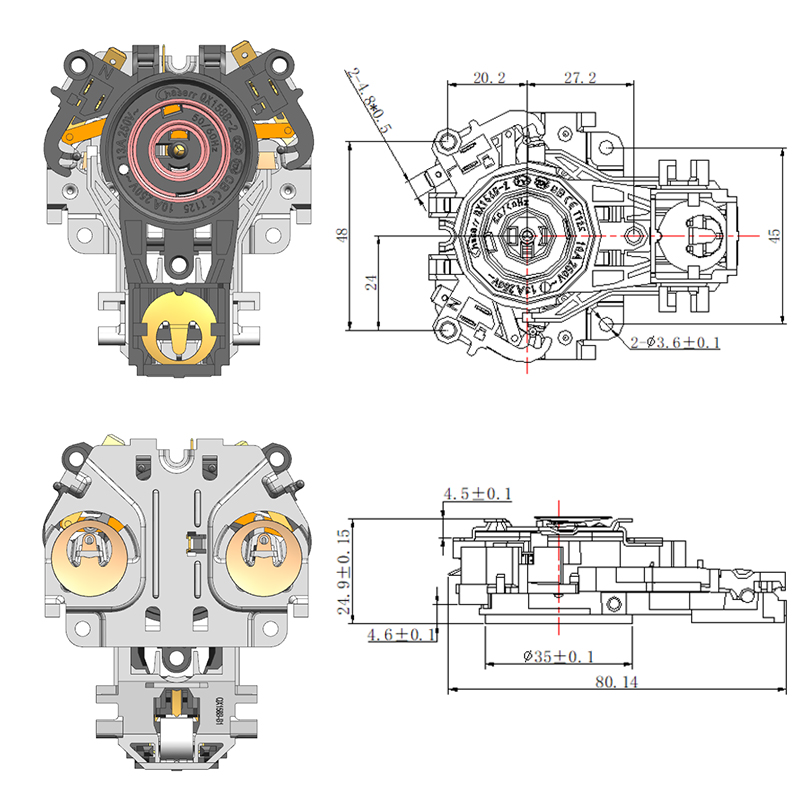
Keep the current drawing and reference photograph together. The image helps a receiving team recognize the component, while the drawing controls the dimensions and configuration. Packaging should preserve that approved configuration; it should not require bending terminals to make the part fit an available cavity.
Review orientation and separation
Coupler terminal protection begins with the position of each component inside its immediate pack. Ask how the part is supported, which surfaces touch the tray and whether neighbouring components can contact each other. Review the arrangement with a full tray rather than one carefully positioned sample.
Confirm that normal stacking does not transfer load through exposed terminals. Check the relationship between the tray above and the highest feature below. If the supplier uses separators, sleeves or individual compartments, evaluate their fit with the selected component and the intended pack quantity.
Do not specify an arbitrary packing material simply because another electrical product uses it. Ask the supplier to propose suitable materials and identify any cleanliness, static-control or moisture precautions required for this component. Record the actual requirement instead of assuming every coupler needs the same treatment.
Approve a complete coupler packing sample
A coupler packing sample should represent the full proposed arrangement: component, immediate protection, inner pack and master carton. Obtain photographs of each level and retain a physical sample where practical. A photograph of an empty tray cannot show how the filled pack behaves during handling.
Discuss the transport and storage route with the supplier. Include whether cartons are palletized, transferred through a distribution warehouse or opened for repacking. If a transport test is required, agree the method, packed configuration and acceptance criteria before testing. Do not claim that one unspecified drop test proves protection under every shipping condition.
| Packing review area | Question to resolve | Evidence to retain |
|---|---|---|
| Component position | How is the part supported and oriented? | Filled-tray photograph |
| Terminal clearance | Can adjacent parts or trays touch terminals? | Section view or physical sample |
| Stacking | Where does the packing load transfer? | Approved stacked arrangement |
| Identification | Can the receiver identify the exact version? | Label proof and part reference |
| Count control | How many parts belong at each level? | Packing quantity schedule |
| Transport evaluation | Which route and conditions were reviewed? | Defined method and inspection record |
Keep the packing approval linked to the component revision. A changed terminal arrangement can require another tray review even when the outer carton dimensions stay the same.
Make labels useful at receiving
Specify the part number, relevant revision, quantity and supplier-provided lot information on the appropriate packing levels. A receiver should be able to distinguish similar models without opening every immediate pack. Use authorized barcode data where the buyer requires machine-readable identification.
Separate logistics labels from component ratings and approvals. A carton label should not introduce an electrical value or compliance mark that has not been confirmed for the actual product. If a rating is needed for identification, use the approved component documentation and agreed artwork.
Decide how partial packs are identified after incoming inspection. If a tray is opened and some parts are removed, the remaining quantity and identity should remain clear. This is especially useful when the same warehouse stores several coupler versions with similar black housings and brass terminals.
Connect packaging to line feeding
Ask the assembly team how components will be removed from the tray and presented at the workstation. A packing design that protects the part but forces operators to grip vulnerable features can create an avoidable handling problem. Review access with the real component and the intended unpacking method.
If trays are reused internally, confirm their allowed use and inspection condition with the supplier and the factory team. Do not assume that a damaged shipping tray remains suitable for repeated line handling. Likewise, avoid mixing loose returns into identified stock without a defined inspection and segregation process.
Agree how suspected terminal damage or a packing discrepancy is handled. Record photographs, pack identity and the affected quantity, then seek the supplier's disposition. Do not instruct warehouse staff to straighten terminals as a routine receiving correction unless an approved technical process specifically permits it.
Finalize the packaging specification
- Attach the exact component drawing and revision.
- Show orientation, separation and terminal clearance in a filled pack.
- Define immediate-pack, inner-pack and carton quantities.
- Approve label content and part identification at each level.
- Agree transport evaluation and receiving acceptance criteria.
- Record how revisions, shortages and damaged packs are handled.
Send the proposed handling route and line-feeding requirements with the quotation request. A complete kettle coupler packaging brief gives the supplier enough context to propose suitable protection and gives the buyer an inspection basis that goes beyond checking the outside of a carton.
Featured Products


-
No. 2892, Ningkang East Road, Tiancheng Industrial Zone, Yueqing City, Zhejiang Province
-
 Email: Una@chaserr.cc
-
 Phone: +86-13075775533
- GET IN TOUCH

Electric Kettle Thermostat Coupler Manufacturer