English
  中文简体
中文简体  Español
How to Choose the Right Thermostat Coupler for Kettles
Kettle failures rarely announce their cause clearly. A unit that stops heating mid-cycle, or one whose auto-shutoff triggers at the wrong temperature, can have any number of explanations — and in a significant share of cases, the problem traces back to the base connector, not the heating element or the control board. For engineers and sourcing managers evaluating components before production commitment, quality assessment of the Thermostat Coupler is one of the more consequential steps in the process. Skipping it, or reducing it to a price comparison, tends to surface problems at the warranty stage rather than the qualification stage.
What Is an Electric Kettle Base Coupler and Why Does Quality Matter?
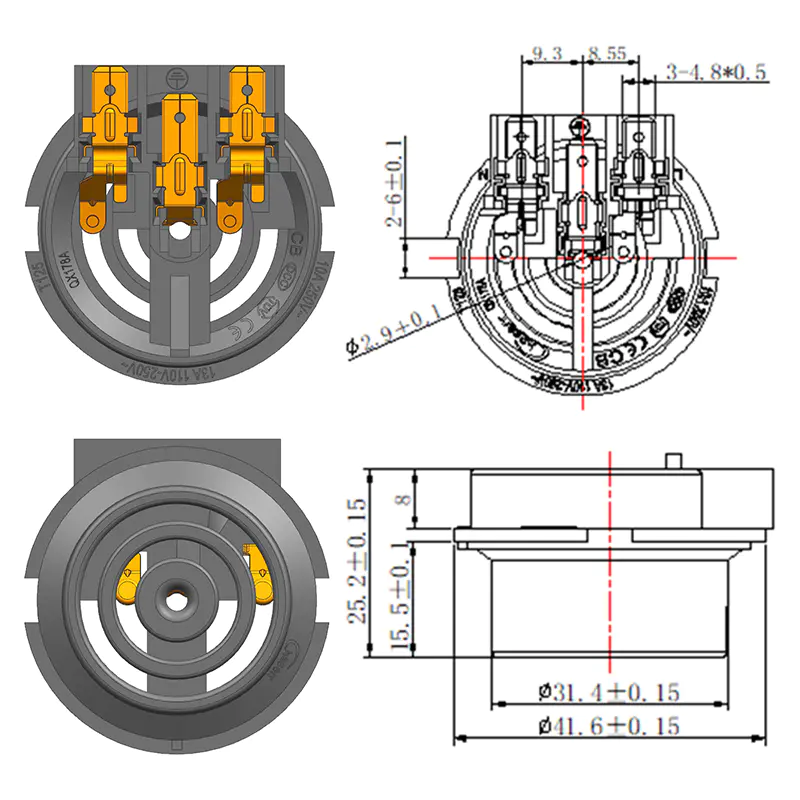
What a Thermostat Coupler Is
A Thermostat Coupler is the electromechanical interface between a cordless kettle body and its power base. It handles two functions simultaneously: transferring electrical current from the base to the heating element, and carrying the thermal signal that tells the thermostat when to cut power. Both functions pass through the same contact points, which means any degradation in the coupler affects power delivery and safety shutoff at the same time.
How the Coupler Connects Kettle and Base
When the kettle is placed on its base, conductive contact pins or plates inside the coupler engage their counterparts in the base unit. These contacts need to align consistently and maintain stable resistance through thousands of placement cycles. The design, whether a fixed-post or a 360-degree rotational configuration, determines how much tolerance the system has for the slight misalignment that occurs during everyday use.
Coupler Function in Power and Temperature Control
Current flows through the coupler contacts to reach the heating element. A separate signal path carries the temperature feedback that governs automatic shutoff. If contact resistance increases over time — through oxidation, mechanical wear, or contamination — the thermal signal becomes unreliable. The shutoff may trigger late, early, or inconsistently, which is both a performance issue and a safety concern.
How Coupler Quality Shapes Product Reliability
A well-specified coupler holds its electrical characteristics across its service life. One that was marginally specified may pass incoming inspection, then degrade after months of daily cycling. That degradation often presents as inconsistent heating times or a base contact zone that runs warmer than it should. These symptoms are difficult to diagnose in the field and expensive to address under warranty.
How Does a Thermostat Coupler Work?
Electrical Contact Mechanism
Spring-loaded contact pins or flat plates compress against their counterparts when the kettle seats on the base. The spring tension determines contact force, and contact force directly affects interface resistance. Too little force, and resistance rises as the contacts wear. Excess force accelerates mechanical wear on the contact surface itself.
Interaction With the Thermostat System
The thermostat circuit monitors temperature through a bimetallic disc or thermal sensor. The coupler carries the signal path that allows this monitoring to function across the kettle-base interface. If the signal contacts experience corrosion or geometric shift due to housing distortion, the thermostat can behave erratically independent of the thermostat's own condition.
Why Connection Stability Matters Long-Term
Structural stability and electrical performance are linked. A housing that distorts under repeated thermal cycling can shift contact geometry enough to change the resistance profile, even when the contact material itself is undamaged. Evaluating coupler quality means looking at both the contact element and the housing that holds it in position.
Key Indicators of a Reliable Coupler
Below is a reference for comparing coupler characteristics across supplier samples or product tiers.
| Quality Indicator | What to Evaluate | Why It Matters |
|---|---|---|
| Contact resistance | Low, consistent reading across samples | Elevated resistance generates heat and affects thermostat accuracy |
| Contact material | Metal type, plating, oxidation resistance | Determines long-term conductivity and corrosion behavior |
| Housing material | Temperature rating, dimensional stability | Distortion shifts contact geometry, affecting reliability |
| Spring force | Consistent across batch | Too low or too high creates wear and connection problems |
| Cycle life rating | Supplier-documented test results | Predicts field durability without waiting for field data |
| Certification | Relevant appliance safety marks | Indicates third-party evaluation against defined safety standards |
Consistent Electrical Conductivity
Contact resistance is measurable with a milliohm meter at incoming inspection. A coupler that shows elevated or variable resistance at this stage will not improve under thermal and mechanical cycling. Batch consistency matters as much as the single-sample result — variation across units from the same production run indicates a process control issue at the supplier.
Heat Resistance of Materials
Both the contact metal and the housing polymer need to hold their properties at the temperatures generated during normal kettle operation, including the elevated temperatures near the contact zone during sustained use. Engineering polymers with appropriate heat ratings are a baseline requirement; standard injection-molded materials not rated for appliance use are a common source of premature housing deformation.
Mechanical Durability Over Cycles
Contacts wear progressively. Each engagement cycle removes a small amount of material, and once a protective surface layer wears through, base metal with different electrical characteristics is exposed. Suppliers should be able to provide cycle test results showing how contact resistance behaves over a meaningful number of plug-in sequences. A coupler whose resistance climbs noticeably early in cycle testing will exhibit that behavior in the field.
How Contact Material Affects Long-Term Performance
Conductive Metal Selection
Brass contacts are common in kettle couplers due to their machinability and acceptable conductivity. Silver-plated contacts offer lower resistance and better oxidation resistance at higher cost. The appropriate specification depends on the product's intended duty cycle and the target service life.
Corrosion Resistance
Kettle environments combine humidity with mineral deposit accumulation. Contact materials that oxidize under these conditions show increasing resistance over time. Silver plating slows this process; unplated base metals without protective treatment are more vulnerable to oxidation-driven resistance increase.
Electrical Stability Over Time
A practical reliability test is to measure contact resistance at the start of cycle testing, then at regular intervals throughout. Stability in this measurement indicates that the material and contact geometry are holding as designed. A rising trend in resistance at a relatively early cycle count is a reliable predictor of field failures.
How to Perform Effective Coupler Testing
Structured coupler testing covers electrical, thermal, and mechanical performance. Each addresses a different failure mode.
- Visual inspection: Check contact surface finish, housing integrity, and dimensional consistency across several samples. Discoloration, irregular surface texture on contact pins, or visible deformation in the housing are worth investigating further.
- Contact resistance measurement: Measure across each contact pair with a calibrated milliohm meter. Measure multiple units and compare — variation within a batch is often more informative than the average reading.
- Heat resistance testing: Subject the coupler to elevated temperature conditions for a defined exposure period, then inspect for dimensional changes, housing distortion, or contact shift.
- Plug-in cycle testing: Run the coupler through a defined number of engagement-disengagement cycles, measuring contact resistance at intervals. Note any change in the mechanical feel of the connection as cycles accumulate.
- Load testing: Apply working current through the coupler and monitor contact zone temperature. The contact area should not generate heat significantly above what the surrounding housing material is rated to withstand.
- Continuity verification: Confirm that the signal path is intact and that no unintended electrical continuity exists between paths that should be isolated.
Common Signs of a Low-Quality Kettle Connector
Recognizing failure patterns in the field helps trace quality problems back to the component level.
- Intermittent power: The kettle sometimes fails to start or cuts out before reaching temperature. This points to contact resistance too variable to maintain a stable connection under load.
- Excessive heat at the base contact: The contact zone on the kettle or base becomes abnormally warm during use, indicating elevated resistance converting power into heat at the interface.
- Loosening mechanical connection: The kettle develops play on the base, or the coupler no longer seats with consistent firmness. Housing wear or deformation is usually the cause.
- Premature contact wear: Visible wear damage on contacts after a short service period suggests material or plating not specified for the actual duty cycle.
- Thermostat malfunction: The kettle fails to shut off at the correct temperature or shuts off unexpectedly. This can indicate signal contact problems rather than a fault in the thermostat component itself.
Certifications and Standards That Indicate Quality
Electrical Safety Certifications
Couplers for use in consumer appliances are typically required to carry electrical safety certification from recognized testing bodies. These certifications indicate the component has been evaluated against defined appliance safety requirements, including contact current rating, insulation performance, and temperature limits.
Heat Resistance Requirements
Appliance standards specify temperature ratings for components used in heating products. A coupler for kettle use should carry a rating appropriate to the temperatures encountered during operation, including fault condition temperatures in the applicable standard.
Manufacturing Quality Systems
Suppliers operating under a recognized quality management framework provide structural basis for production consistency. This does not replace incoming inspection, but it indicates the supplier has formal processes for detecting and responding to production variation.
How to Select a Reliable Electric Kettle Base Coupler Supplier
Supplier qualification for this component should address the following points directly.
- Manufacturing experience: Ask specifically about experience with kettle coupler production, not connector manufacturing in general. The thermal and mechanical demands of kettle applications are specific.
- In-house testing capability: Suppliers who perform contact resistance, cycle, and thermal testing internally can provide supporting data as part of qualification. Those relying entirely on third-party testing have less daily visibility into their own production.
- Certification support: Confirm that the supplier's product carries relevant safety approvals for the markets you are supplying, or that the supplier can support the certification process for custom configurations.
- Batch consistency documentation: Request dimensional and electrical variation data across production batches, not just from initial samples. Batch-to-batch consistency is the measure that determines how reliable the supply chain is in practice.
- Technical responsiveness: Integration questions arise during production ramp. A supplier who provides engineering support through that phase reduces the risk that qualification issues become production delays.
Questions Buyers and Engineers Often Have
What Is the Most Important Indicator of Coupler Quality?
Contact resistance stability over time correlates directly with field reliability. A coupler that holds low, consistent resistance through extended cycle testing is demonstrating the material and structural integrity that long-term performance requires.
Can Material Selection Affect Thermostat Performance?
Yes. Contact materials that develop oxidation or mechanical wear increase resistance in the signal path between the kettle and thermostat circuit. This can shift the temperature at which the shutoff triggers, affecting both performance and safety outcomes.
How Can Buyers Verify Batch Consistency?
Pull multiple samples from different positions within a production batch and measure dimensional and electrical parameters across all of them. Variation within a batch often tells more than average performance across a small initial sample.
What Causes Early Coupler Failure?
Early failure typically involves underspecified contact materials, insufficient contact force from spring elements, housing polymers not rated for the thermal environment, or dimensional inconsistency that prevents stable contact engagement from the start of service life.
Evaluating an electric kettle Base Coupler runs through a sequence: understand the coupler function, verify how it works under load, check materials against the thermal environment, test performance across cycles, and assess the supplier's ability to hold that performance in volume production. Each step narrows the gap between what a sample demonstrates and what a production batch will deliver in the field. A Thermostat Coupler that holds up through this sequence is not an overspecified component — it is the specification that kettle reliability and safety require. If you are sourcing Kettle Connectors or evaluating a new supplier, Wenzhou Qianxun Electrical Technology Co., Ltd. supports the qualification process with engineering documentation, test data, and production consistency verification. Reaching out with your application requirements is a straightforward starting point for a supply arrangement that reduces downstream quality exposure rather than deferring it to the warranty period.
Featured Products
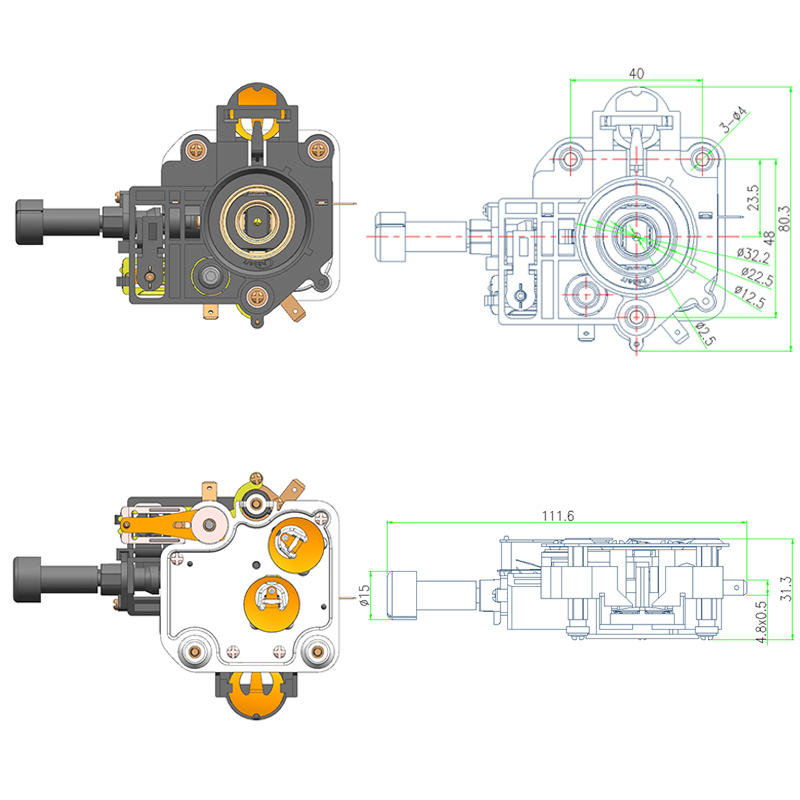

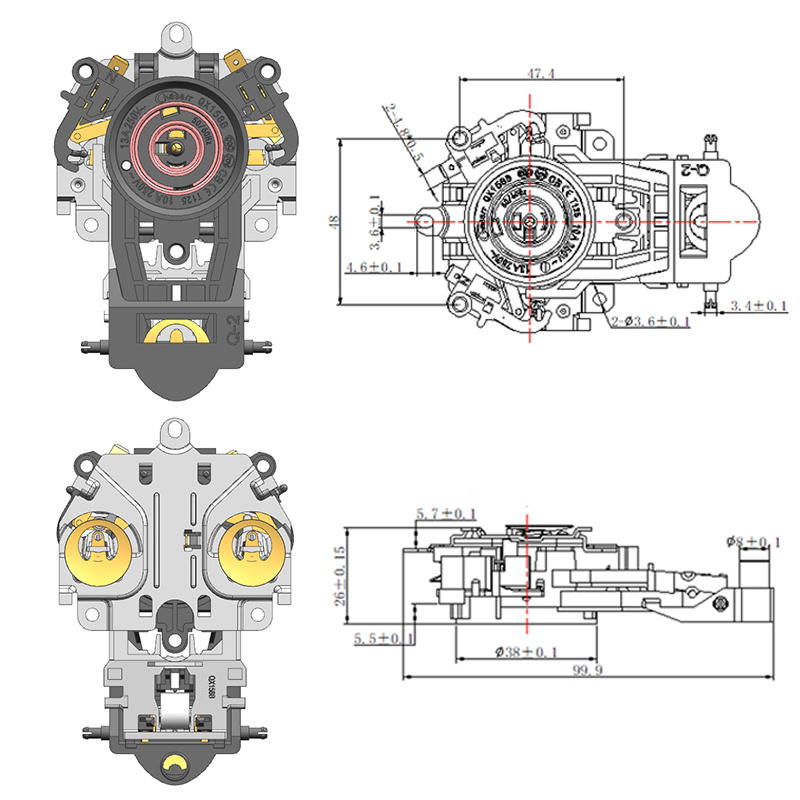
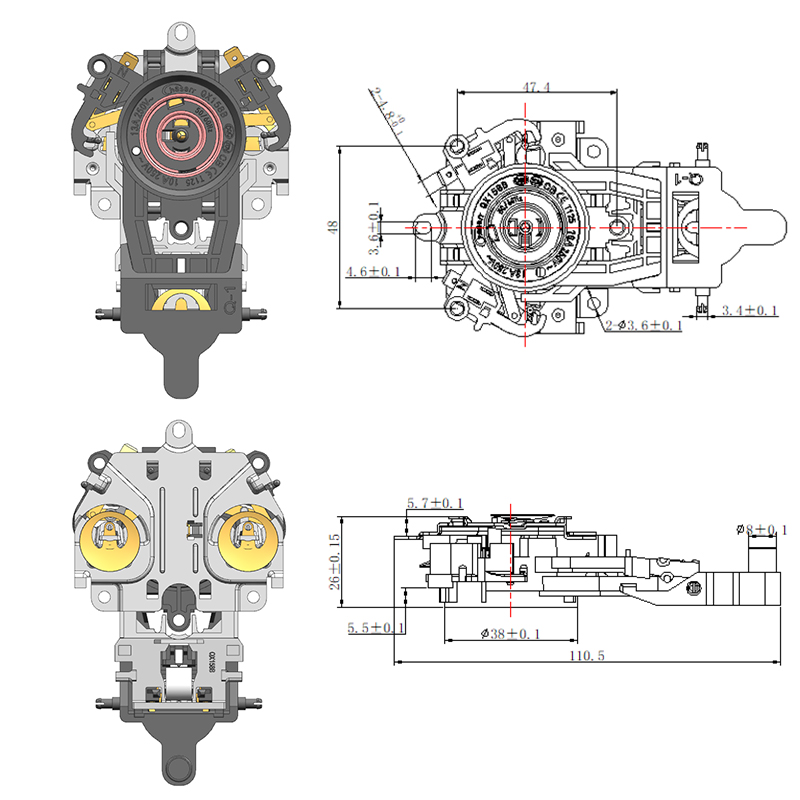

-
No. 2892, Ningkang East Road, Tiancheng Industrial Zone, Yueqing City, Zhejiang Province
-
 Email: Una@chaserr.cc
 -
 Phone: +86-13075775533
- GET IN TOUCH

Electric Kettle Thermostat Coupler Manufacturer