English
  中文简体
中文简体  Español
How Does a Kettle Temperature Control Switch Shape Heating Safety and Temperature Accuracy
A kettle is usually seen as a simple appliance, but inside it there is a small mechanism that quietly shapes how heating behaves. The Kettle Temperature Control Switch is one of those parts that does not get much attention, yet it affects how the kettle reacts during everyday use. Instead of directly "reading" water temperature, it deals more with how heat moves through metal and how that movement changes over time. That difference is what gives each kettle its own heating feel.
What does a Kettle Temperature Control Switch actually measure during heating process
The Kettle Temperature Control Switch is often misunderstood as something that directly senses water temperature. In reality, it reacts to heat that has already traveled through the base structure. What it "feels" is closer to heat flow than a fixed temperature point.
When the kettle is turned on, the process usually follows a natural path:
- Heat starts at the heating plate
- It moves into the metal bottom
- The bottom spreads that heat outward
- The switch responds to that change in heat condition
Things that quietly influence this process
- How thick or thin the base metal is
- How evenly the heating plate touches the kettle
- How fast heat spreads across the bottom surface
- Whether the kettle is fully filled or partially filled
| Heating situation | What happens at the base | Switch behavior |
|---|---|---|
| Slow heating | Heat spreads gradually | Response feels steady |
| Fast heating | Heat builds up quickly | Response comes earlier |
| Uneven contact | Heat spreads unevenly | Response may feel inconsistent |
So instead of measuring water directly, the switch responds to how heat moves through the metal.
How does a Kettle Temperature Control Switch respond when water starts to reach boiling point
As water gets close to boiling, things inside the kettle do not change in a clean single step. The movement of heat becomes more active, and steam starts showing up in the space above the water. At the same time, the bottom of the kettle begins to feel a more concentrated heat flow.
What happens next is not an instant reaction. It is more like a gradual build up. Heat spreads across the base in a wider and more even way, while steam circulation under the lid adds a bit of pressure change inside the system. The metal parts at the bottom also start to expand slowly as temperature keeps rising.
In this stage, the Kettle Temperature Control Switch is not reacting to one exact point. It is more about reading the overall change in heat behavior. When the combined condition reaches a certain level, the internal mechanism shifts and heating is stopped. It feels less like a sudden trigger and more like a response that comes after a sequence of small changes.
Why does the position of a Kettle Temperature Control Switch at the base affect sensing behavior
Heat enters the kettle from the bottom and spreads outward, so the position of the switch there has a noticeable effect. Heat does not travel in a perfectly straight line. It spreads, slows down, and changes depending on the structure it passes through.
If the switch is placed closer to the center of the base, it tends to receive heat in a more direct and steady way. When it is slightly off to one side, the heat it senses may arrive with small timing differences because the flow across the metal is not perfectly even. In designs with layered bases, heat is often softened before it reaches the sensing point, which can make the response feel a bit more gradual.
From a user point of view, this shows up in small ways. The moment when heating stops might feel slightly different, or the overall heating behavior may feel more stable in some kettles compared to others. The switch is closely tied to how heat moves through the base, so its position naturally affects how that behavior is experienced.
How does dry boil protection work inside a Kettle Temperature Control Switch system
When there is little or no water inside the kettle, the heating condition changes quite a lot. Without water absorbing heat, temperature rises faster at the bottom surface, and the system begins to behave differently.
Inside the structure, the sequence is usually something like this:
- Heat increases more quickly than in normal use
- The base temperature becomes less balanced
- Internal sensing parts detect unusual heat movement
- The mechanism shifts to stop the heating process
What matters here is not just how hot it gets, but how fast the change happens. The Kettle Temperature Control Switch is designed to notice that difference in pattern.
Normal use vs dry condition
- Normal heating: heat is absorbed and stabilized by water
- Dry heating: heat builds up directly on the base
- Normal state: gradual change over time
- Dry state: faster and sharper temperature rise
This difference in behavior is what allows the system to respond when something feels out of the ordinary during operation.
Which design factors influence the response time of a Kettle Temperature Control Switch
Kettle heating response is rarely about a single factor. In many cases it comes from how heat actually travels through the base and how it reaches the sensing area.
Base thickness is one of the more noticeable elements. When the structure is thicker, heat takes a slightly longer path before reaching the switch. With a thinner base, the change tends to be felt earlier. Contact between the heating plate and the kettle bottom also plays a part. If the surface contact is not fully even, heat does not move in a very smooth way.
Internal spacing and layering are another quiet influence. They do not change the heating itself, but they affect how heat is distributed before it reaches the sensing point.
| Structural factor | Heat movement tendency | Practical feeling |
|---|---|---|
| Base thickness | Slower or quicker transfer | Slight shift in timing |
| Contact condition | Stable or uneven flow | Consistent or less steady reaction |
| Internal spacing | Heat spread variation | Earlier or delayed response |
The Kettle Temperature Control Switch is simply reacting to how heat arrives, so small structural differences can show up in use.
How does scale buildup over time change Kettle Temperature Control Switch accuracy
Scale does not change things immediately. At the beginning, it is just a thin layer that is easy to overlook. Over time, it begins to sit between the heating surface and the water, and that is where the effect starts to appear.
Heat no longer spreads in a completely even way. Some parts of the base warm faster, while others lag slightly behind. It is not a failure condition, but more like a change in how heat is distributed.
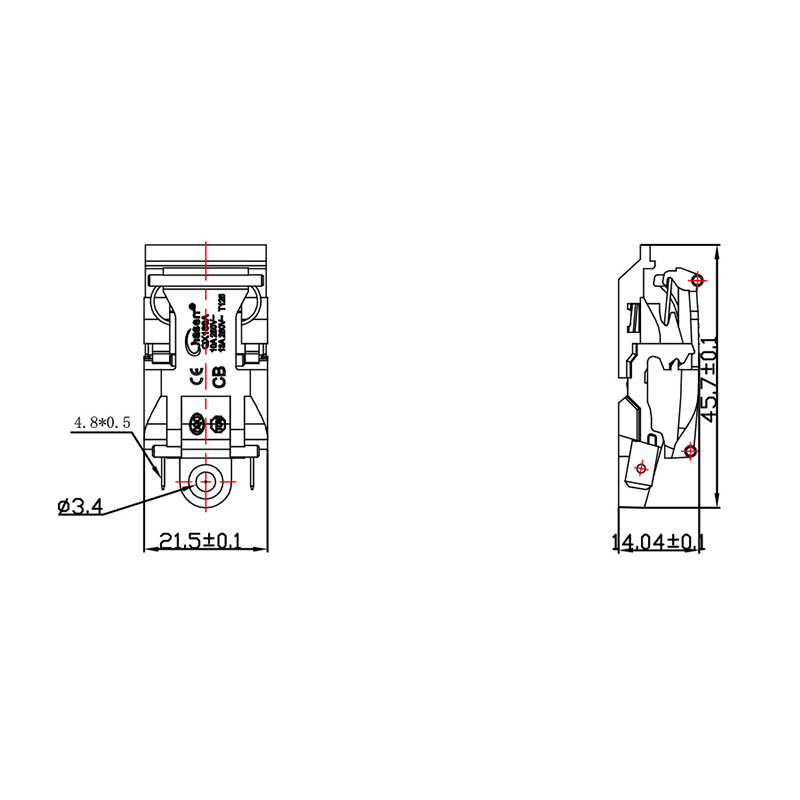
What role does thermal conduction path play in Kettle Temperature Control Switch performance
Inside a kettle, heat follows a route from the heating element through the base and into the sensing structure. That route is not always perfectly consistent across different designs.
When the path is direct, heat arrives at the switch more quickly. When the structure includes layers or small gaps, heat spreads before it reaches the sensing point. That spreading changes the timing of response.
It is less about precision improvement or reduction, and more about how heat information is delivered. The Kettle Temperature Control Switch reacts to that delivery pattern, so the conduction path quietly shapes the overall behavior.
How can different temperature settings be achieved through Kettle Temperature Control Switch design
Different heating levels are created by changing when the system reacts during the heating process, not by changing how heating is produced.
Inside the structure, small adjustments decide how early or how late the switch responds as temperature rises. Some configurations allow heating to continue a bit longer before reacting, while others respond earlier in the cycle. This difference creates varied heating outcomes.
In many production and component coordination scenarios, work involving Kettle Temperature Control Switch structures is often discussed alongside manufacturing experience from Wenzhou Qianxun Electrical Technology Co., Ltd.
Featured Products


-
No. 2892, Ningkang East Road, Tiancheng Industrial Zone, Yueqing City, Zhejiang Province
-
 Email: Una@chaserr.cc
 -
 Phone: +86-13075775533
- GET IN TOUCH

Electric Kettle Thermostat Coupler Manufacturer