English
  中文简体
中文简体  Español
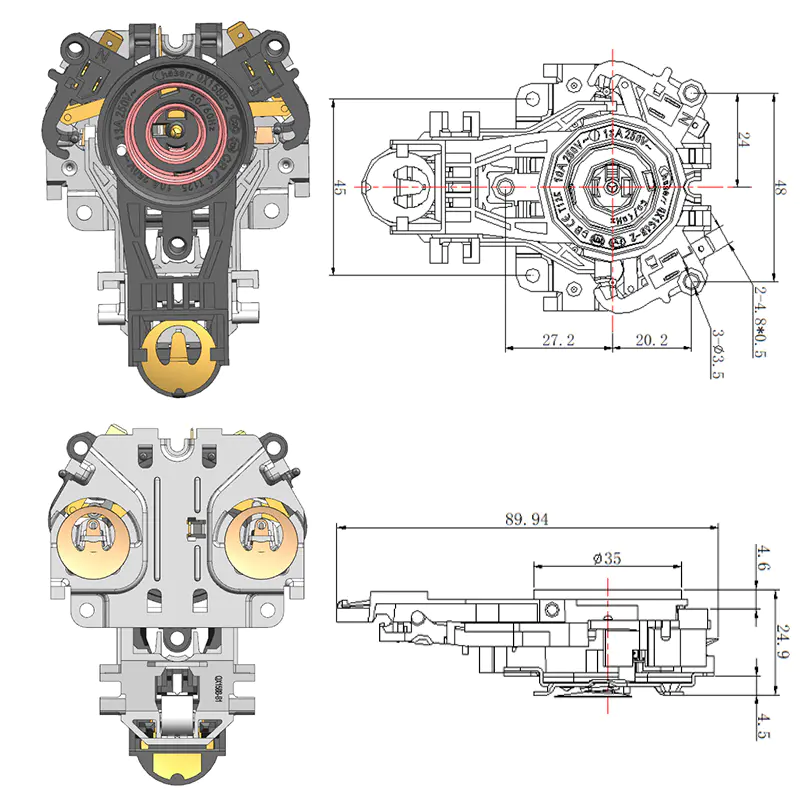
How Base Coupler Impacts Electric Kettle Safety Systems
Anyone sourcing components for electric kettles eventually runs into the same worry: what happens at the point where the kettle body meets its power base? A Base Coupler sits right at that junction, and if it's poorly designed, the whole safety picture of the appliance falls apart. Engineers who've dealt with returned units due to arcing or intermittent contact know this pain well. Getting the coupling mechanism right isn't a minor detail — it's often the difference between a kettle that passes certification smoothly and one that keeps bouncing back from testing labs.
What Exactly Sits Between the Kettle and Its Base?
Picture the underside of any cordless kettle. There's a set of contacts, a plastic housing, and some kind of connector that lets the water-holding vessel separate from the powered stand. That connector is the coupler, and its job sounds simple until you consider what it's actually managing: live current, moisture nearby, repeated insertion cycles, and a user who isn't thinking about any of this while pouring their morning tea.
The coupler has to align contacts precisely every single time the kettle is lifted off and set back down. Get the tolerances wrong and you get sparking, uneven contact pressure, or worse — a connection that stays partially engaged even after lifting the vessel away.
Why Electrical Isolation Matters More Than People Assume
Here's something that surprises newer engineers in this space: the coupler isn't just a mechanical bridge, it's also an isolation barrier. When someone lifts the kettle to pour water, the electrical path needs to break cleanly and instantly. No lingering voltage, no exposed live pins.
A well-built Base Coupler achieves this through a few design choices working together:
- Recessed contact pins that stay shielded until proper alignment occurs
- Spring-loaded mechanisms that break contact the moment separation begins
- Housing materials rated for both heat exposure and electrical insulation
- Physical barriers preventing accidental finger contact with live terminals
Skip any one of these and you're looking at a product that might pass a basic bench test but fail under real household conditions — spilled water, dropped kettles, kids reaching for the counter.
Does the Coupler Work Alone, or Does It Need Backup?
It doesn't work alone, and honestly, it shouldn't. A coupler handles the physical connection and disconnection, but temperature regulation is a separate job entirely, usually handled by a thermostat mounted near the base or within the kettle's lower assembly.
This is where the Bimetal Thermostat Working Principle becomes relevant. Bimetallic strips inside the thermostat bend as they heat up, because the two metals bonded together expand at different rates. Once that bending reaches a certain point, it physically pushes a switch open, cutting power before things get dangerous.
So while the coupler manages the "is this thing plugged in correctly" question, the thermostat manages "is this thing getting too hot." Both systems need to communicate through the same electrical pathway, and that pathway runs straight through the coupler.
How Does a Bimetal Thermostat Actually Work in This Setup?
Breaking it down into stages helps clarify why this pairing matters so much:
- Water heats up, and heat transfers to the thermostat's bimetal strip
- The strip bends as one metal layer expands faster than the other
- At a preset bending threshold, the strip trips a mechanical switch
- Power to the heating element cuts off automatically
- Once temperature drops enough, the strip may reset, depending on design type
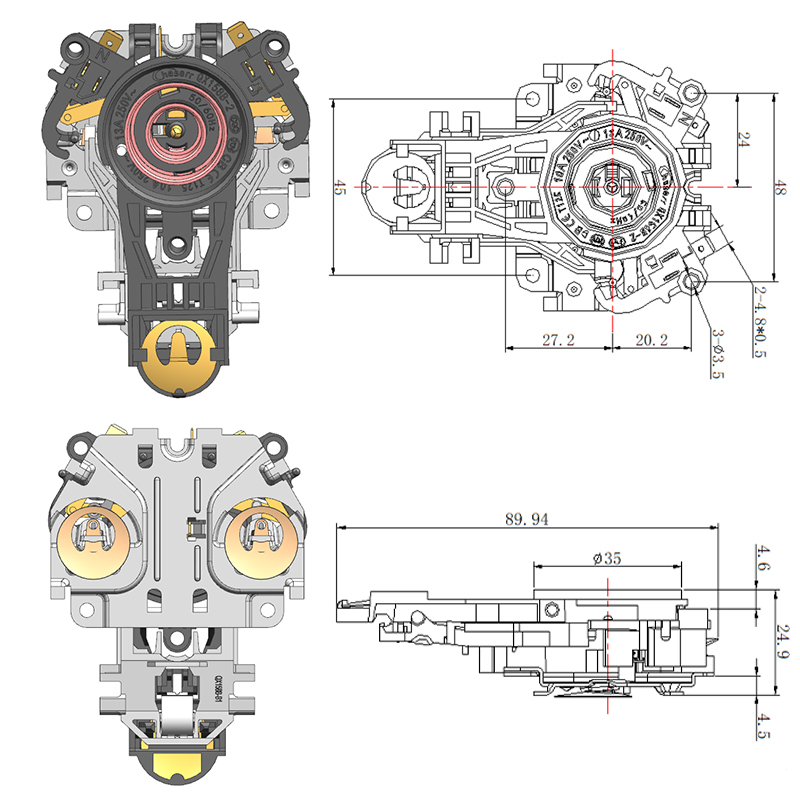
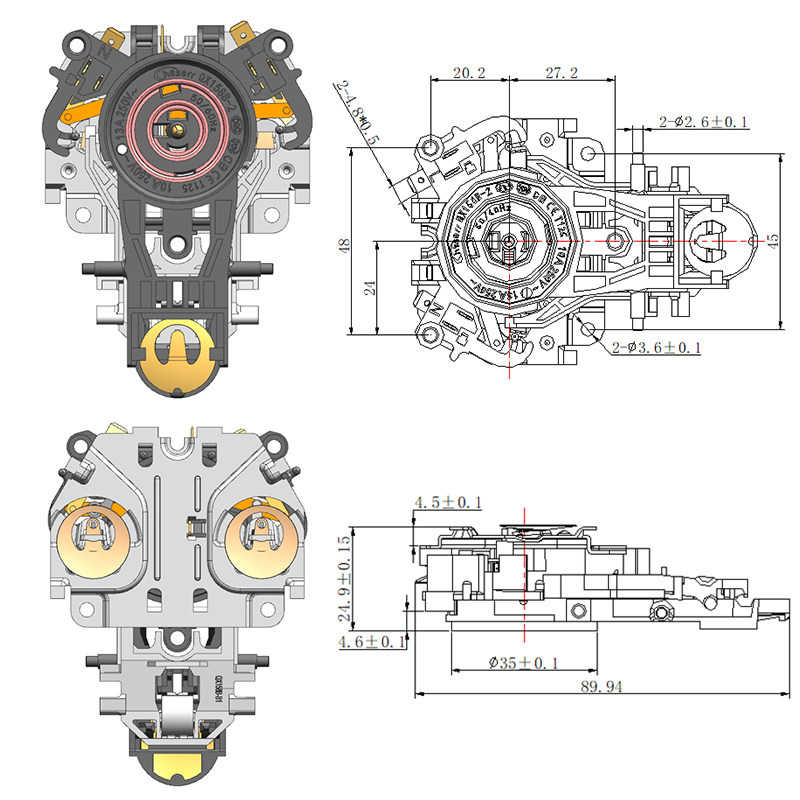
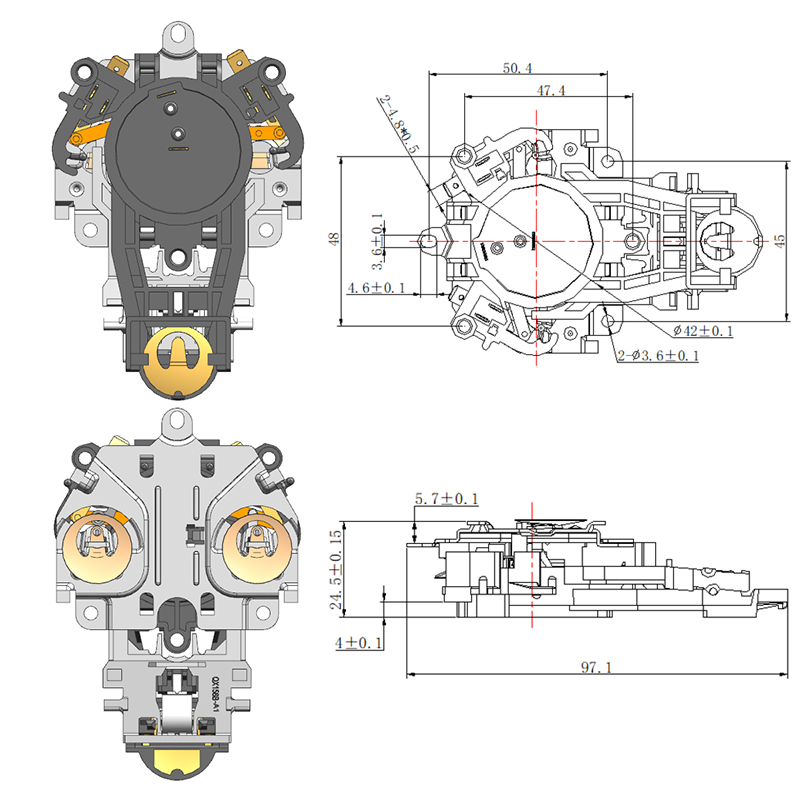
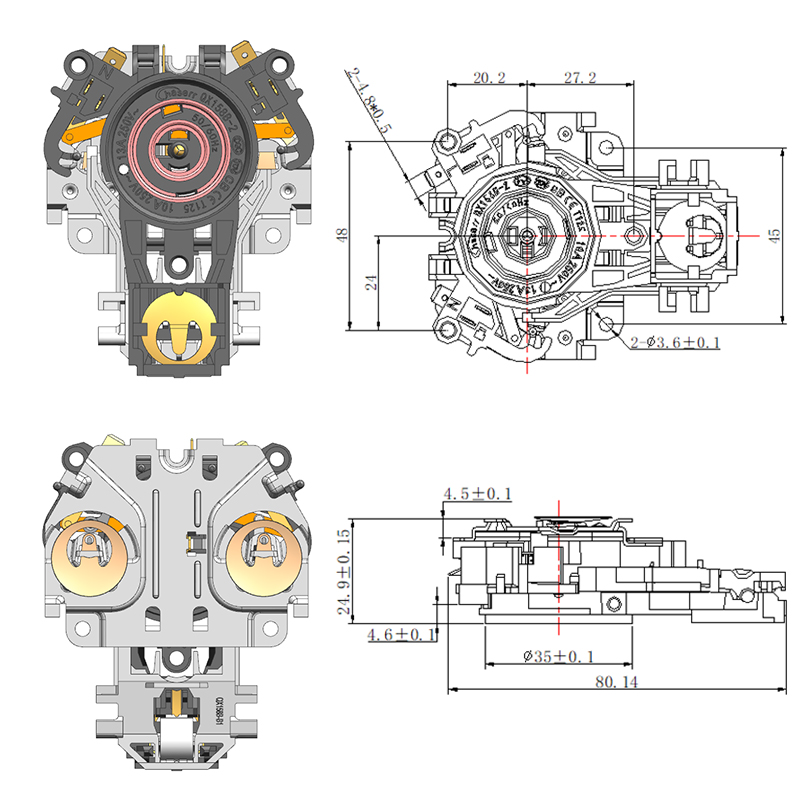
A Thermostat Coupler or Thermostat Connector often serves as the physical link that carries this switching signal from the thermostat assembly to the Base Coupler and onward to the power source. Without a stable connector, even a perfectly functioning thermostat can't communicate its shutoff signal reliably.
Can a Faulty Kettle Connector Cause Overheating on Its Own?
Yes, and this catches people off guard sometimes. A Kettle Connector with worn or misaligned contacts can create resistance at the connection point. That resistance generates localized heat, separate from whatever the thermostat is monitoring inside the water chamber itself.
Over repeated cycles, this localized heating can degrade plastic housing, warp contact pins, or in worse cases, create a fire risk that has nothing to do with the water temperature at all. This is why coupler quality can't be treated as secondary to thermostat quality. Both need to hold up independently.
Preventing Dry Boil and Arc Risks Together
Dry burning happens when a kettle gets switched on without enough water inside, or when a leak drains water below the heating element during operation. This is one of the more common failure modes in cheaper kettle designs.
A properly integrated Base Coupler and thermostat setup helps address this through layered protection:
| Risk Type | Primary Defense | Supporting Component |
|---|---|---|
| Dry Boiling | Thermostat trips when excessive heat is detected | Bimetal Thermostat Switch |
| Arc During Disconnection | Spring-loaded contact separation minimizes arcing | Base Coupler Design |
| Partial Contact / Resistance Heating | Precision-aligned electrical contacts ensure stable connection | Kettle Base Connector |
| Overtemperature During Normal Use | Automatic temperature cutoff prevents overheating | Automatic Temperature Control Thermostat |
Each layer backs up the others. If one system misses a fault condition, ideally another catches it before things escalate toward a hazard.
Does Coupler Design Affect Manufacturing Consistency Too?
This question doesn't get asked often enough, but it should. Coupler Testing during production isn't only about safety certification — it's also about whether every unit coming off the line behaves the same way as the last one.
Inconsistent coupler tolerances mean some units in a batch might have tighter, more reliable contact than others. From a quality control standpoint, that's a problem long before it becomes a safety complaint. Manufacturers running Coupler Function checks during assembly catch these variances early, rather than discovering them after a batch has already shipped.
A few practical checks worth including in a QC routine:
- Insertion and removal cycle testing to confirm consistent contact pressure over time
- Visual inspection of pin alignment after repeated coupling cycles
- Resistance measurement across the connection point under load
- Verification that the isolation barrier remains intact after mechanical stress
Choosing an Adjustable Thermostat Switch Alongside the Coupler
Some kettle designs call for temperature flexibility rather than a single fixed cutoff point, which is where an Adjustable Bimetal Thermostat Switch comes into play. This allows manufacturers to tune shutoff behavior for different kettle capacities or intended uses, whether that's a compact travel kettle or a larger household unit.
Pairing an adjustable thermostat with a well-matched coupler and connector assembly gives engineers more room to fine-tune safety margins without redesigning the entire base structure from scratch. It's a practical way to serve multiple product lines using a shared underlying platform.
Bringing the Safety System Together
None of these components function well in isolation, and that's really the point worth remembering. The coupler manages physical and electrical connection integrity, the thermostat monitors and responds to heat buildup, and the connector pathways carry signals between them reliably enough that the whole system behaves predictably under everyday use. For engineers and procurement teams evaluating suppliers, the question isn't just whether a Base Coupler meets a spec sheet on paper, but whether it holds up across repeated cycles, moisture exposure, and the kind of everyday handling that lab testing doesn't always replicate. Wenzhou Qianxun Electrical Technology Co., Ltd. works with manufacturers on exactly this kind of integrated component sourcing, helping match coupler, thermostat, and connector assemblies to the safety and reliability requirements of specific kettle product lines, and is available to discuss technical specifications or sample testing for teams looking to move a project forward.
Featured Products


-
No. 2892, Ningkang East Road, Tiancheng Industrial Zone, Yueqing City, Zhejiang Province
-
 Email: Una@chaserr.cc
 -
 Phone: +86-13075775533
- GET IN TOUCH

Electric Kettle Thermostat Coupler Manufacturer