English
  中文简体
中文简体  Español
Adaptability of Kettle Temperature Control Switch in Different Voltage Environments
Kitchen appliances like kettles are indispensable in our daily lives. However, with the variety of voltage standards across different regions, the adaptability of the Kettle Temperature Control Switch plays a crucial role in ensuring efficient performance and safety.
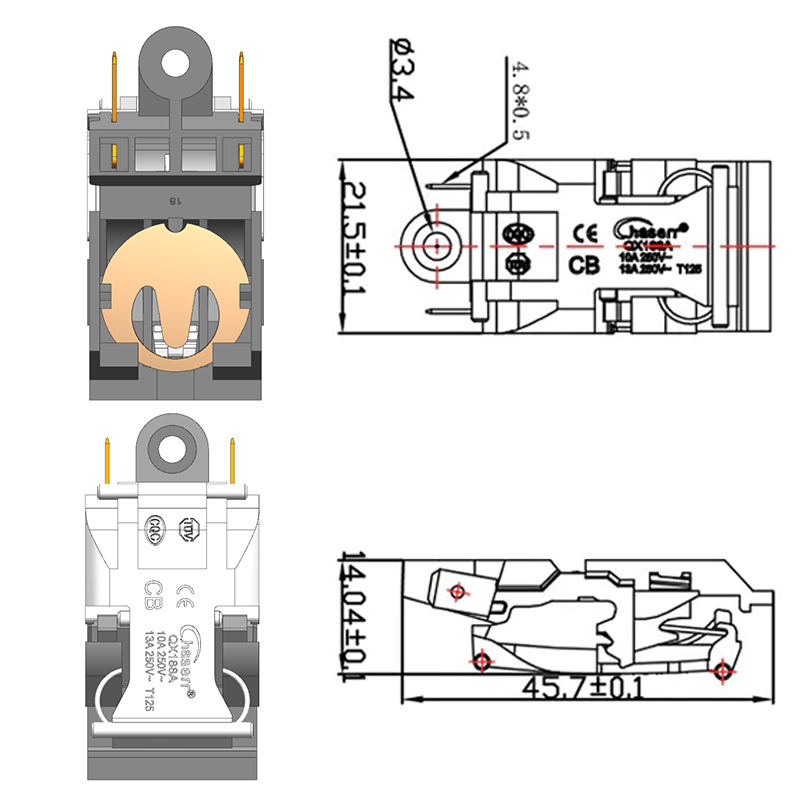
1. Understanding Voltage Compatibility
Voltage variations are one of the primary challenges faced by electric appliances. Different countries operate at different standard voltages—most of Europe uses 230V, while in the U.S., 120V is more common. Kettle Temperature Control Switches must be engineered to handle these voltage discrepancies effectively.
- Voltage Range: A well-designed Kettle Temperature Control Switch is built to operate within a specific voltage range. It ensures that no matter where the kettle is used, the switch can safely handle the supplied voltage without malfunctioning.
- Adaptation Mechanisms: Many advanced switches incorporate automatic voltage regulators or transformers to adapt to voltage fluctuations. This ensures that the kettle's heating element operates efficiently, regardless of whether it's powered by a 120V or 230V supply.
2. Impact of Voltage on Temperature Regulation
The primary function of a Kettle Temperature Control Switch is to regulate the temperature of the water. Voltage variations can influence this process in several ways.
- Higher Voltage: In regions with higher voltage (e.g., 230V), the heating element heats up faster. The Kettle Temperature Control Switch must accurately detect the water temperature to prevent overheating or underheating.
- Lower Voltage: Conversely, in lower voltage environments (e.g., 120V), the kettle may take longer to heat the water. The switch needs to be calibrated to compensate for the lower energy input, ensuring that it still turns off the heating element at the correct temperature.
3. Safety Considerations
Safety is paramount when dealing with electrical appliances. Voltage fluctuations can cause surges or drops that might damage the Kettle Temperature Control Switch or cause it to behave unpredictably.
- Surge Protection: Many modern switches come equipped with surge protection features to handle unexpected voltage spikes. This is crucial for preventing short circuits or internal damage when using the kettle in environments with an unstable power supply.
- Circuit Overload Protection: Kettle Temperature Control Switches often feature overload protection mechanisms that prevent excessive current flow. This is especially important when the appliance is used in areas with frequent power fluctuations, as it safeguards both the switch and the kettle.
4. Designing for Global Use
As kettles are used in various countries with different voltage standards, manufacturers must design Kettle Temperature Control Switches with global compatibility in mind.
- Multi-Voltage Design: Some kettle switches are specifically designed to work with both 120V and 230V systems, making them versatile and usable in multiple regions. This ensures that users do not need to purchase a separate kettle for different locations.
- Universal Adapters: Additionally, manufacturers may offer universal voltage adapters to make their products suitable for international travel. These adapters can be used to adjust the voltage of the electrical supply, ensuring that the kettle operates safely and efficiently.
The adaptability of the Kettle Temperature Control Switch to different voltage environments is crucial for ensuring that kettles perform safely and efficiently across the globe. Whether it's adjusting to higher or lower voltages, modern switches are designed with multiple safety and functionality features to handle these variations.
Featured Products


-
No. 2892, Ningkang East Road, Tiancheng Industrial Zone, Yueqing City, Zhejiang Province
-
 Email: Una@chaserr.cc
 -
 Phone: +86-13075775533
- GET IN TOUCH

Electric Kettle Thermostat Coupler Manufacturer