English
 中文简体
 Español

What Happens Inside an Electric Kettle When Water Reaches Boiling Temperature
What Happens to Water During the Heating Process
When an electric kettle is switched on, current flows through the heating element fixed in the base or floor of the vessel. Heat passes from the element into the water by conduction at the contact surfaces and then through convection as warmer water rises and cooler water moves in to replace it. As energy continues to enter, the bulk temperature of the water climbs in a steady progression toward the boiling point for the local conditions.
Near boiling, vapour bubbles form more readily on the hot surfaces and in the liquid. Steam generation increases, pressure and humidity in the headspace above the water rise and the familiar rolling boil appears if heating is allowed to continue. Kettle operation is built around this transition: the appliance must deliver heat efficiently up to that region and then end the main heating phase so that the vessel does not run on unnecessarily. Temperature, steam and the layout of channels or sensors inside the kettle are what link the state of the water to the control that cuts power.
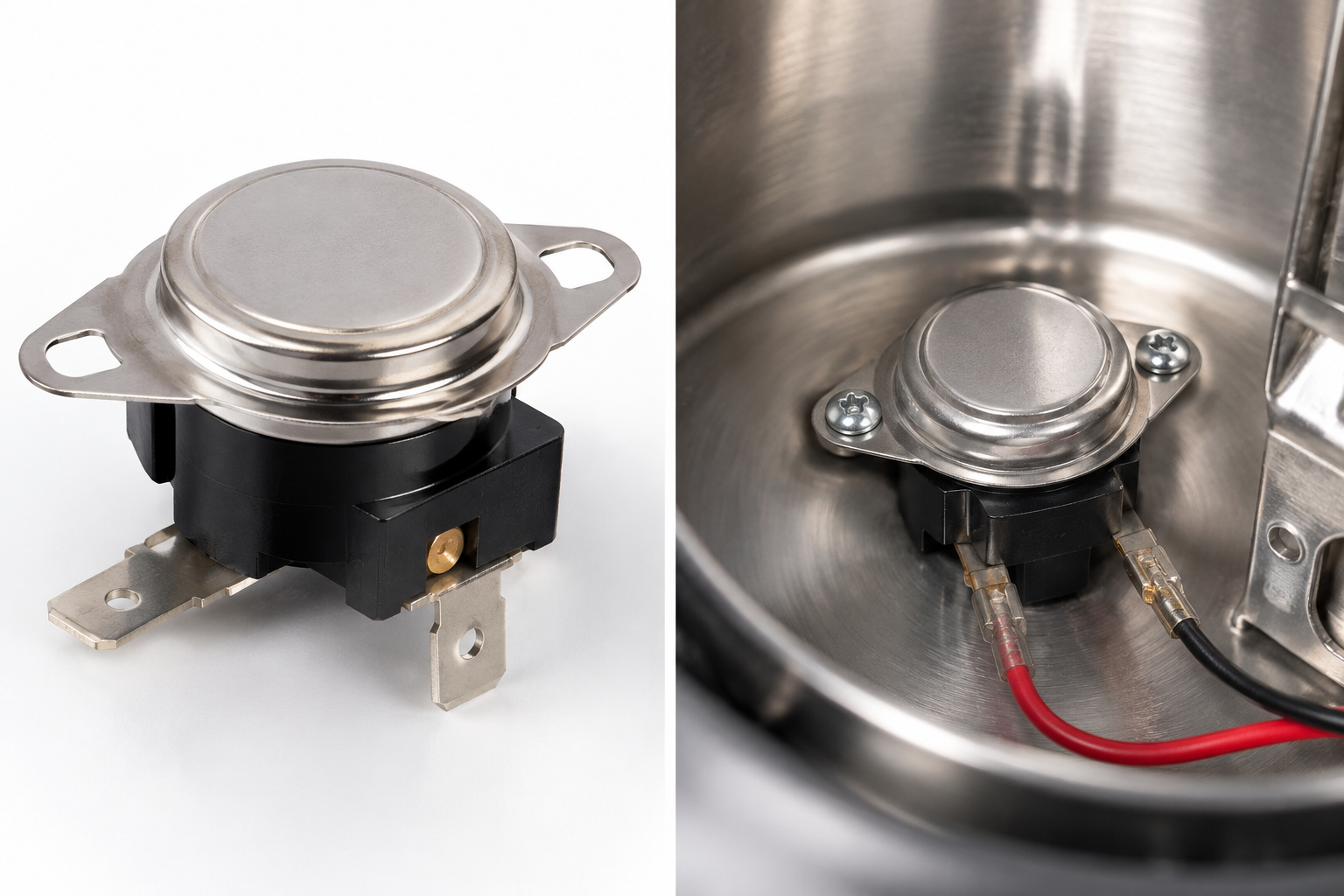
What Happens Inside the Kettle as Boiling Begins
Formation of Steam
At boiling temperature, liquid water turns to steam in significant volume. Bubbles break the surface and vapour fills the upper part of the kettle under the lid. In many designs a controlled path allows some of that steam to leave the main chamber or to pass near a sensing location. Steam is not only a by-product; in steam-activated controls it becomes the signal that boiling has been reached.
Steam and Temperature Detection
Depending on the kettle architecture, either a rise in temperature at a fixed sensor or the arrival of steam at a thermally sensitive switch initiates the next step. Internal structure—baffles, steam tubes, sensor pockets—guides heat or vapour toward the control device. The connection between that structure and the control switch determines how quickly and how repeatably the appliance recognises boiling. Poor alignment or blocked paths delay detection; correct layout keeps the control event close to the true boiling condition.
How the Temperature Control Switch Responds at Boiling Point
Activation of the Switching Mechanism
When the switch's designed temperature or steam-related operating condition is reached, its temperature-sensitive mechanism moves. That movement may be a snap action of a bimetal element, a change driven by a heated probe or another qualified construction. The mechanism is calibrated so that normal heating does not trip early, yet boiling conditions bring it reliably to the trip point. Activation is the moment the protective or end-of-boil logic leaves the sensing domain and enters the electrical domain.
Disconnection of the Heating Circuit
Once activated, the switch opens the path that supplies the heating element, either directly or through the kettle's control arrangement. Current to the element falls to zero and the normal water-heating process stops. Residual heat in the metal may produce a short after-boil, but continuous energy input has ended. Clear, full opening of the contacts is required so that the element cannot remain partially energised.
Returning to the Ready State
After the kettle cools, switch behaviour depends on type. Automatic-reset designs return to the closed or ready state when temperature falls through the reset band, allowing a new cycle when the user switches on again. Manual-reset designs stay open until a button or lever is operated, which can be preferred where an explicit user action is wanted after a trip. Stable behaviour over many cycles keeps both styles predictable: trip points should not wander and contacts should not stick. Water Kettle Temperature Control at the boiling point is exactly this chain—sense, open, and later restore readiness according to the chosen reset style.
Product Advantages of a Kettle Temperature Control Switch
Accurate Response to Designed Operating Conditions
A switch intended for kettle service is expected to act when its specified temperature or steam-related trigger is met, not randomly earlier or later. Suitable operating characteristics support a boiling control process that feels consistent to the user and protects the appliance from prolonged full-power heating after the water has already boiled.
Consistent Power Disconnection
Each activation should produce a dependable break in the heater circuit. Consistent switching under the electrical load of the element underpins safe, repeatable kettle operation across the life of the product. Contact materials and mechanism design are chosen for that duty cycle.
Practical Integration into Electric Kettles
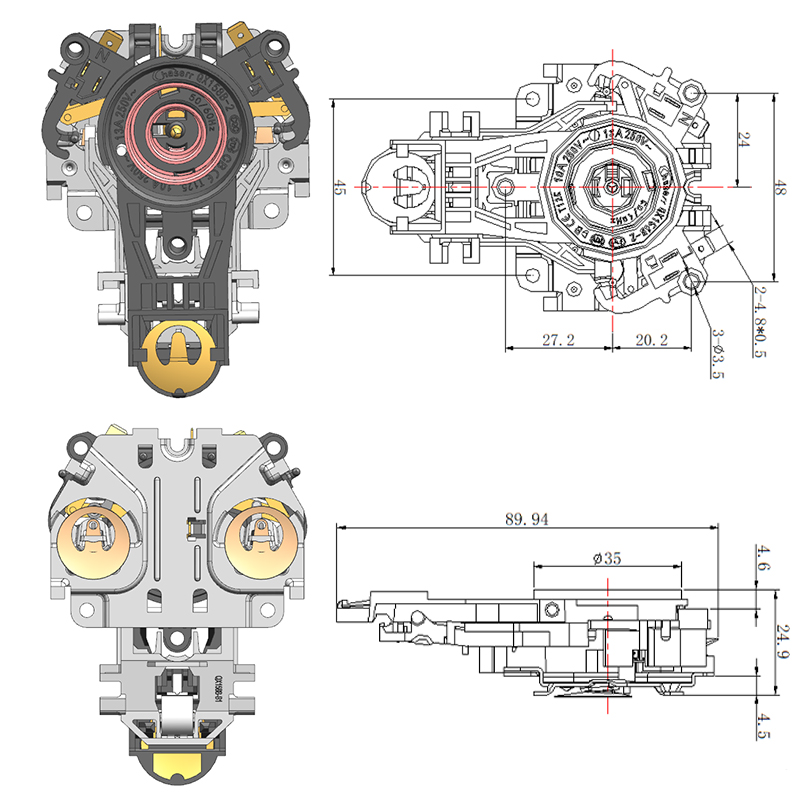
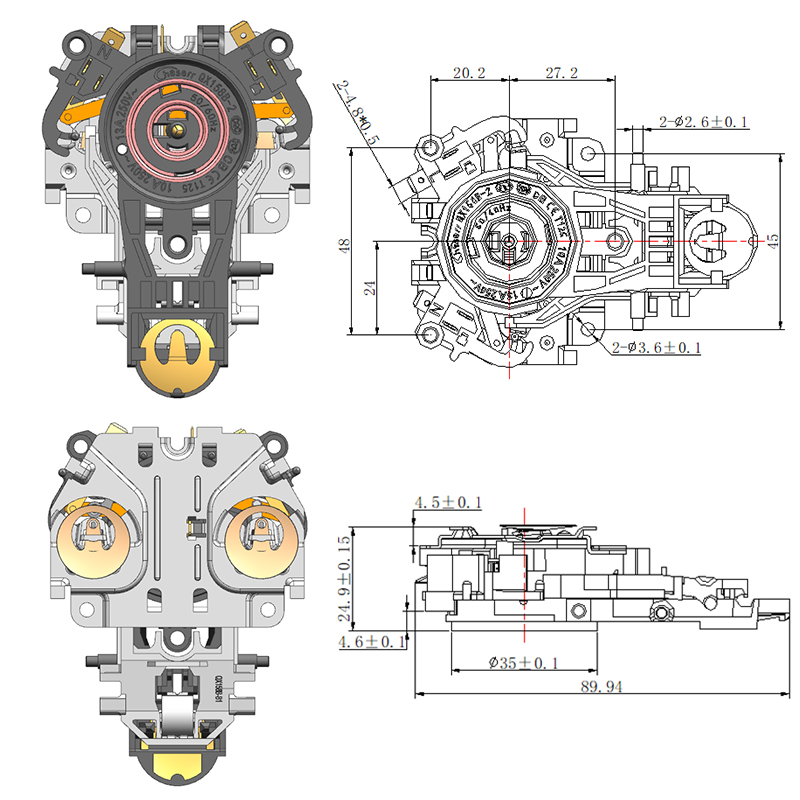
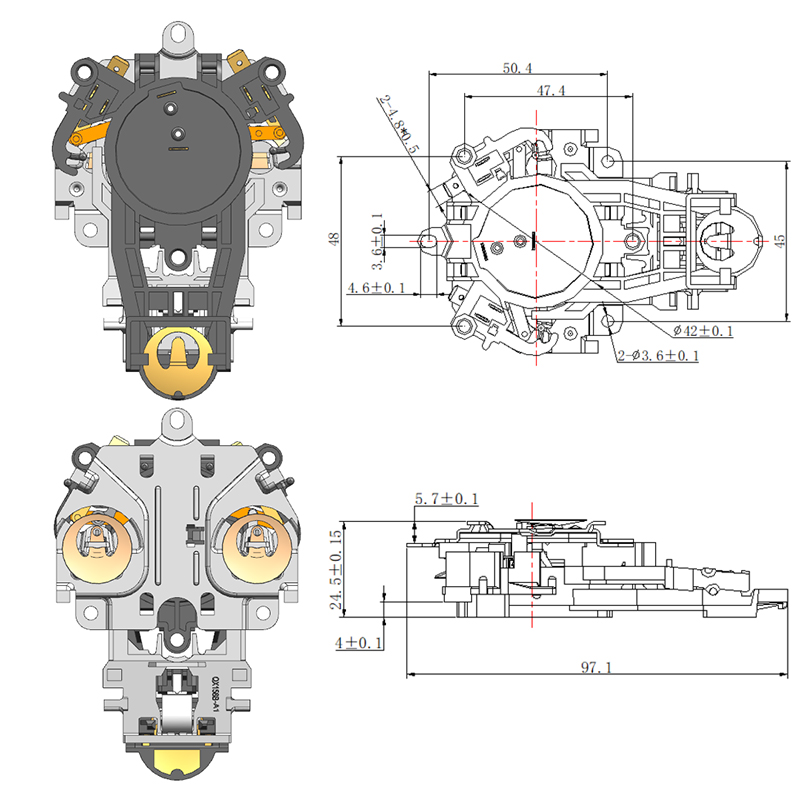
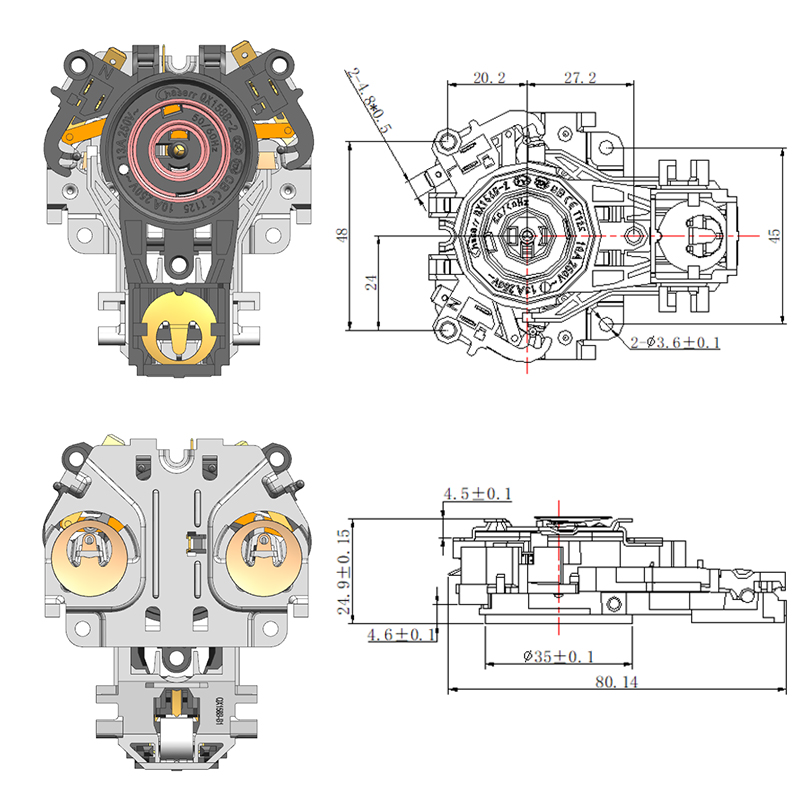
Integration succeeds when electrical ratings, operating band and mounting geometry match the kettle's wiring and mechanical layout. Rated voltage, rated current, operating temperature and installation dimensions are the usual checkpoints before a switch is fixed into a base or steam path. A candidate that fails any of those checks forces redesign or creates a weak point in series production. Temperature Control Switches for this role are therefore treated as appliance-specific components, not as generic thermal parts dropped into any housing.
What Kettle Manufacturers Should Verify When Selecting the Switch
Manufacturers confirm whether the application needs temperature sensing at a solid surface, steam activation through a vapour path or another defined control method. Operating temperature and the nature of the switching action—including reset behaviour—must fit the boil-detection strategy. Electrical ratings have to cover the heater with the margins required by the relevant appliance rules. Structural compatibility—height, footprint, terminal orientation, fixing method—must allow stable thermal coupling and secure wiring. Checking these items against drawings and test plans early avoids late changes on the assembly line.
Sequence from Heat Input to Power Cut
| Stage | What occurs inside the kettle | Control implication |
|---|---|---|
| Element energised | Heat transfers into the water | Temperature rises toward boiling |
| Approach to boil | Bubble activity and steam increase | Headspace and sensors begin to see change |
| Boiling condition | Steam production and temperature at trip region | Switch mechanism reaches operating point |
| Switch activation | Sensing element moves contacts | Circuit to heater is opened |
| After disconnection | Heating stops; residual heat fades | User pours or restarts per design |
| Reset / ready | Automatic or manual return to ready state | Next cycle can begin when intended |
Design and Use Notes Around the Boiling Event
Lid fit, vent paths and scale on the element all influence how evenly water heats and how steam reaches a sensor. Manufacturers validate the full system—vessel, element, switch and user interface—rather than the switch in isolation. End users benefit when the kettle is filled within the marked range and kept reasonably free of heavy scale so that both boiling performance and detection remain close to the design intent. The temperature control switch does not create boiling; it recognises the boiling regime and ends powered heating in a controlled way.
From Rising Temperature to a Controlled End of Heat
As water heats, steam forms and either temperature or vapour at a designed location activates the temperature control switch, which then disconnects the heating element and stops the normal boil cycle until the switch resets according to its type. A switch with suitable operating characteristics, consistent opening action and correct electrical and mechanical fit is what makes that sequence reliable. Wenzhou Qianxun Electrical Technology Co., Ltd. produces temperature control components for appliance applications including electric kettles. Review of sensing method, operating band, electrical ratings and mounting compatibility against the kettle design supports selection of a switch that manages the transition from active heating to a completed boil in a stable, repeatable manner.
Featured Products
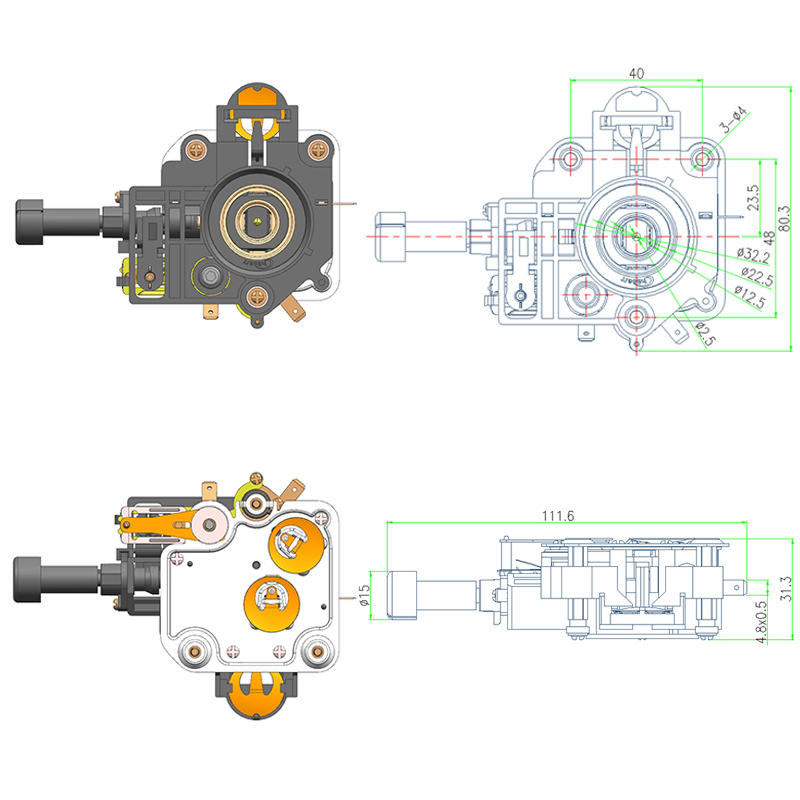

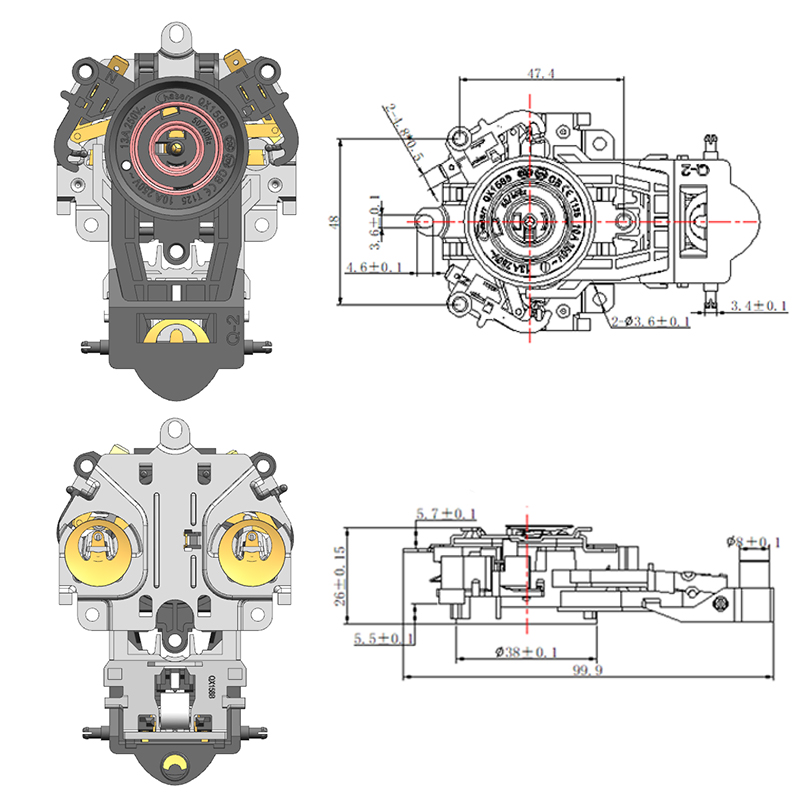
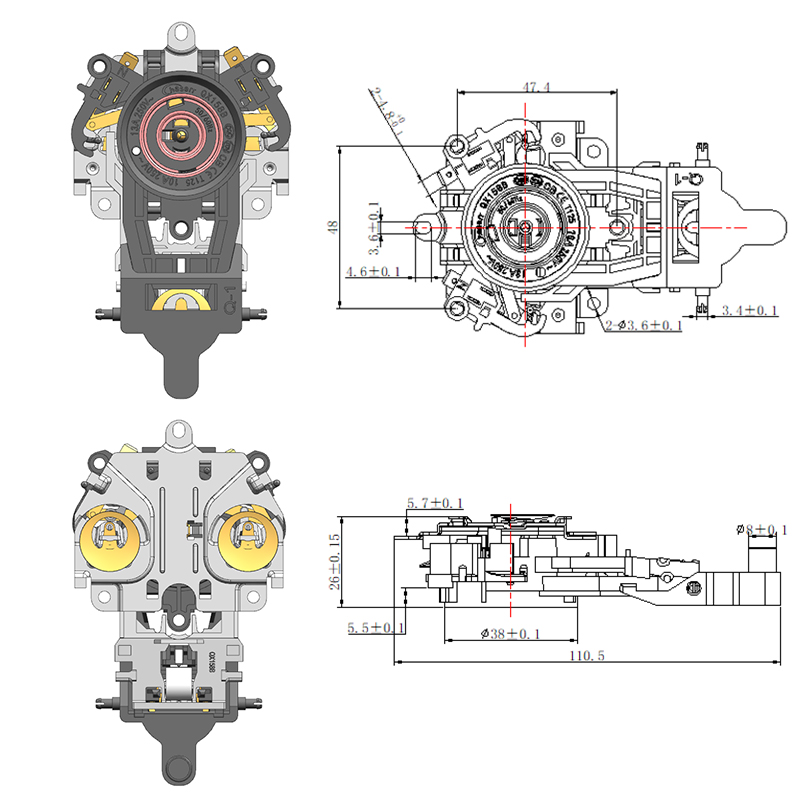

-
No. 2892, Ningkang East Road, Tiancheng Industrial Zone, Yueqing City, Zhejiang Province
-
 Email: Una@chaserr.cc
-
 Phone: +86-13075775533
- GET IN TOUCH

Electric Kettle Thermostat Coupler Manufacturer